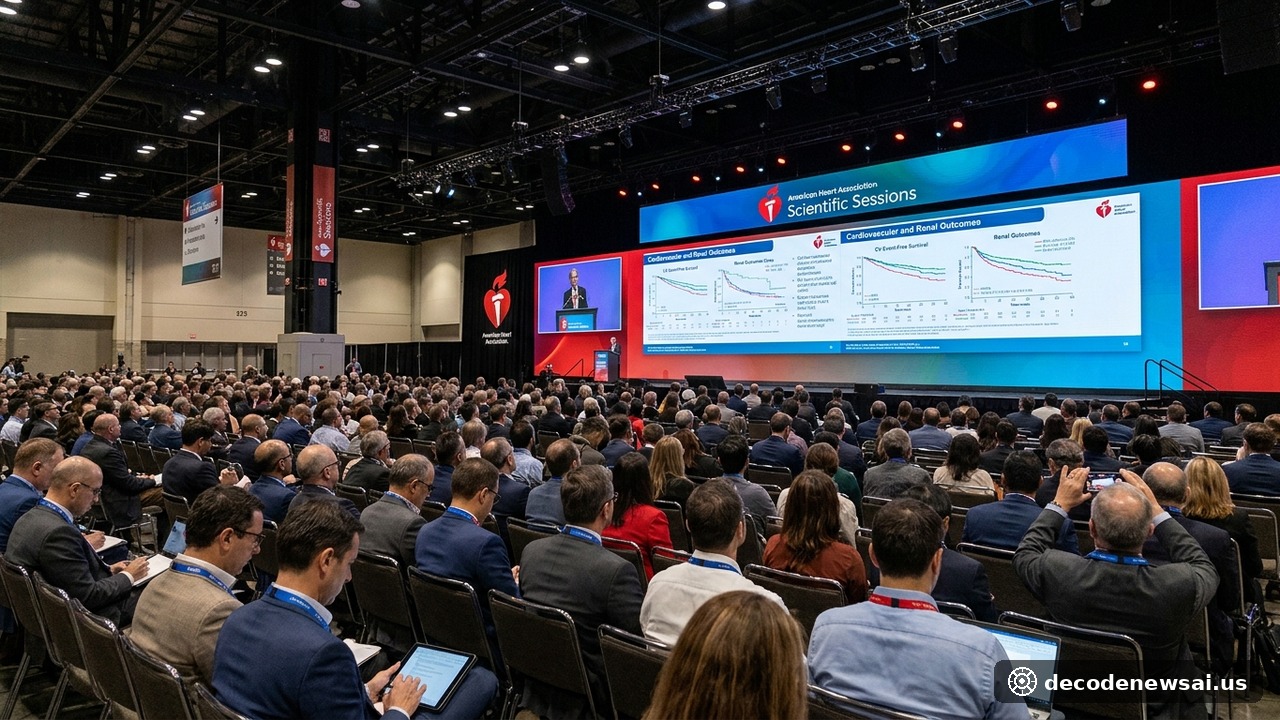
Cardiovascular clinical researchers unveiled pivotal late-breaking clinical trial results on Sunday at the American Heart Association Scientific Sessions 2026 in Chicago. The STREAM trial, evaluating 1,880 adults aged 70 and older without prior atherosclerotic disease, demonstrated that discontinuing primary prevention statins met statistical noninferiority criteria. The clinical findings were published simultaneously in the New England Journal of Medicine. Geriatric cardiologists praised the pragmatic trial design. Primary prevention statin continuation guidelines face renewed scrutiny.
Noninferiority met but 12.7 percent had cardiovascular events
The multicenter randomized open-label noninferiority study was conducted across 24 academic centers in Switzerland, the Netherlands, and France. Eligible trial participants had a mean age of 77.5 years and managed at least two coexisting chronic conditions. All enrolled participants had maintained stable statin regimens for primary prevention for at least one year before random assignment. Investigators randomized subjects in a strict one-to-one ratio to discontinue or continue lipid-lowering therapy. Trial methodology remained robust.
Two-year longitudinal outcome tracking revealed nuanced clinical disparities between the randomized arms. Across the two-year observation window, the restricted mean event-free survival time was 96.5 weeks with discontinuation compared to 98.5 weeks with continuation. The difference of minus 2.0 weeks fell well within the prespecified noninferiority boundary of minus 5.2 weeks. Noninferiority was confirmed with high statistical significance. Empirical data supported the technical milestone.
However, absolute secondary incidence rates for major composite cardiovascular events were moderately higher among subjects who discontinued therapy. Primary cardiovascular outcomes occurred in 12.7 percent of participants in the discontinuation cohort compared to 9.2 percent in the continuation arm. Clinical epidemiologists calculated that for every 40 multimorbid older adults who withdrew from statins, one additional major vascular event or death occurred over two years. Vascular risks remain real.
Rita Redberg urges shared decision-making on stopping statins
University of California San Francisco cardiology professor Rita Redberg presented detailed interpretative context during the plenary symposium. Redberg emphasized: "This small, increased risk of cardiovascular events means that one cannot make a general recommendation about stopping statins, and there should be shared decision-making between patient and physician." Expert guidance was balanced and pragmatic.
Contrary to conventional assumptions among geriatric clinicians, secondary patient-reported endpoints revealed no meaningful physical benefits following statin discontinuation. Clinical investigators noted no statistically significant improvements in subjective muscle pain, accidental fall frequency, or sarcopenia frailty scores between arms. Discontinuing statins did not enhance standardized health-related quality of life metrics. The historical belief that stopping statins relieves chronic musculoskeletal discomfort was contradicted by trial data. Evidence dispelled clinical dogma.
Laboratory lipid measurements tracked across an evaluable subset of 235 participants demonstrated marked cholesterol rebound following discontinuation. Mean low-density lipoprotein cholesterol rose to 176.0 milligrams per deciliter at 12 months in the discontinuation arm. Conversely, the continuation arm maintained stable circulating levels averaging 99.4 milligrams per deciliter. Serum lipid elevations proved substantial.
Guideline committees to review STREAM dataset for prevention updates
Senior international cardiology specialists emphasized clinical prudence when translating trial results into real-world geriatric practice. Panelists cautioned that older individuals with high coronary calcium scores, significant tobacco history, or active diabetes face elevated risks of plaque instability if statins are halted. Individual vascular risk profiles must inform every therapeutic adjustment. Clinical prescribing requires nuanced personalization.
The landmark European trial provides definitive high-grade clinical evidence regarding polypharmacy reduction in complex elderly populations. As global demographics shift toward older societies, managing polypharmacy and drug interactions has become an urgent public health imperative. Evaluating the net clinical utility of continuing lifelong preventive medications carries immense economic and clinical relevance. Deprescribing science continues maturing steadily.
International clinical cardiology guideline committees scheduled the STREAM dataset for formal review in upcoming cardiovascular prevention updates. Expert consensus anticipates that future practice guidelines will formalize shared decision-making frameworks for older patients. Geriatric preventive cardiology is moving decisively beyond rigid age-blind prescribing algorithms. Medicine is combining scientific rigor with clinical compassion. Patient-centered care guides the future.