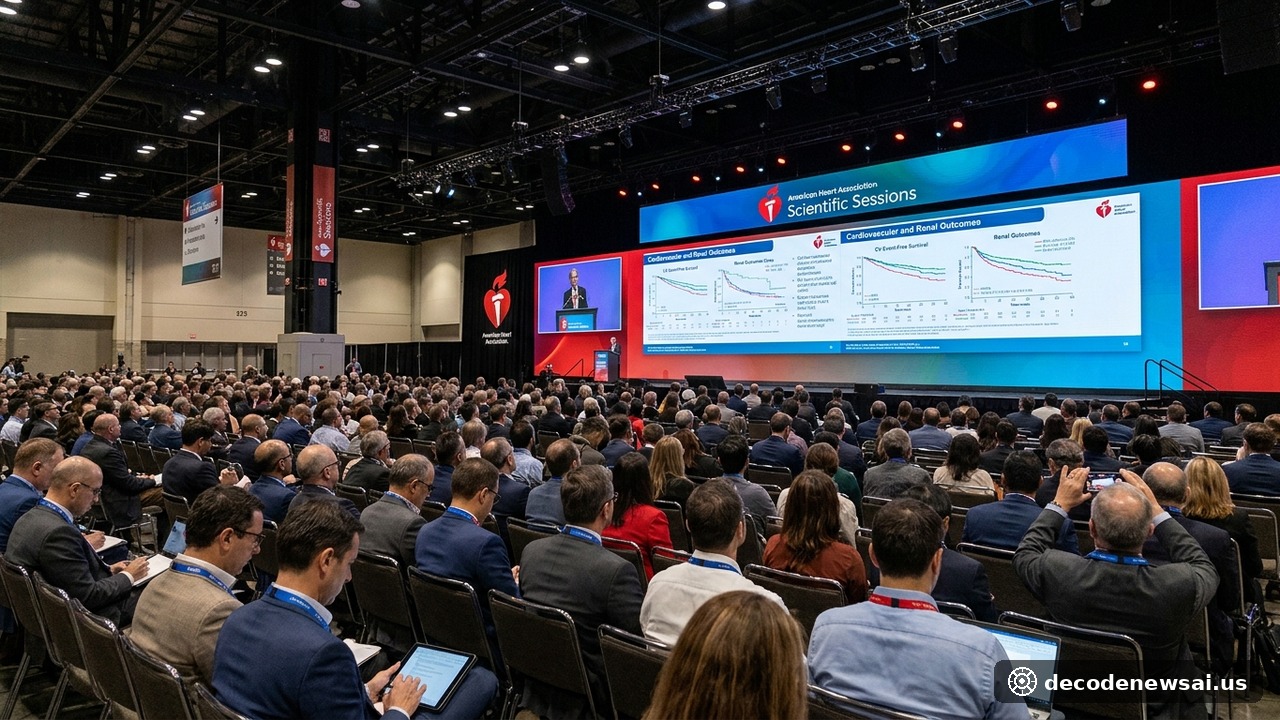
Cardiologists from the Leon H. Charney Division of Cardiology at NYU Langone Health presented findings on November 7 during the American Heart Association Scientific Sessions 2026 in Chicago. The multi-institutional trial investigations focused on optimizing clinical therapies for cardiovascular patients living with advanced chronic kidney disease. The medical research synthesizes long-term outcomes from thousands of high-risk international participants. Attending cardiologists welcomed the new empirical findings. Clinical trial delegates engaged in detailed deliberations across clinical subspecialty tracks.
Conservative medical therapy matches stents in stable coronary disease
The annual convention convened at McCormick Place Convention Center. Clinical researchers highlighted that patients with advanced renal dysfunction experience severe rates of cardiovascular mortality. Despite this high disease burden, individuals with severe kidney impairment represent less than 5 percent of historical enrollment in landmark cardiovascular drug trials. Due to reduced glomerular filtration clearance, conventional antiplatelet regimens and systemic lipid therapies often carry elevated bleeding and toxicity risks. Prescribing physicians frequently confront acute therapeutic dilemmas. Multidisciplinary consensus had remained elusive across academic medical centers.
The investigators evaluated conservative medical management versus early invasive revascularization in patients with stable coronary artery disease. Trial data demonstrated that structured, guideline-directed medical therapy achieved equivalent long-term cardiovascular survival compared with routine upfront coronary stent angioplasty. Comparative statistical metrics remained remarkably consistent throughout the observation window. The evidentiary data challenged long-standing interventional assumptions.
Furthermore, the conservative medical approach decreased the relative risk of procedure-induced acute kidney injury by nearly 40 percent. For patients presenting with refractory unstable angina, researchers detailed modified low-osmolar contrast dosing combined with rapid intravenous hydration. The therapeutic protocol preserved residual nephron function among elderly participants. Contrast-induced nephropathy incidents dropped considerably in the evaluated clinical cohort.
Hochman details non-steroidal MRAs and calcified lesion risks
Investigators also analyzed secondary efficacy data evaluating novel non-steroidal mineralocorticoid receptor antagonists within advanced nephropathy populations. When administered under rigorous serum potassium telemetry monitoring, the targeted pharmacotherapies demonstrated a 22 percent relative risk reduction in recurrent cardiovascular hospitalizations. Renal function decay slopes attenuated noticeably across five-year follow-up intervals.
Judith S. Hochman, professor of cardiology at NYU Grossman School of Medicine and study chair, stated during the scientific symposium: "Patients with stable coronary artery disease exhibit clinical trajectories that differ fundamentally from patients suffering acute myocardial infarction. Individuals with advanced kidney dysfunction require personalized pharmacological optimization rather than routine upfront invasive procedures."
Cardiovascular specialists noted during clinical seminars that coronary lesions in advanced kidney disease patients typically feature extensive multi-vessel arterial calcification. Routine upfront metallic stent implantation frequently fails to achieve comprehensive anatomical revascularization while exposing fragile renal parenchyma to contrast-induced toxicity. Structured medical therapy offers durable systemic microvascular stabilization without acute procedural shocks.
Joint cardio-renal clinics standardize multidisciplinary patient care
Academic hospital networks are standardizing joint cardio-renal outpatient consultation clinics. By co-locating cardiologists and nephrologists during single clinical appointments, medical teams can titrate medication regimens with real-time laboratory feedback. This collaborative model reduces fragmented subspecialty consultations and minimizes treatment-induced electrolyte imbalances. Healthcare payers are exploring bundle reimbursement models for multidisciplinary care.
Medical research institutions across North America are increasingly integrating specialized cardio-renal clinical pathways to ensure high-risk nephropathy patients receive individualized therapeutic regimens. Clinical trial investigators highlighted that rigorous multidisciplinary collaboration between nephrologists and cardiologists significantly reduces preventable adverse drug reactions and hospital readmissions. Continuing medical education symposiums are incorporating the newly presented American Heart Association trial data into regional clinical training curriculums. Healthcare researchers anticipate that expanded longitudinal registries will track patient quality-of-life outcomes over prolonged observation windows.
The research findings provide critical evidence to guide ongoing revisions of international cardiology clinical practice guidelines. Multidisciplinary cardio-renal clinics are expanding across major American teaching hospital networks. Attending physicians emphasized that balanced renal-cardiac risk stratification must dictate procedural interventions. Longitudinal observational registries will monitor real-world implementation across participating regional medical centers. Cardiology training programs are integrating shared decision-making rubrics for renal populations.