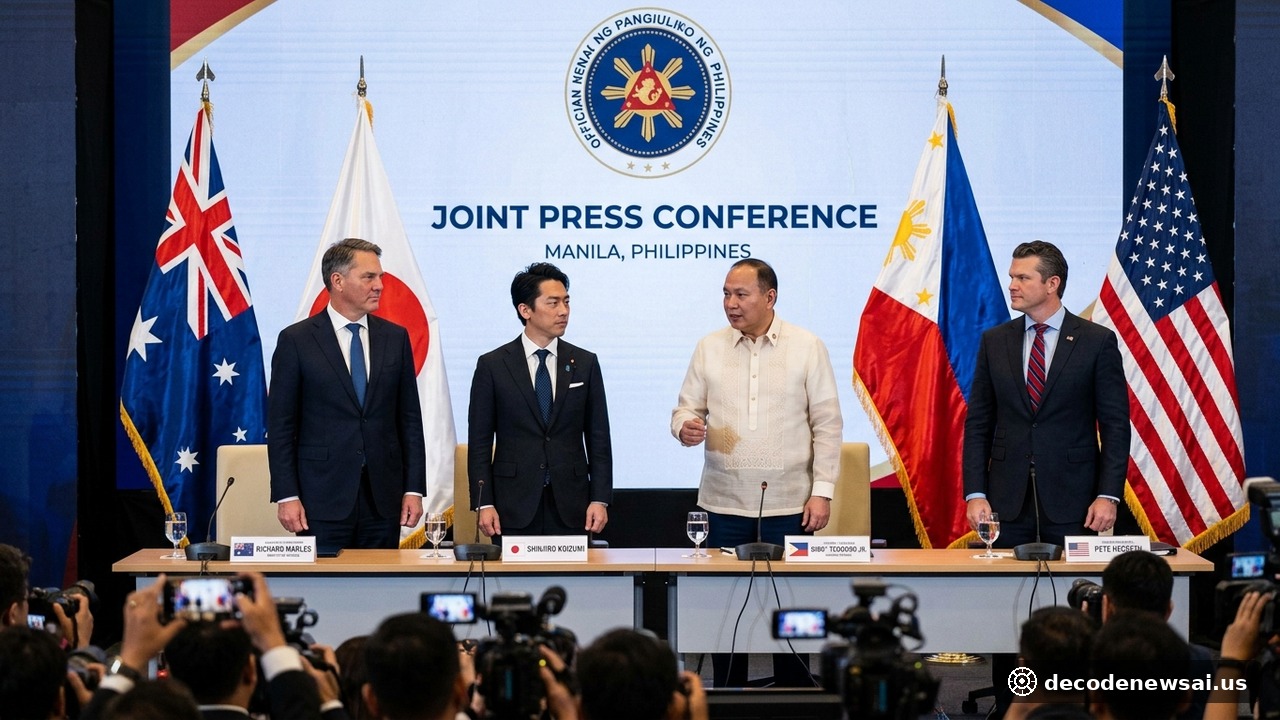
Defense ministers and senior military officials from Australia, Japan, the Philippines, and the United States formally released a comprehensive joint ministerial declaration on Tuesday, November 10, 2026, in Manila. Meeting on the sidelines of the ASEAN Defense Ministers' Meeting-Plus, the defense leaders approved the immediate establishment of a Combined Coordination Center situated in the Philippines. The strategic initiative significantly expands multilateral maritime patrol frequencies, joint live-fire exercise complexity, and archipelago defense capabilities across regional waters.
Philippine Defense Chief Calls Center a Transformative Milestone
The Combined Coordination Center will serve as a permanent multinational operational command node connecting the defense establishments of the four maritime democracies. Senior naval and air liaison officers will rotate through the facility, synchronizing maritime domain awareness feeds, intelligence telemetry, and regional patrol logistics. The establishment of direct secure communications links eliminates tactical bottlenecks during multilateral maritime security operations.
Speaking during a joint press conference hosted at Camp Aguinaldo in Quezon City, the Philippine Secretary of National Defense delivered formal remarks. The defense chief affirmed: "Establishing the Combined Coordination Center represents a transformative milestone in executing our collective defense vision. Defending our sovereign archipelago requires modern reconnaissance technology and seamless coordination with treaty allies. We remain resolute in upholding international maritime law, freedom of navigation, and Indo-Pacific stability."
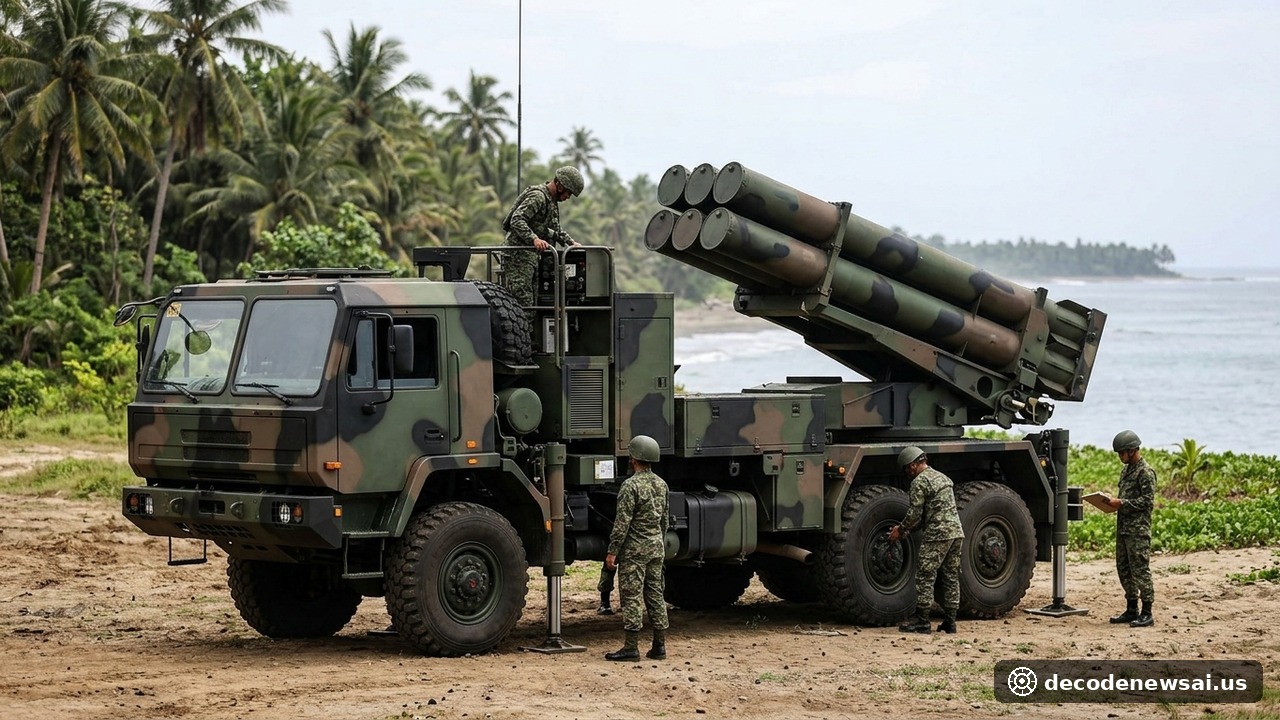
Beyond establishing the joint coordination hub, the defense chiefs pledged to synchronize bilateral and multilateral defense acquisition initiatives. The United States, Japan, and Australia confirmed coordinated financial and technical assistance to accelerate the modernization of the Armed Forces of the Philippines. Collaborative investments will prioritize coastal radar tracking installations, long-range maritime patrol aircraft, and advanced air defense interceptor batteries.
Japan Minister Links Quad Cooperation to Rules-Based Order
Addressing international correspondents during the concluding briefing, Japan's Minister of Defense outlined the strategic imperative behind the agreement. The minister stated: "Peace and prosperity across the Indo-Pacific remain essential for unimpeded global commercial navigation. Deepening practical quadrilateral defense cooperation demonstrates our unwavering resolve to safeguard the rules-based international order. Japan will continue providing advanced surveillance radars and maritime security equipment to bolster Philippine defense posture."
The joint declaration underscored firm collective opposition to any unilateral attempts to alter the maritime status quo by force or coercion in the South China Sea and East China Sea. The defense leaders endorsed expanded participation in Exercise Balikatan and Keen Sword, incorporating advanced surface warfare and joint amphibious logistics maneuvers.
International security analysts observed that the quadrilateral partnership creates a networked deterrence architecture across the first island chain. Diplomatic delegations confirmed that multilateral staff talks will convene quarterly to evaluate center operations and coordinate forthcoming regional training deployments.
Shipping and Legal Experts Praise Maritime Defense Pact
In addition, regional maritime transport federations and commercial shipping syndicates praised the multilateral defense pact for enhancing commercial navigation certainty. Because key international trade arteries pass through regional waterways, improving maritime surveillance deters piracy and protects commercial shipping lanes. Defense policy researchers commended the participating nations for institutionalizing routine operational cooperation across diverse naval assets.
Furthermore, international legal scholars and multilateral diplomacy institutes highlighted that establishing permanent operational coordination facilities reinforces transparent dispute resolution mechanisms under the United Nations Convention on the Law of the Sea. Allied defense leaders look forward to operationalizing the Combined Coordination Center ahead of scheduled joint maritime exercises in early 2027.
In addition, international maritime strategists and defense logistics fellows highlighted that structured staff integration reinforces operational readiness across strategic sealanes. Because allied maritime security operations require interoperable communications and streamlined airspace deconfliction, the Combined Coordination Center establishes an essential framework for long-term regional stability. Multilateral defense planners look forward to participating in comprehensive staff exercises that deepen tactical coordination across all four participating armed forces.