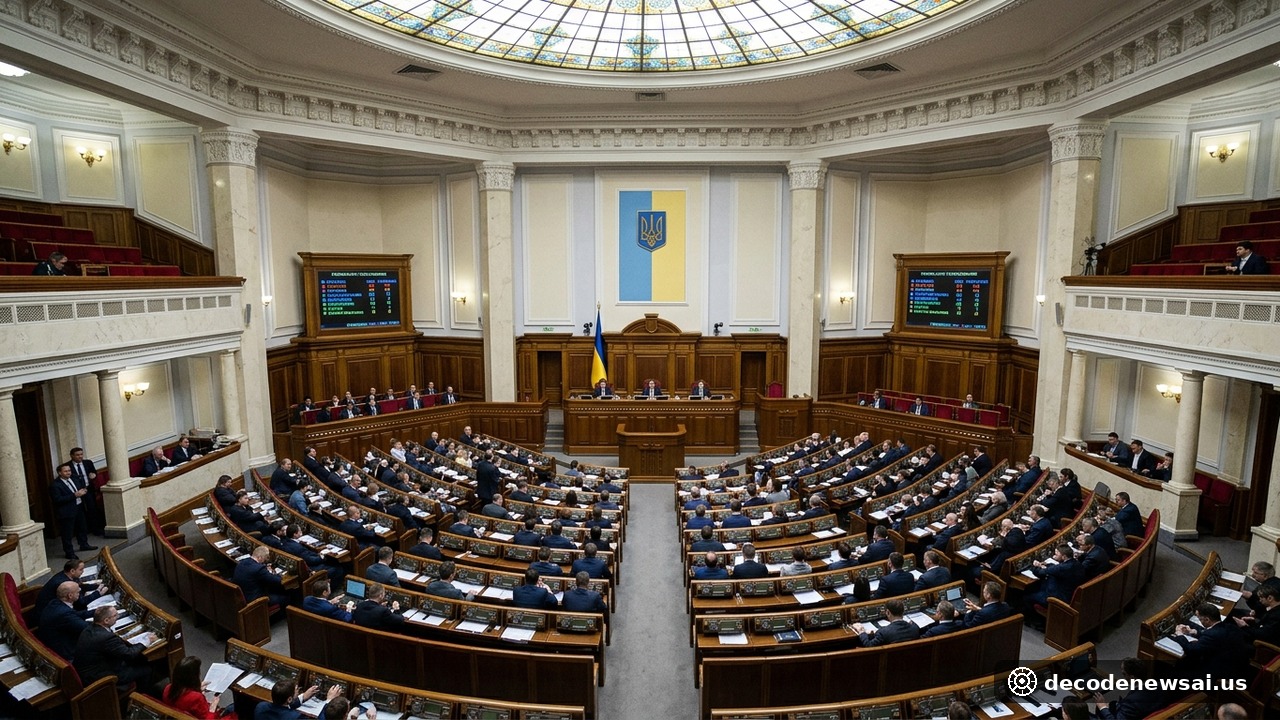
The Verkhovna Rada of Ukraine approved two legislative measures on Tuesday, November 10, 2026, marking the nation's formal entry pathway into the Single Euro Payments Area. Voting with an overwhelming majority of 286 lawmakers in favor, the national parliament passed Draft Laws No. 14327-d and No. 15503 in their initial reading. The statutory packages establish comprehensive legal harmonizations aligning domestic financial regulations with European Union standards and European Payments Council compliance frameworks. Ukrainian businesses and households will secure direct access to streamlined, low-cost euro-denominated financial transactions across continental Europe.
The newly endorsed legislative package establishes unified standards for national registries covering corporate bank accounts and safe-deposit boxes. The statute reinforces whistleblower safeguards and strengthens beneficial ownership disclosure obligations. Under the revised regulatory framework, the statutory transaction reporting threshold subject to mandatory primary financial monitoring was raised from 400,000 hryvnias to 550,000 hryvnias. This procedural adjustment relieves administrative burdens on compliant commercial enterprises while focusing investigative resources on high-risk transfers.
Addressing international correspondents inside the parliamentary chamber in Kyiv, the Chairman of the Parliamentary Committee on Finance, Tax, and Customs Policy emphasized the strategic necessity of the accession measures. The parliamentary leader stated: "Passing the Single Euro Payments Area accession legislation in its first reading establishes an indispensable regulatory bridge connecting Ukraine directly with the broader European common market. Standardizing cross-border payment rules substantially reduces transaction expenses for domestic exporters while accelerating national accession milestones. We remain determined to finalize the secondary reading to ensure timely operational execution."
Integrating into the pan-European payments framework connects Ukrainian financial institutions with 41 participating sovereign territories. Commercial friction will plummet. Official economic models compiled by the Ministry of Finance of Ukraine project that SEPA integration will generate recurring annual savings between 70 million and 100 million euros in waived intermediary banking fees. Cross-border capital remittances and international trade clearances that formerly required several business days will execute within seconds under automated processing rules.
Senior economists from the European Commission and development directors at the World Bank commended the parliamentary vote as a decisive step toward economic resilience. In a formal policy review distributed to European finance ministries, European regulatory officials noted: "Connecting Ukraine to the Single Euro Payments Area provides an ultra-efficient payment pipeline vital for commercial logistics and post-conflict reconstruction capital deployment. Transparent, synchronized banking standards cultivate robust multinational investor confidence. This decisive legislative advancement demonstrates Kyiv's durable commitment to deep institutional modernization."
The National Bank of Ukraine confirmed that bilateral integration drills with major commercial banks are proceeding according to established milestones. Full operational interoperability testing is scheduled to conclude in early 2027.
Strengthening Cross-Border Digital Financial Supervision and Anti-Money Laundering Cooperation
To ensure systemic security following accession to the unified European payments network, Ukrainian financial regulatory authorities formulated rigorous technical compliance frameworks. Regulatory alignment accelerated.
New statutory regulations require all participating commercial banking institutions to conduct periodic cybersecurity resilience audits. Cross-border capital transactions exceeding statutory monitoring limits will undergo automated real-time verification across central bank compliance nodes. Multilateral financial agencies commended the Ukrainian government's institutional execution. Compliance protocols expanded significantly.
Speaking during a concluding press briefing in Kyiv, the Governor of the National Bank of Ukraine affirmed the operational progress: "Technical synchronization with the European Payments Council represents more than payment infrastructure modernization; it fundamentally elevates national financial integrity. We remain dedicated to enforcing rigorous oversight standards that safeguard domestic commercial liquidity." Commercial confidence rebounded across European capital markets.
In addition, macroeconomic research directors and cross-border trade policy analysts emphasized that low-cost euro clearing accelerates bilateral supply chain integration between Ukrainian manufacturers and European industrial partners. By standardizing digital invoice validation and harmonizing automated clearinghouse procedures, the legislative reform provides durable institutional architecture supporting long-term economic reconstruction across Eastern Europe.