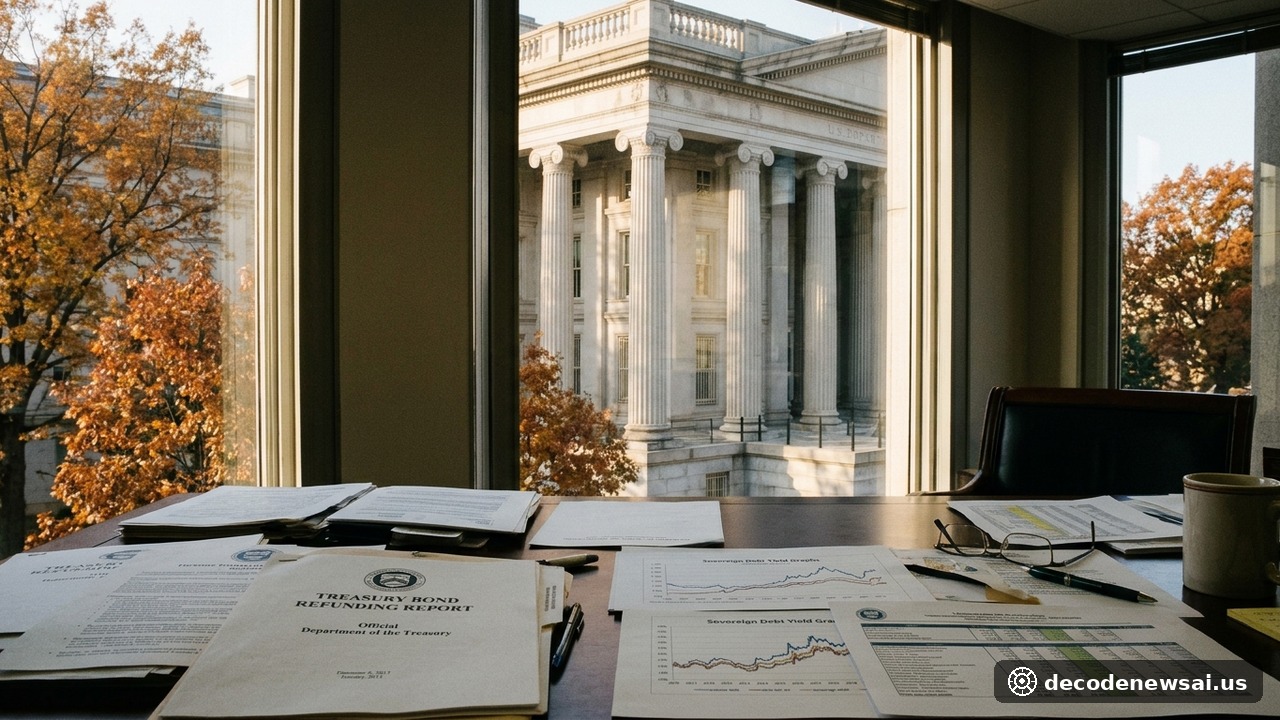
The Congressional Budget Office issued its official Monthly Budget Review for fiscal year 2026 on Monday, November 9, 2026. Nonpartisan analysts reported that the federal budget deficit reached $1.992 trillion for the full fiscal year. The deficit equaled 6.2 percent of gross domestic product. Federal debt held by the public reached 100 percent of GDP.
Deficit Surges to 6.2% of GDP Amid Expenditure Growth
The CBO's annual summary detailed federal financial operations. The 2026 shortfall of 6.2 percent of GDP widened from 5.8 percent in fiscal year 2025. This ratio exceeds the fifty-year historical average of 3.8 percent. Since 1946, the federal deficit has reached or exceeded this level in only eight previous years.
Federal receipts rose 3 percent to $5.403 trillion during fiscal 2026. However, total federal outlays increased at twice that rate, climbing 6 percent to $7.396 trillion. Outlays outpaced revenue collections across mandatory programs and net interest on public debt.
Customs duties and corporate collections fell short of baseline expectations. Net interest costs continued to climb following extended periods of elevated policy rates. The CBO budget summary noted the discrepancy directly: "The deficit in 2026 was $140 billion larger than the shortfall estimated in CBO's baseline projections."
Federal Debt Held by Public Matches Historic 1946 Benchmark
The report revealed a significant milestone in national debt accumulation. By the close of fiscal 2026, debt held by the public reached 100 percent of GDP. This represents the highest level recorded since the immediate aftermath of World War II in 1946. At the end of fiscal 2025, public debt stood at 99.0 percent.
Rising debt totals sparked debate over federal spending priorities on Capitol Hill. Mounting interest expenses now rival major domestic agency appropriations. Benchmark 10-year Treasury yields settled around 4.86 percent as bond markets evaluated federal borrowing needs.
Wall Street investors anticipate that a divided Congress could restrain legislative appropriations. However, mandatory entitlements and interest costs remain largely automatic. Financial institutions continue monitoring the Treasury Department's quarterly refunding auctions closely.
October Monthly Shortfall Climbs to $409 Billion
The CBO also published preliminary estimates for October 2026, the opening month of fiscal year 2027. The federal government incurred a monthly deficit of $409 billion in October. This marked a $125 billion expansion compared to the shortfall recorded in October 2025.
Revenues dropped $36 billion year-over-year while outlays rose $89 billion. Calendar timing shifts contributed to the monthly surge because November 1 fell on a weekend, pushing certain federal benefit distributions into late October. Even adjusting for calendar timing, the underlying monthly deficit widened by $131 billion.
Incoming congressional leaders face complex fiscal deadlines ahead of next year's debt ceiling debate. Lawmakers must navigate appropriations during the current lame-duck session. The expanding deficit underscores long-term structural imbalances in the federal budget.
Fiscal policy researchers noted that the escalation of sovereign debt levels to one hundred percent of gross domestic product intensifies pressure on future budgetary appropriations. With mandatory spending and debt servicing absorbing a growing share of federal revenues, policymakers face narrowing flexibility to address emerging economic priorities. Financial institutions and institutional bondholders are closely watching legislative negotiations during the lame-duck session to gauge long-term federal fiscal governance.
Macroeconomic analysts observed that sovereign debt reaching one hundred percent of gross domestic product increases federal budget sensitivity to interest rate fluctuations. Rising mandatory debt service payments reduce fiscal room for discretionary economic investments and infrastructure programs. Institutional asset managers are carefully evaluating auction demand profiles across medium-term and long-term Treasury issues ahead of the new congressional session.