The United States Food and Drug Administration on Monday ordered manufacturers of glucagon-like peptide-1 receptor agonists to update prescription prescribing information with warnings regarding potential vision loss. Federal health regulators identified consistent statistical links between the widely prescribed diabetes and weight loss medications and non-arteritic anterior ischemic optic neuropathy. The regulatory order impacts millions of patients currently taking blockbuster brand therapies across the United States. Healthcare providers must follow updated safety guidance. Pharmaceutical manufacturers are initiating immediate label revisions.
Clinical Trial Analysis Reveals Six in 100,000 Incidence Rate of Rare Optic Neuropathy
Federal scientists conducted an exhaustive two-year safety review evaluating data across more than 125 randomized clinical trials. The agency's analytical assessment determined that non-arteritic anterior ischemic optic neuropathy occurred in roughly 6 of every 100,000 patients who took a GLP-1 receptor agonist for at least 12 months. In comparison, the baseline incidence rate for control patients receiving a placebo or alternative glucose-lowering agents remained below 4 per 100,000 individuals. The comparative statistical elevation was demonstrable across multiple trial registries. Incidence rates showed clear clinical deviation.
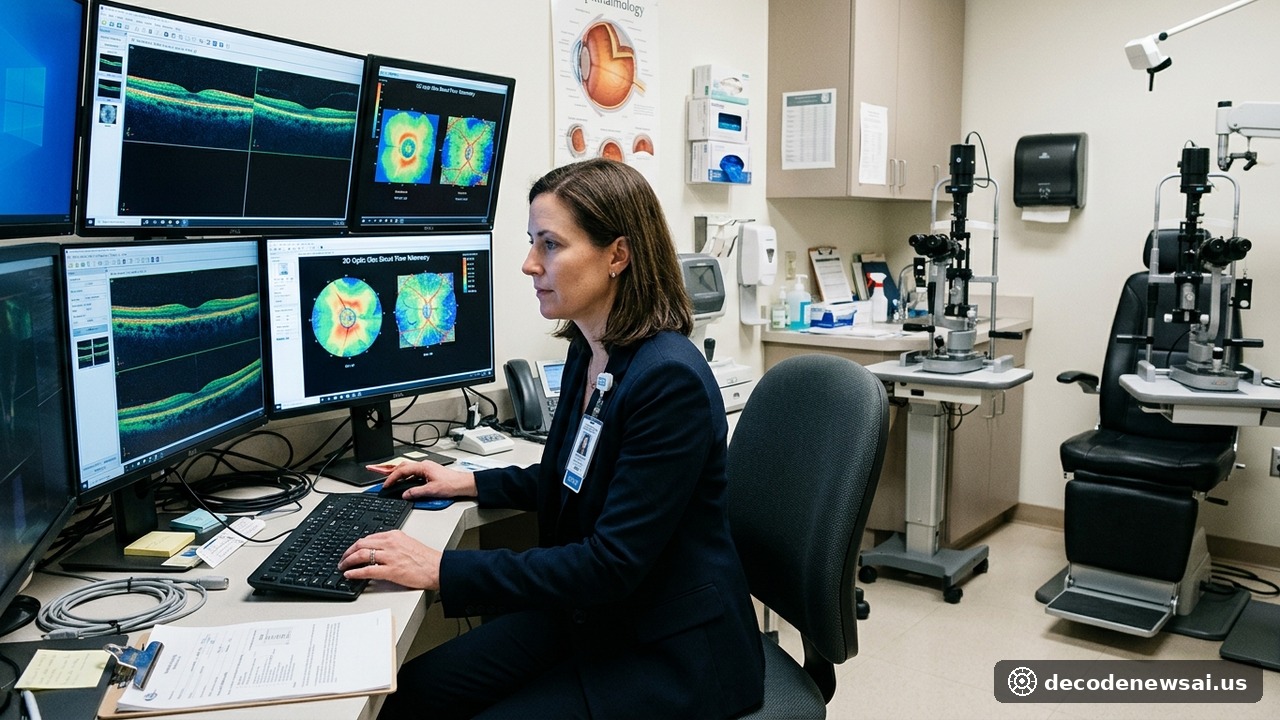
Non-arteritic anterior ischemic optic neuropathy is commonly referred to in medical practice as an eye stroke. The pathology occurs when microvascular blood circulation delivering oxygen to the anterior optic nerve head is suddenly compromised. Affected patients typically awaken with sudden, painless, and severe loss of vision in one eye or localized visual field deficits. Tissue necrosis across the optic nerve is largely permanent. Visual recovery rates are exceptionally low. Clinical ophthalmologists stress that prompt risk awareness is essential.
Dr. Joseph Rizzo of Harvard Medical School discussed the clinical prognosis during an interview with CBS News on Monday. He observed: "Usually when you lose vision, although there may be some mild degree of improvement, it's usually not a large degree of improvement. And unfortunately, a great frustration for so many of our patients and doctors who take care of patients with NAION is the fact that we do not really know how to mitigate the risk." The expert analysis was received with deep concern across clinical networks. Strict adherence to prescription guidance remains vital.
Prescribing Updates Encompass Leading Blockbuster Incretin Formulations
The federal labeling directive applies comprehensively across all approved therapeutic brands within the class. Formulations affected include Novo Nordisk's semaglutide products marketed as Ozempic, Wegovy, and oral Rybelsus, as well as Eli Lilly's tirzepatide treatments known as Mounjaro and Zepbound. These therapies have experienced unprecedented commercial demand due to substantial efficacy in blood sugar control and chronic weight management. More than 15 million patients maintain active prescriptions nationwide. Supply chain compliance teams face immediate operational restructuring.
The agency's formal drug safety communication urges prescribers to review baseline ophthalmic history before initiating therapy. If an individual has previously suffered ischemic optic damage in one eye, initiating GLP-1 therapy carries documented risk of bilateral involvement in the companion eye. Manufacturers are required to submit revised labeling language to the agency within 30 days. Electronic health record vendors began updating clinical decision warning alerts immediately. Informed consent procedures have been strengthened.
Regulatory scrutiny escalated following a formal determination by the Danish Patient Compensation Association, which approved financial compensation claims for four patients who developed irreversible vision damage following treatment. That decision reinforced safety investigations conducted by international health authorities. Multiple regulatory agencies across Europe and Asia have initiated parallel assessments. Health ministries are coordinating observational findings.
Clinical Guidance and Emergency Protocols for Sudden Visual Symptoms
Addressing the broad population of patients currently utilizing prescribed GLP-1 therapies, the FDA emphasized that individuals should not discontinue their prescribed medications without consulting their physician. Abrupt cessation of insulin-sensitizing agents can precipitate severe diabetic ketoacidosis and serious cardiovascular complications. For the vast majority of diabetic patients, metabolic therapeutic benefits substantially outweigh the statistical risk of rare ophthalmic complications. Prudent clinical evaluation remains essential. Public apprehension is being managed through professional medical education.
The agency established concise self-monitoring protocols for individuals taking the medications. Patients experiencing blurred vision, expanding blind spots, distorted color perception, or sudden unilateral visual loss must contact a qualified ophthalmologist within 24 hours. Early identification of optic disc edema provides the only viable opportunity to preserve residual visual function. Primary care networks are coordinating closely with specialized eye clinics.
Wall Street healthcare analysts noted that the new warning could moderate consumer demand across the elective weight loss market segment. While the eye condition remains an exceptionally rare clinical event, the introduction of formal safety warnings will prompt closer medical supervision. Global drug development programs for next-generation incretin molecules will face higher scrutiny regarding neurovascular safety profiles. The pharmaceutical regulatory environment is placing primary emphasis on long-term patient safety.