WASHINGTON - The United States Food and Drug Administration issued a comprehensive drug safety communication on Monday, November 9, requiring manufacturers of all approved glucagon-like peptide-1 receptor agonists (GLP-1 RAs) to update prescribing information. The class-wide safety mandate requires drugmakers to add clinical warnings regarding the potential risk of non-arteritic anterior ischemic optic neuropathy (NAION), a rare but serious eye condition that can cause sudden and irreversible vision loss. The regulatory directive applies across both injectable and oral formulations.
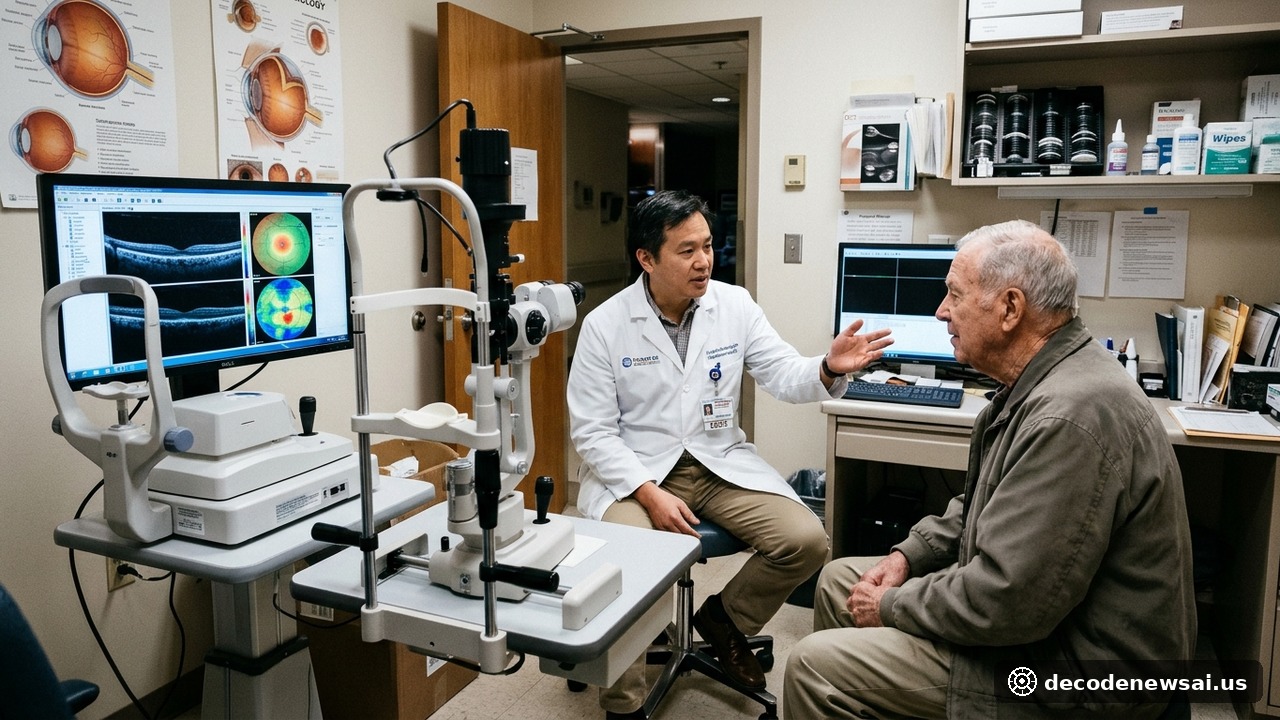
NAION risk and vision loss explained by doctor
The regulatory order impacts the pharmaceutical industry's most widely prescribed metabolic therapies, including semaglutide products manufactured by Novo Nordisk (Ozempic and Wegovy) alongside tirzepatide treatments produced by Eli Lilly and Company (Mounjaro and Zepbound). Older GLP-1 formulations, including dulaglutide and liraglutide, are also subject to the mandatory labeling revision. Drugmakers must submit revised draft prescribing documentation within 30 days.
Non-arteritic anterior ischemic optic neuropathy occurs when blood flow to the optic nerve head is acutely compromised, precipitating ischemic swelling that damages optical nerve fibers. The condition typically presents as sudden, painless vision loss in one eye, frequently resulting in permanent visual field deficits. Clinical ophthalmology currently possesses no approved therapeutic agents to restore vision once optic nerve necrosis occurs.
Dr. Joseph Rizzo, Director of Neuro-Ophthalmology at Massachusetts Eye and Ear and an investigator of drug-associated optic neuropathies, discussed the clinical implications during an interview on Monday: "Usually when you lose vision from NAION, although there may be some mild degree of improvement, it is usually not a large degree of improvement, and a great frustration for patients and physicians is the fact that we do not really know how to mitigate the risk."
FDA evidence, company responses and monitoring needs
The FDA stated that the regulatory intervention followed extensive signal detection analyses within the FDA Adverse Event Reporting System (FAERS), corroborated by peer-reviewed epidemiological cohort evaluations published in major ophthalmology journals. While reported cases remain statistically rare relative to the tens of millions of active prescriptions, regulators identified a persistent temporal association. Patients with prior NAION occurrences face elevated risks of bilateral recurrence upon commencing GLP-1 therapy.
Eli Lilly and Novo Nordisk issued formal statements confirming receipt of the FDA directive, affirming full compliance with federal labeling guidance. The manufacturers emphasized that extensive cardiovascular and glycemic outcomes trials continue to demonstrate favorable risk-benefit profiles for approved indications. Endocrine societies urged patients not to discontinue prescribed therapies without consulting their physicians.
The FDA's class-wide safety directive emphasizes the necessity of rigorous post-marketing surveillance as novel therapeutic classes achieve mass commercial adoption. Endocrinology specialists and ophthalmic societies noted that while the absolute statistical incidence of NAION remains exceptionally low, proactive clinician awareness is essential to prevent permanent visual impairment. Comprehensive baseline retinal examinations allow clinicians to identify pre-existing microvascular vulnerabilities before initiating GLP-1 receptor agonist treatment regimens.
Balanced labeling and patient dialogue preserve benefits
Medical researchers stressed that patients managing severe diabetes and clinical obesity should maintain structured dialogue with their healthcare providers rather than abruptly discontinuing prescribed treatments. The proven cardiovascular, renal, and metabolic benefits of GLP-1 therapies continue to offer substantial clinical advantages for millions of patients worldwide. By instituting transparent labeling standards, regulatory authorities empower patients and physicians to make fully informed healthcare decisions while advancing rigorous pharmacological safety benchmarks globally.
Clinical pharmacology researchers and patient advocacy groups underscored that balanced regulatory labeling empowers healthcare providers to optimize therapeutic outcomes safely. Establishing standardized baseline screening protocols allows clinicians to identify rare ocular vulnerabilities while preserving the profound cardiometabolic benefits of GLP-1 therapies for chronic disease management. Transparent regulatory oversight reinforces public trust and maintains rigorous safety benchmarks across innovative global medicine.