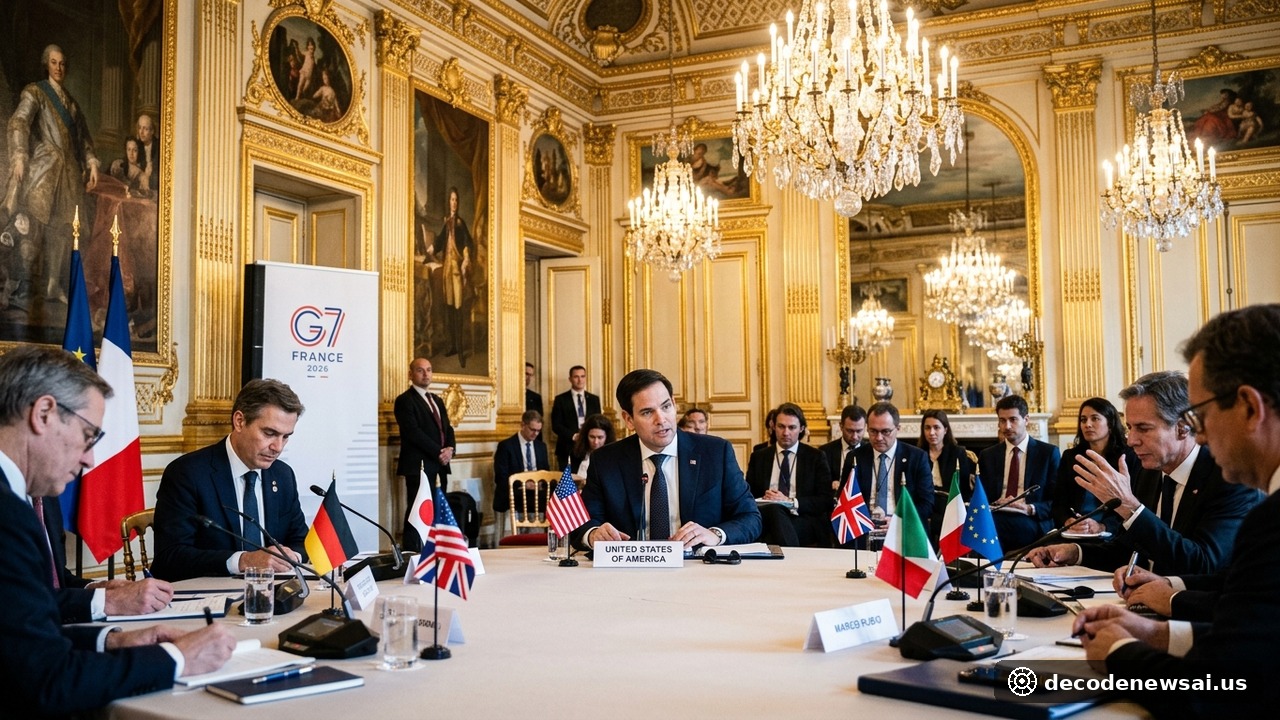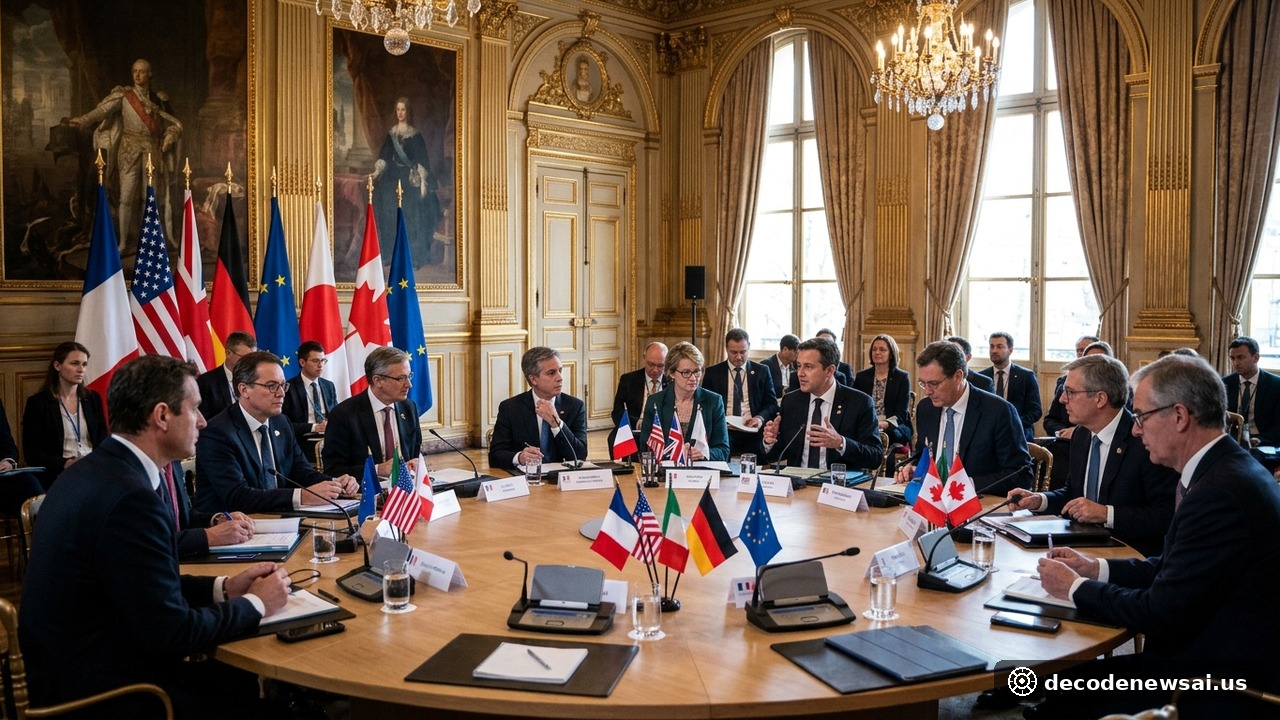
Foreign ministers from the Group of Seven industrialized democracies convened in Paris on November 9, 2026, for two days of high-stakes diplomatic deliberations. United States Secretary of State Marco Rubio attended the summit during his first overseas trip following his party's midterm election losses. French Foreign Minister Jean-Noel Barrot hosted the opening bilateral and plenary sessions at the Quai d'Orsay. Top diplomats from the US, Britain, Canada, France, Germany, Italy, Japan, and the European Union tackled deep divisions over postwar security guarantees for Ukraine and escalating transatlantic friction regarding international judicial institutions.
Rubio faces European anxiety over Abu Dhabi talks and ICC sanctions
The Paris gathering directly coincided with imminent United States-mediated trilateral peace discussions scheduled in Abu Dhabi involving American, Ukrainian, and Russian delegations. European governments have voiced profound apprehension over being sidelined from core security negotiations determining the future territorial and defensive architecture of Europe. While US officials indicated European allies would not sit at the primary trilateral table in Abu Dhabi, Washington agreed to prior consultations regarding defensive assurances.
European partners fear rapid concessions could permanently compromise NATO's eastern frontier and reward military aggression. Following meetings with French and British counterparts, Secretary Rubio sought to reassure allies while maintaining a realistic assessment of the diplomatic track. He told reporters: "Ultimately, it would be a positive, but we have got a ways to go. But it is good that they are talking, it is good that the trilateral talks are on again."
Simultaneously, severe friction erupted over the Trump administration's aggressive policy toward the International Criminal Court (ICC). Washington has imposed sweeping sanctions and visa cancellations against ICC judges and staff, accusing the tribunal of overstepping its jurisdiction to target American personnel. Every other G7 nation belongs to the Rome Statute that established the court. European leaders expressed outrage over the punitive measures, with the European Union preparing blocking statutes to shield European entities from secondary American sanctions.
Kallas defends ICC as summit tests US policy continuity
European Union High Representative for Foreign Affairs Kaja Kallas mounted a forceful defense of the tribunal during bilateral exchanges with Rubio in Paris. She emphasized that international legal institutions remain vital pillars of global stability that cannot be discarded during crises. Kallas stated: "In this moment where we see more war crimes across the world committed, we need more accountability, not less."
The summit also served as a crucial bellwether for European allies seeking to gauge American foreign policy continuity after the balance of power shifted in the United States Congress. European diplomats questioned whether domestic political setbacks would temper the administration's unilateral postures on tariffs, multilateral bodies, and Middle Eastern military operations. Rubio firmly signaled that President Donald Trump intends to maintain his geopolitical trajectory without compromise.
Discussions on the Persian Gulf and maritime security in the Strait of Hormuz underscored ongoing shared risks. American diplomats briefed partners on recent targeted operations against coastal facilities while European ministers urged restraint to prevent broader regional conflict. The G7 foreign ministers are expected to release a joint communique on November 10 reflecting baseline consensus on humanitarian aid and economic coordination. However, underlying strategic fractures between Washington and its European allies remain sharply defined.
Analysts weigh midterm shifts on transatlantic diplomacy
Diplomatic historians and foreign policy analysts noted that midterm congressional power shifts traditionally introduce tactical recalibrations in American bilateral engagements. While executive authority over foreign diplomacy remains constitutionally concentrated in the presidency, incoming congressional committee leadership can exert substantial leverage through budgetary authorizations and confirmation hearings. European diplomatic delegations in Paris emphasized the critical necessity of sustained transatlantic alignment regarding defense industrial cooperation and intelligence sharing. Discussions among G7 foreign ministers underscored a shared determination to preserve multilateral diplomatic channels despite growing friction over judicial sovereignty and economic sanctions.