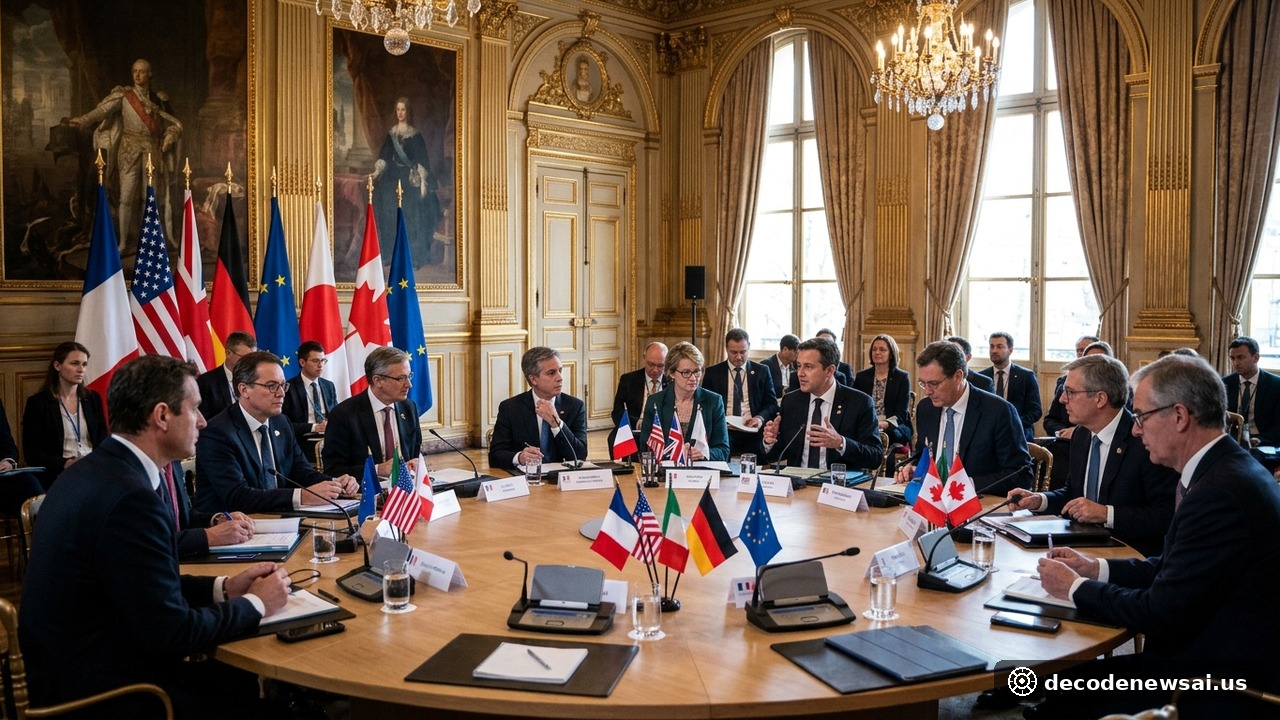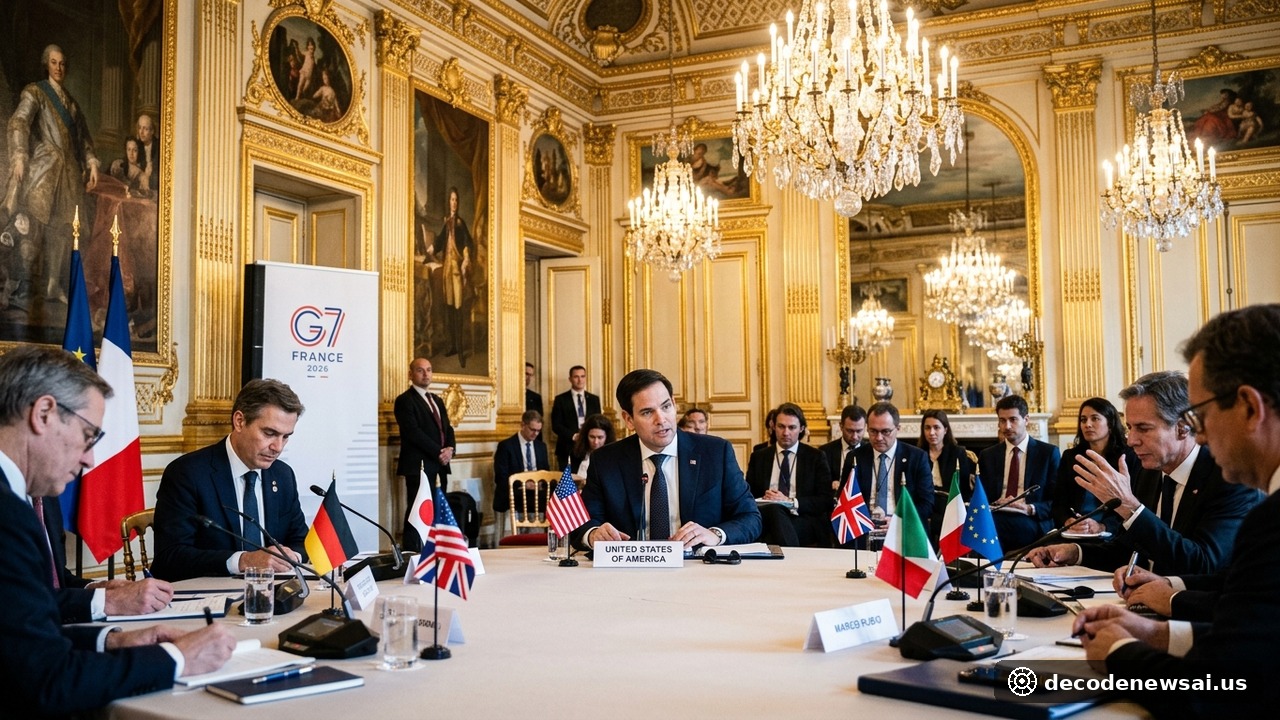
PARIS - United States Secretary of State Marco Rubio arrived in Paris on Monday, November 9, embarking on an intensive round of multilateral diplomatic consultations with counterparts from the Group of Seven industrialized nations. Marking his first official European diplomatic mission following the United States midterm elections, Secretary Rubio led American delegations through working sessions focusing on global governance frameworks for frontier artificial intelligence, volatile developments in the Middle East, and ongoing security commitments regarding Ukraine.
G7 ministers discuss Super Intelligence and Ukraine
According to the official diplomatic itinerary released by the United States Department of State, Secretary Rubio participated in a specialized G7 ministerial session dedicated specifically to Super Intelligence on Monday afternoon. Foreign ministers reviewed systemic geopolitical risks associated with sovereign frontier computing infrastructure and automated cyber operations. The G7 partners reaffirmed common principles aimed at preventing the weaponization of frontier algorithmic capabilities while instituting shared risk mitigation protocols.
Secretary Rubio addressed foreign ministers during working deliberations in Paris, underscoring American foreign policy priorities across emerging technologies. Rubio stated: "We must ensure that the development of frontier artificial intelligence advances the shared security interests of democratic societies while strictly protecting critical technological capabilities from hostile exploitation." Allied foreign ministers expressed strong alignment with the policy framework.
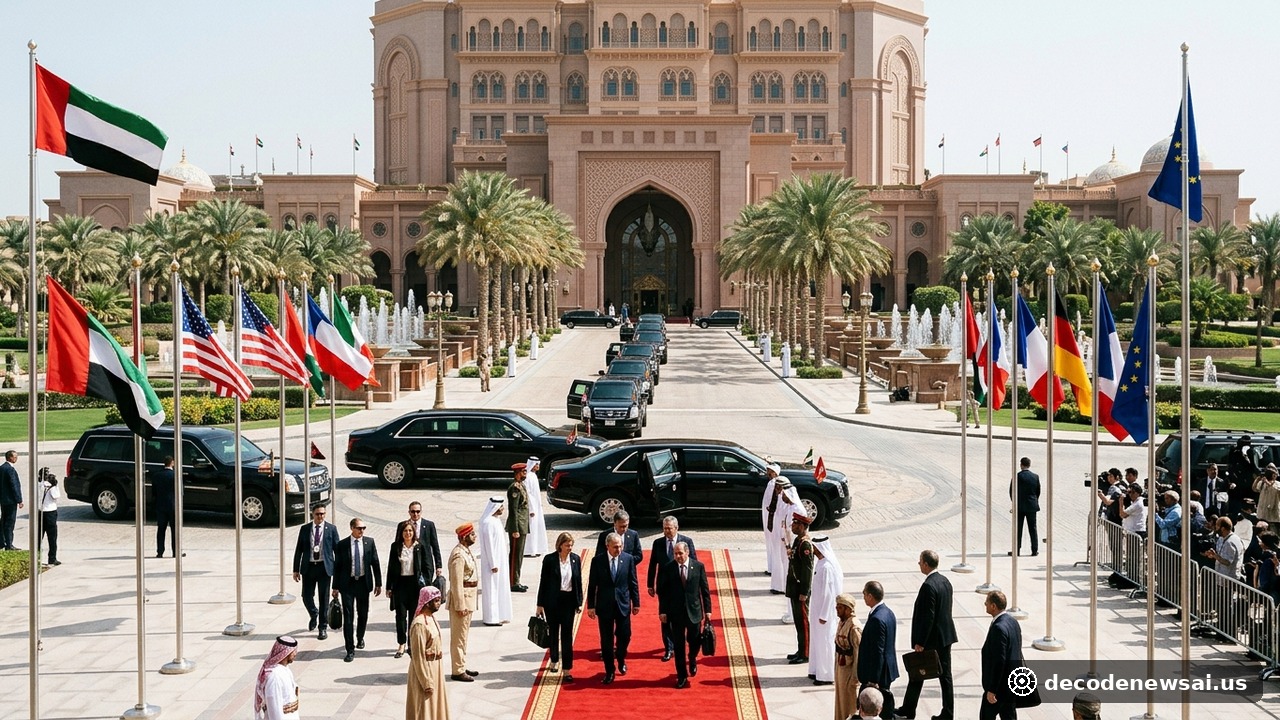
Outside multilateral ministerial assemblies, Secretary Rubio engaged in bilateral consultations with German Foreign Minister Johann Wadephul and French Foreign Minister Jean-Noel Barrot. Bilateral discussions centered heavily on freedom of navigation throughout vital maritime transit corridors across the Persian Gulf and Red Sea, where regional escalation risks remain elevated. Diplomats assessed preliminary trilateral diplomatic contacts taking place in Abu Dhabi regarding Ukraine, emphasizing that any sustainable diplomatic resolution requires ironclad multilateral defensive guarantees.
Rubio meets Macron on NATO burden-sharing
At 6:45 p.m. local time on Monday, Secretary Rubio concluded bilateral proceedings with an evening meeting at the Elysee Palace with French President Emmanuel Macron. Discussions addressed burden-sharing obligations across NATO and coordinated transatlantic industrial supply chain security. European diplomatic observers emphasized that Rubio's mission demonstrated continuity across core United States strategic commitments despite shifts in the legislative balance of power in Washington.
During working lunches with French and German foreign policy counterparts, Secretary Rubio reiterated that United States strategic defense commitments remain completely binding across key alliances. Discussions focused on maintaining secure commercial maritime lanes throughout the Red Sea, countering regional drone proliferation, and ensuring continuous humanitarian distribution channels across conflict-affected civilian corridors. The delegation coordinated joint monitoring protocols to track unauthorized dual-use hardware shipments across regional waters.
European defense strategists noted that personal diplomatic engagement by the Secretary of State shortly after domestic legislative elections provides vital reassurance to NATO partners. The G7 foreign ministers agreed to establish an intergovernmental working taskforce dedicated to standardizing frontier artificial intelligence testing benchmarks before the conclusion of 2027. The ministerial framework underscores that shared democratic principles and collective security obligations remain central to international diplomacy amid evolving technological frontiers.
Paris talks lay groundwork for future accords
Diplomatic correspondents traveling with the United States delegation observed that multilateral engagements in Paris laid essential groundwork for forthcoming bilateral accords. Allied foreign ministries reaffirmed their joint resolve to monitor international maritime traffic, uphold humanitarian relief conventions, and collaborate on shared technological safety standards globally. Secretary Rubio's high-level deliberations reflect enduring transatlantic partnerships committed to multilateral stability and technological resilience. Allied foreign policy delegations agreed to maintain coordinated channels of communication ahead of ministerial summits planned for early next year. Constructive diplomatic cooperation ensures that shared democratic interests remain safeguarded across international assemblies. Diplomats noted that maintaining close bilateral dialogue ensures predictable economic, technological, and defense cooperation among democratic allies during periods of global geopolitical transition.