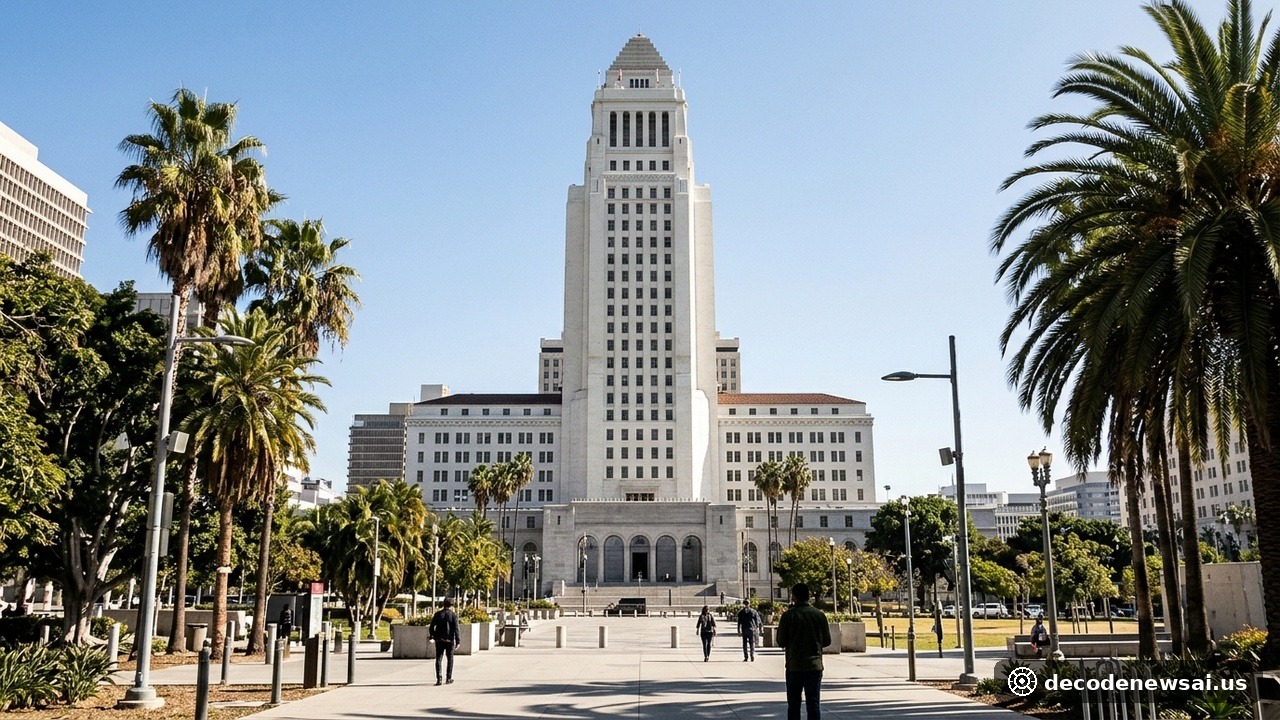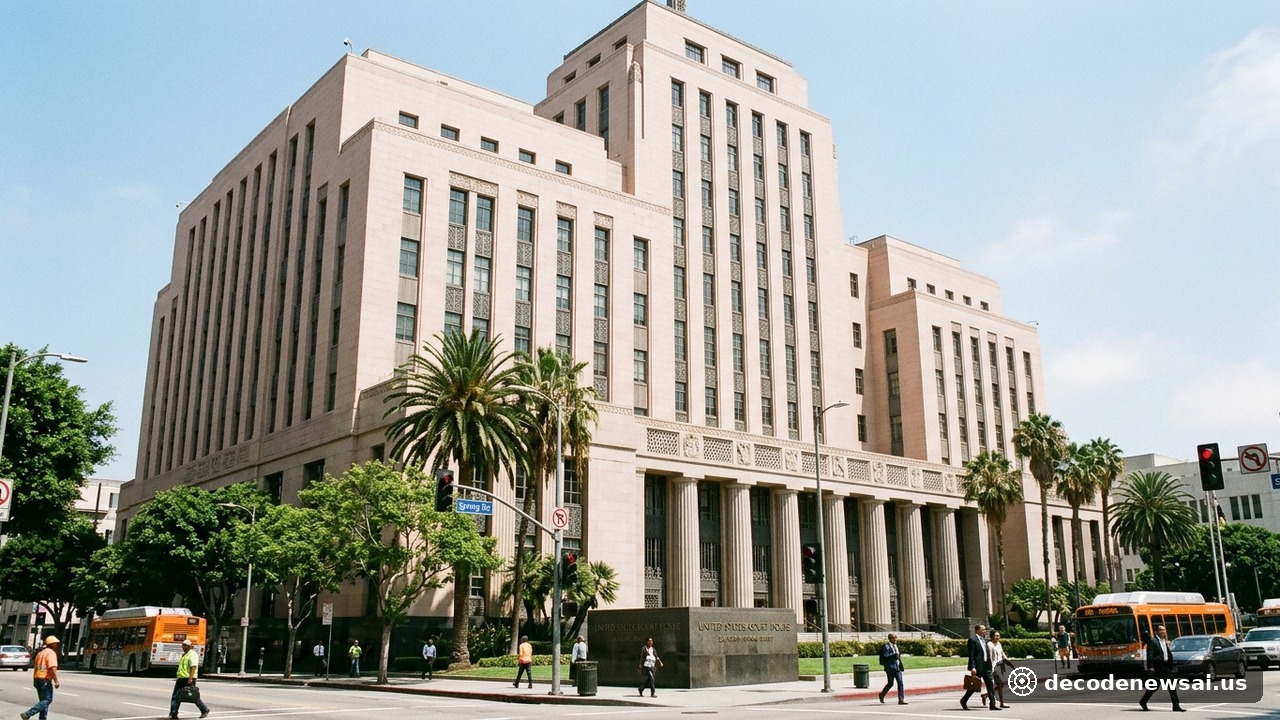
The United States General Services Administration (GSA) formally initiated public property disposition proceedings on November 9, 2026, offering the historic 14-story federal courthouse on Spring Street in downtown Los Angeles for private commercial acquisition. The monumental Art Moderne landmark, encompassing approximately 750,000 square feet near Los Angeles City Hall, has been targeted for accelerated federal divestment. The action reflects a sweeping nationwide campaign by federal property administrators to eliminate holding expenditures associated with underutilized civic architecture.
s Underwood courthouse hosted Mendez v. Westminster and Brown groundwork
Constructed during the 1930s and designed by acclaimed federal architect Gilbert Stanley Underwood, the Spring Street complex is listed on the National Register of Historic Places. The building historically served as the regional headquarters for the United States Court of Appeals for the Ninth Circuit and the United States District Court for the Central District of California. It served as the setting for landmark legal milestones, including Mendez v. Westminster, the pivotal 1947 civil rights ruling that dismantled racial segregation across California public schools and laid the constitutional groundwork for Brown v. Board of Education.
The facility became largely surplus following the completion of the modern 600,000-square-foot United States Courthouse nearby on First Street in 2016. Federal judicial chambers, the United States Marshals Service, and federal prosecutors relocated to the new high-security complex, leaving substantial sections of the historic Spring Street property unoccupied. Portions of the former federal courtrooms are currently leased on an interim basis by the Superior Court of Los Angeles County.
In official disposition notices published on its portal, the GSA emphasized that shedding redundant federal properties protects public finances. Maintaining aging historic structures requires tens of millions of dollars in deferred maintenance, seismic retrofitting, and energy utilities. The GSA official notice stated: "The GSA is focused on rightsizing the federal real estate portfolio to reduce the burden on the American taxpayer."
Under federal statutory property disposal procedures, surplus properties must first be screened for potential public benefit conveyances, including adaptive re-use for municipal administrative services or supportive affordable housing. If regional public agencies decline to acquire the property, the federal government will proceed with an open competitive commercial auction open to private real estate investors and developers.
The announcement sparked acute concern among Southern California architectural historians and urban preservationists. Dan Rosenfeld, a prominent California real estate executive who formerly managed civic real estate portfolios for both city and state agencies, expressed dismay at the rapid disposition timeline. Rosenfeld warned that aggressive commercial auctions could jeopardize the building's irreplaceable historic courtrooms, ornate plasterwork, and historic murals.
Preservation organizations urged federal officials to attach binding preservation covenants to the deed prior to transfer. The GSA confirmed that any eventual commercial conveyance will comply with Section 106 of the National Historic Preservation Act to protect significant architectural features. Commercial bidding guidelines are expected to be published early in 2027.
Commercial real estate strategists and urban renewal specialists pointed out that the disposal of underutilized federal judicial assets offers unique opportunities for metropolitan downtown revitalization. Adapting mid-century monumental architecture for modern municipal, educational, or creative commercial purposes requires careful alignment between private capital investment and rigorous historic preservation mandates. The General Services Administration's portfolio right-sizing initiative reflects broader administrative efforts to compress federal operational footprints following the widespread adoption of remote telework and consolidated federal courthouses. Urban planning groups in Los Angeles highlighted the potential for adaptive re-use concepts that preserve historic public courtrooms while introducing vibrant mixed-use facilities into the civic center district. Prospective commercial developers and institutional preservation trusts are expected to review formal property condition assessments as federal authorities prepare official bidding documentation.