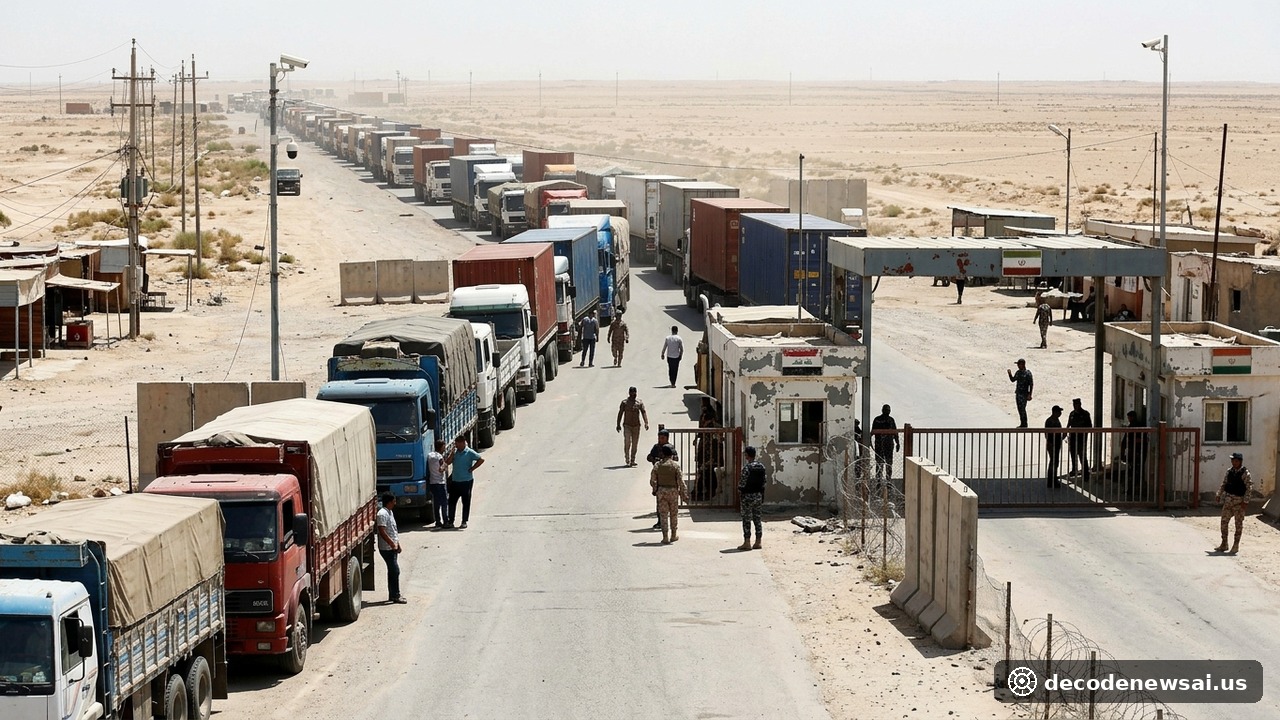
The Iraqi Ministry of Interior's General Authority for Border Crossings officially reopened the vital Al-Sheeb border terminal in southern Missan province on Tuesday, November 10, 2026, fully restoring commercial freight transit and bilateral passenger immigration with the Islamic Republic of Iran. The strategic land terminal had been temporarily shuttered in mid-October following diplomatic pressure from the United States aiming to restrict regional trade channels into Tehran. Baghdad's formal decision reflects growing determination to prioritize domestic economic stability and sovereign border management over external geopolitical directives.
Al-Sheeb closure disrupted border commerce and logistics
The Al-Sheeb port of entry serves as a primary logistical corridor linking southern Iraq with Iran's industrial Khuzestan province, facilitating daily exchanges of consumer agricultural goods and building materials.
The temporary closure imposed significant commercial disruptions on provincial logistics providers, merchant networks, and thousands of border residents dependent on cross-border market activity. Confirming the operational resumption during a press conference in Baghdad, an executive border administration official stated: "Reopening this vital international transit corridor represents a sovereign administrative prerogative of the Iraqi state. Baghdad remains obligated to protect the economic welfare of our border provinces, and we will not permit unilateral external mandates to compromise essential domestic commerce."
Technical administrative inspections confirmed that automated customs processing networks, biometric verification gates, and commercial freight weigh stations resumed full continuous operations on Tuesday morning.
Baghdad balances US security ties with Iran trade
Regional political analysts noted that the decision underscores Baghdad's ongoing pursuit of balanced multilateral foreign policy amidst acute regional tensions. While maintaining strategic security partnerships with the United States, Iraq remains structurally dependent on Iranian imports for electrical grid stability and domestic natural gas supplies. Total annual bilateral non-oil commercial exchange between the two neighboring states routinely surpasses several billion dollars, rendering total economic isolation practically unworkable for domestic civil infrastructure.
Commercial logistics syndicates and provincial chambers of commerce welcomed the reopening, highlighting that uninterrupted overland freight transit lowers transportation costs across regional supply chains. Bilateral technical delegations are scheduled to convene in late November to formalize upgraded customs inspection standards, ensuring steady cross-border logistics flows across the shared frontier.
Multilateral commercial logistics operators and maritime terminal authorities reported that standardizing cross-border compliance classifications minimizes administrative friction while facilitating steady trade flows across global shipping corridors. Because modern advanced manufacturing platforms depend on synchronized component deliveries, predictable regulatory oversight prevents inventory bottlenecks and maintains stable factory operations. Trade compliance executives highlighted that digital documentation processing streamlines administrative overhead for international carriers, reinforcing commercial partnerships and sustaining steady transpacific bilateral commerce throughout the scheduled exemption period.
Analysts say open borders protect regional supply chains
International trade compliance specialists and Middle East logistics analysts emphasized that overland transit corridors remain indispensable for commercial stability across regional manufacturing hubs. Because neighboring emerging markets depend on bilateral freight exchanges for raw materials and perishable foodstuffs, maintaining open cross-border crossing infrastructure prevents severe supply chain dislocations in peripheral economic zones. Regional customs coordination directors confirmed that automated inspection telemetry and electronic manifest filing operated smoothly without administrative transit backlogs. Diplomatic research institutes commended Baghdad's balanced foreign policy orientation, noting that pragmatic regional economic engagement supports lasting commercial resilience and cooperative neighborly relations throughout the Middle East.
Regional economic development syndicates and logistics operators observed that maintaining steady border transit corridors protects thousands of peripheral jobs across border governorates. Because international commerce relies on predictable overland routing, reopening key border crossings ensures continuous distribution of essential foodstuffs and construction materials. Diplomatic research fellows emphasized that fostering balanced regional trade ties mitigates political friction and advances lasting stability throughout the Middle East.
Furthermore, international trade federations confirmed that modern customs infrastructure and automated clearance lanes reduce transit delays for commercial logistics fleets. Cross-border merchants expressed satisfaction with the reopening of freight processing centers, noting that reliable land transit helps stabilize commodity prices across adjacent municipal markets.