NEW YORK - Comprehensive macroeconomic intelligence published by Interactive Brokers and BNP Paribas on Monday, November 9, indicates that the United States economy demonstrated resilient expansion throughout the third quarter of 2026. Real gross domestic product increased at an annualized rate of 3.4 percent, accelerating from 2.2 percent recorded in the second quarter and outpacing institutional consensus estimates. Labor market data confirmed parallel durability, with nonfarm payrolls expanding by 165,000 positions in October.
Business investment and payrolls drive economic resilience
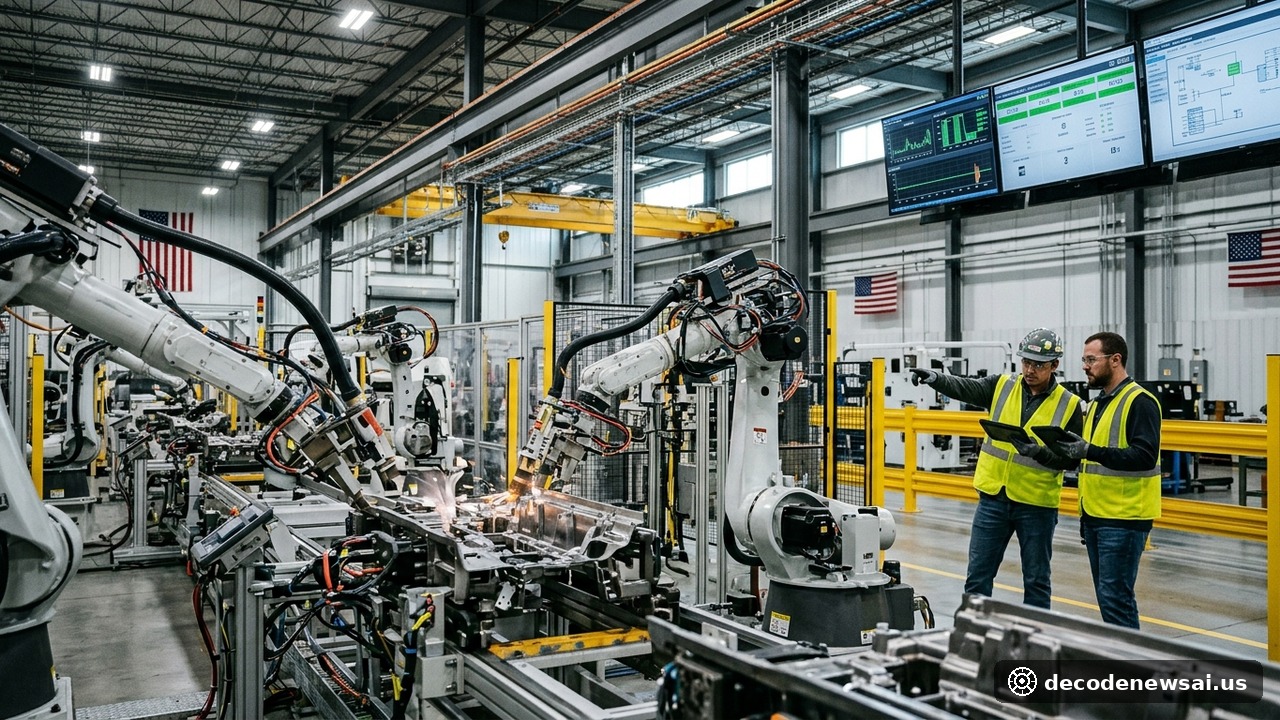
The acceleration in third-quarter economic output was anchored by aggressive commercial fixed investment. Real nonresidential fixed investment surged 12.7 percent on an annualized basis, reflecting multi-billion-dollar corporate capital outlays dedicated to artificial intelligence computational clusters and commercial grid infrastructure. Real final sales to private domestic purchasers advanced 4.9 percent, illustrating durable underlying domestic demand that counterbalanced headwinds originating from international net export deficits.
The Chief Strategist for Interactive Brokers stated in a research note on Monday: "Macroeconomic telemetry highlights exceptional underlying resilience across the domestic economy. Robust nonresidential investment paired with upside labor market performance provides durable fundamental support for capital markets." Quantitative asset management teams commended the solid corporate expenditure metrics.
Labor Department revisions reinforced the constructive employment landscape, adding a combined 84,000 jobs to previous August and September payroll totals. Average hourly earnings increased by 0.4 percent month-over-month, representing the most rapid monthly acceleration in twelve months, while the headline unemployment rate held steady at 4.1 percent. Bipartisan employment growth concentrated within specialized business professional services, transportation logistics, and healthcare delivery networks.
Inflation at 3.7 percent tests Federal Reserve rate policy
However, persistent price pressures continue to complicate central bank interest rate calibration. Driven by sharp rallies in wholesale energy commodities, headline consumer price index inflation advanced 0.6 percent month-over-month, pushing the annualized inflation rate to 3.7 percent. The persistence of above-target inflation reinforced the Federal Reserve's decision to maintain the federal funds target range at 3.75 to 4.00 percent following a 10-2 vote at its latest monetary policy gathering.
Global institutional economists observed that strong real investment cycles and robust private balance sheets provide substantial ballast against global geopolitical shocks. Maintaining equilibrium between solid domestic expansion and controlled inflation remains the defining operational challenge governing international macroeconomic trajectories heading into fiscal 2027.
Institutional macroeconomic strategists and quantitative portfolio managers noted that third-quarter real GDP accelerating to 3.4 percent highlights the broad-based durability of domestic demand. Substantial double-digit increases in business capital expenditures demonstrate that enterprise investments in technological automation and artificial intelligence infrastructure are providing sustainable economic stimulus. Combined with robust employment expansion of 165,000 nonfarm payrolls and stable 4.1 percent unemployment, the domestic economy retains substantial momentum heading into the fourth quarter. Central bank observers emphasized that maintaining balanced monetary calibration will ensure that productive capital investment continues driving non-inflationary growth across diverse industrial sectors.
Economists affirm GDP growth and 165,000 payroll gains
Macroeconomic research economists and quantitative asset managers emphasized that accelerating third-quarter GDP growth underscores the broad-based resilience of domestic business investment. Labor market analysts pointed out that steady job creation of 165,000 payroll positions combined with a low 4.1 percent unemployment rate provides vital household purchasing power stability. Central banking policy observers affirmed that balanced monetary calibration will support sustainable non-inflationary economic growth across diverse industrial and manufacturing sectors. Macroeconomic surveillance analysts affirmed that robust corporate capital expenditures and solid employment growth reinforce domestic economic resilience. Maintaining disciplined financial risk management allows commercial banking institutions and households to navigate shifting monetary policy environments sustainably. Federal Reserve economists affirmed that comprehensive macroeconomic surveillance ensures that financial institutions and households maintain sustainable balance sheets amidst changing credit conditions.