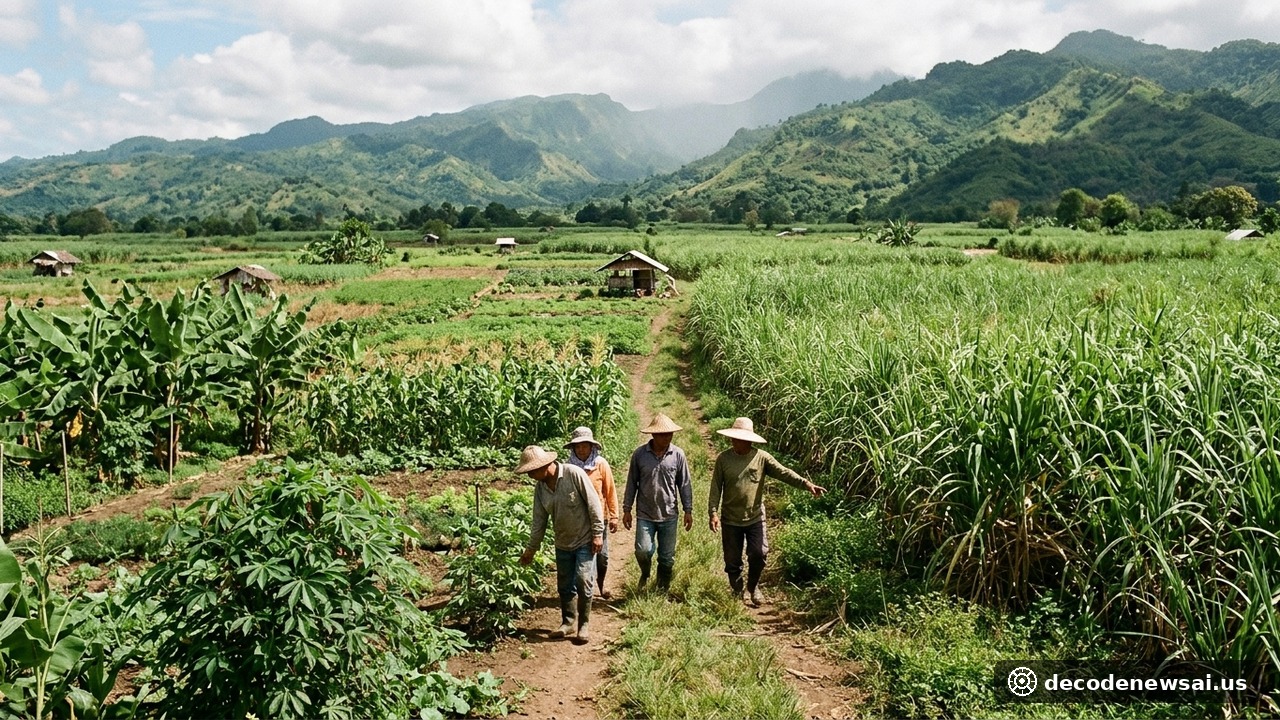
The Philippine Statistics Authority (PSA) released its official regional poverty monitoring bulletin in Manila on November 9, 2026, documenting significant economic improvements across the newly organized Negros Island Region (NIR). According to official household survey data, the family poverty incidence across the region fell by approximately 8 percentage points compared to prior baseline surveys, marking one of the steepest poverty reduction trajectories recorded anywhere in the archipelago over recent years.
Poverty incidence falls from 28.4% to 20.4%
The detailed empirical report, compiled by the PSA's Social Sector Statistics division, revealed that the proportion of families whose per capita income fell below the established regional poverty threshold dropped from 28.4% to 20.4%. The scientific sampling covered thousands of urban and rural households distributed across Negros Occidental, Negros Oriental, and Siquijor provinces.
Poverty thresholds in the Philippines are established by calculating the minimum annual per capita income required for an average family of five to satisfy basic nutritional food intake and essential non-food physiological necessities. In addition to the primary poverty incidence drop, the poverty gap ratio—measuring the average income shortfall of poor families from the poverty threshold—narrowed by 4.6 percentage points, indicating rising living standards among rural agrarian populations.
PSA senior macroeconomists highlighted the structural economic transitions driving rural income growth across Negros Island. Historically, the regional economy was heavily dependent on monoculture sugarcane cultivation, which exposed thousands of seasonal farm workers (sacadas) to chronic seasonal underemployment and food vulnerability between harvests.
Dr. Claire Dennis S. Mapa cites agricultural diversification gains
Over the past three years, coordinated provincial initiatives and national infrastructure investments accelerated agrarian diversification. Smallholder farming associations successfully expanded commercial cultivation into high-yield fruit orchards, aquaculture, poultry farming, and organic cacao processing. Concurrently, public infrastructure investments completed regional arterial road networks and coastal shipping links, allowing smallholders to transport fresh produce directly to metropolitan urban markets in Cebu and Iloilo without paying exorbitant intermediary transport costs.
During an official press conference at PSA central headquarters in Quezon City, National Statistician and Civil Registrar General Dr. Claire Dennis S. Mapa analyzed the socio-economic milestones. Dr. Mapa commended provincial poverty mitigation efforts while urging sustained policy vigilance. Dr. Mapa stated: "The eight percentage point reduction in family poverty across the Negros Island Region demonstrates that agricultural diversification and targeted local employment programs are delivering measurable improvements for rural households."
The PSA report emphasized that while headline gains are substantial, smallholder farming communities remain vulnerable to climate-induced disruptions, including recurrent tropical typhoons and El Nino drought cycles. State economic planning officials called on national agrarian agencies to expand parametric crop insurance coverage and rural microfinance initiatives to protect gains as the regional development framework expands.
Negros diversification blueprint for rural poverty reduction
Macroeconomic development specialists and agrarian policy economists highlighted that regional poverty reduction hinges on transforming single-crop agricultural regions into integrated multi-sector economies. The successful diversification of Negros Island's rural economy away from exclusive reliance on sugarcane cultivation demonstrates the catalytic role of targeted provincial agricultural support programs. Connecting smallholder farming cooperatives with regional urban retail markets enhances rural purchasing power and creates dependable non-seasonal employment opportunities for rural households. National planning agencies emphasized that scaling rural electrification, digital agricultural telemetry, and farm-to-market transport arteries remains critical for cementing multi-year developmental gains. International development partners and regional microfinance institutions are evaluating the Negros developmental blueprint to determine whether similar integrated interventions can alleviate poverty across other agricultural provinces.
Provincial planning authorities and agrarian development economists emphasized that sustained infrastructure investments provide the essential foundation for long-term rural prosperity. Connecting smallholder agricultural producers directly with regional commercial supply chains elevates rural household incomes and reduces structural economic vulnerability. The successful diversification blueprint demonstrated across Negros Island offers valuable strategic insights for regional poverty eradication initiatives nationwide.