German manufacturing orders rebounded strongly in September, expanding 4.4% month-over-month on a seasonally and calendar-adjusted basis, according to revised macroeconomic data published Monday by the Federal Statistical Office (Destatis). Driven by automotive manufacturing recoveries following summer maintenance shutdowns and large export contracts across specialized industrial equipment, Europe's largest industrial economy demonstrated emerging stabilization. Overall third-quarter industrial orders posted a 0.2% sequential expansion. Basic manufacturing indicators across the continent secured meaningful support. Factory momentum displayed measurable improvement.
Automotive Sector Rebounds 10.5% Alongside Robust Industrial Machinery Bookings
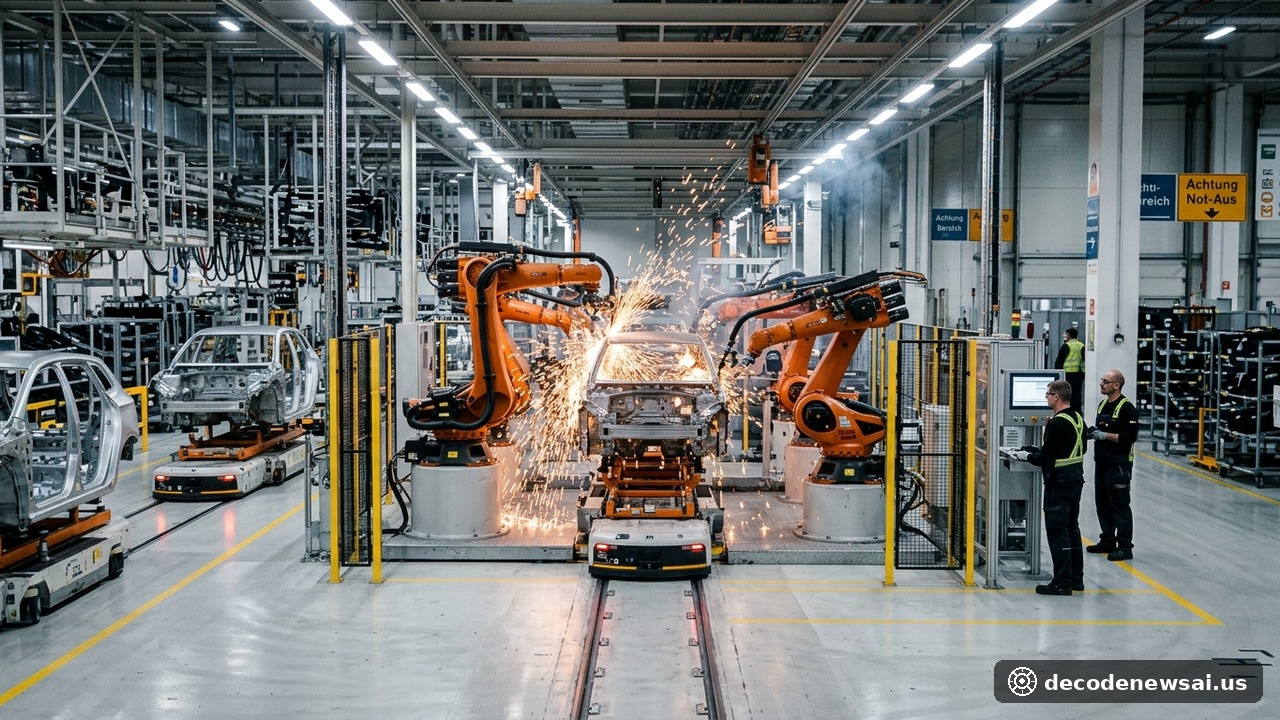
Detailed sector performance metrics released by Destatis revealed that new orders across automotive manufacturing jumped 10.5% month-over-month in September, functioning as the primary catalyst for the broader factory rebound. Factory orders and final vehicle assemblies had slumped during July and August due to extensive plant holidays and tooling retrofits across major domestic assembly complexes. Production tempo accelerated noticeably in September as plants returned to full operations. Passenger vehicle bookings from European trading partners and North American distributors increased substantially. Industrial resilience across vehicle manufacturing was evident.
Complementing automotive gains, the specialized machinery and factory equipment manufacturing segment registered an 8.3% month-over-month expansion. That growth was propelled primarily by large-scale commercial contracts for power-generation turbines and automated assembly systems. Core industrial bookings among medium-sized engineering firms also stabilized after extended declines. Conversely, bookings for other transport equipment including rail transport, shipbuilding, and aircraft fell 10.4% sequentially following elevated order volumes earlier this year. Performance diverged across heavy manufacturing branches. High-precision capital goods retained solid underlying demand.
The Federal Ministry for Economic Affairs and Climate Action published a formal assessment of the statistical results on Monday. Ministry analysts noted: "The robust rebound in September orders effectively offset the temporary manufacturing contraction observed during the summer months, confirming that Germany's core industrial foundations retain sound restorative capacity under demanding external conditions." Official validation improved commercial sentiment across business organizations. The Association of German Chambers of Commerce and Industry welcomed the data. Manufacturing recovery expectations strengthened.
Destatis Upwardly Revises August Contraction and Releases October Toll Truck Mileage
Alongside September orders, Destatis published routine revisions to historical data for August. The month-over-month contraction for August was revised upward from a preliminary 10.6% drop to a 10.1% decline. The updated statistical series confirms that aggregate factory orders in the third quarter rose 0.2% compared with the second quarter. The modest quarterly gain contradicted pessimistic forecasts suggesting that the German industrial base had slipped into a severe technical recession. Economic output established an operational baseline. Quarterly progression stabilized.
The statistical agency also released its latest high-frequency indicator on Monday, publishing the October truck toll mileage index for heavy transport vehicles with four or more axles on federal motorways. Mileage activity decreased 1.6% month-over-month on a calendar- and seasonally adjusted basis, but achieved a 0.5% calendar-adjusted increase compared with October 2025. Toll mileage volume functions as an accurate proxy for immediate freight turnover and assembly line operational rates. High-frequency indicators suggest industrial operations maintained steady baseline throughput. Logistics networks avoided severe disruptions.
Dirk Schumacher, chief economist at German state development bank KfW, issued a public economic commentary regarding the sector's trajectory. He cautioned: "While September's figures provide welcome positive signals, global supply chain fragmentation and geopolitical friction continue to present structural headwinds for European industry." Institutional economists urged analytical caution. Structural recovery will require extended consolidation.
Moderating Energy Cost Pressures and European Central Bank Monetary Easing Support
Underpinning industrial stabilization is the steady retreat of regional industrial energy expenses across European wholesale hubs. With natural gas storage facilities exceeding 95% capacity ahead of winter demand periods, electricity and pipeline gas costs have moderated substantially from previous peaks. Operating rates across energy-intensive chemical and primary metals producers expanded steadily. Upstream raw material expenses diminished. Operating cash margins recovered moderately.
Successive interest rate cuts implemented by the European Central Bank since summer began yielding constructive transmission across commercial credit markets. Commercial lending rates for equipment modernization and industrial facility upgrades trended downward. Lower borrowing expenses prompted foreign commercial buyers to finalize previously delayed machine tool orders. Monetary conditions transitioned from restrictive posture toward neutral settings. Liquidity conditions supported real economic activity.
Nevertheless, European economic policy think tanks emphasized that sustained industrial expansion remains constrained by sluggish external demand and elevated corporate labor costs. Whether manufacturing purchasing managers' indices maintain consistent readings above expansionary thresholds will determine if the broader industrial economy permanently overcomes stagnation. National regulatory frameworks must prioritize competitiveness and operational simplification. Europe's industrial revitalization remains an ongoing endeavor.