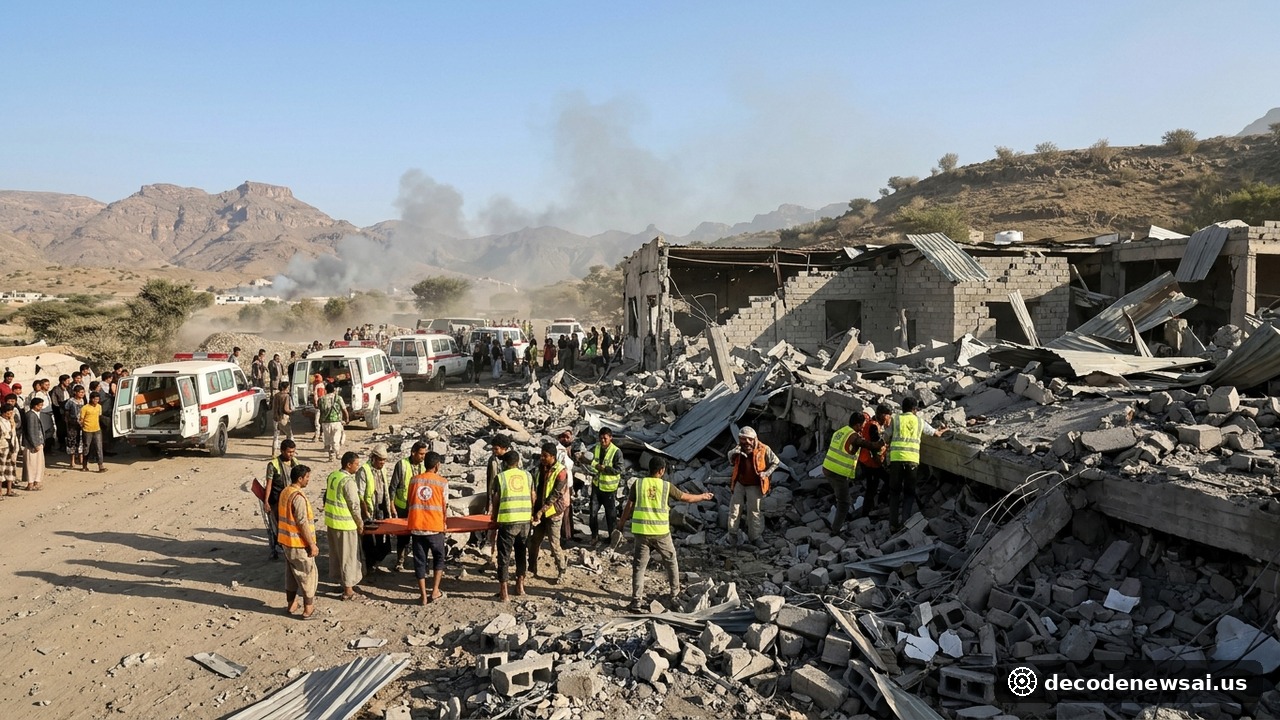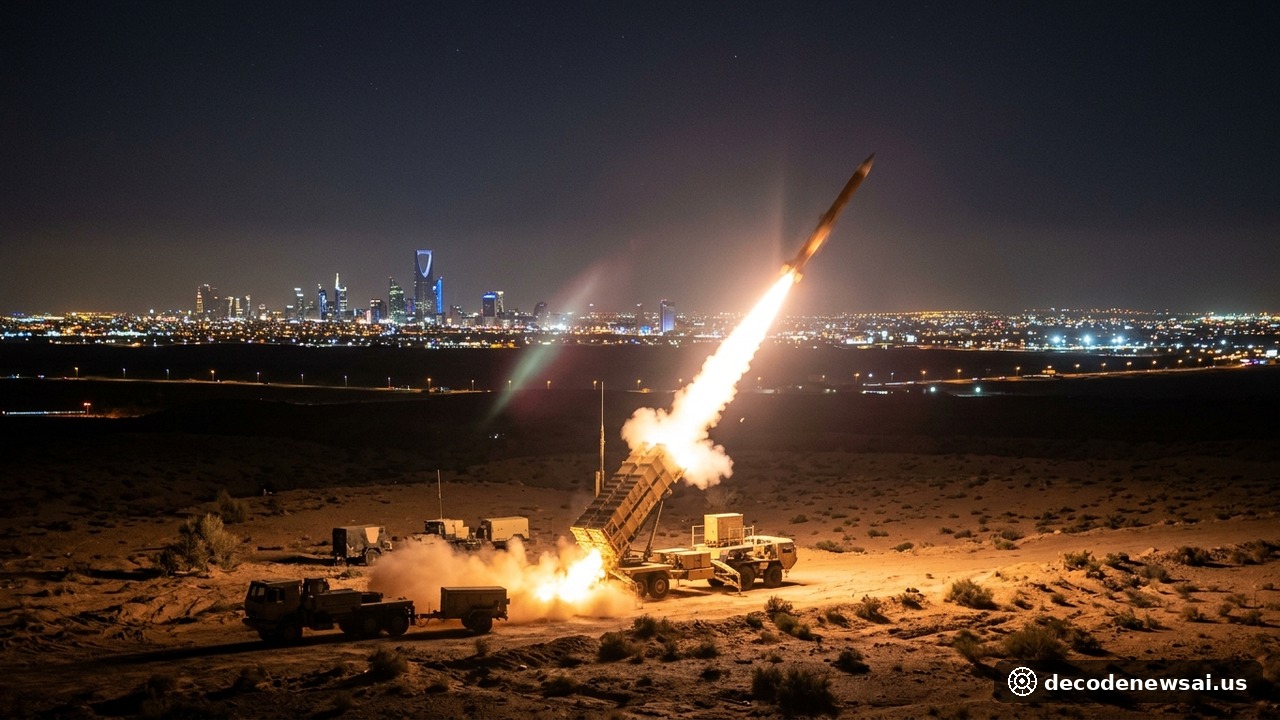
Air defense formations belonging to the Saudi-led military coalition intercepted three inbound ballistic missiles targeting Riyadh on the evening of November 9, 2026. Military authorities confirmed that terminal Patriot missile batteries neutralized two of the incoming projectiles directly over the capital's metropolitan boundaries. Interceptor debris landed adjacent to the King Abdullah Financial District, inflicting minor structural damage on the exterior facade of a Saudi Aramco administrative complex. Civil defense teams confirmed zero civilian casualties.
Houthi launch zones and Riyadh civil defence alerts
The hostile barrage originated from launch zones controlled by Houthi insurgents across northwestern Yemen. Ground-based phased-array radars operated by the Royal Saudi Air Defense Forces detected the ballistic trajectories shortly after liftoff. Fire control batteries engaged the targets at high altitudes across the suburban desert perimeter.
The Saudi General Directorate of Civil Defence issued sirens and shelter alerts across three administrative zones in central Riyadh. The warning was canceled within minutes following successful kinetic interceptions. Falling shrapnel caused superficial debris damage to corporate glazing around the financial district. Municipal response units rapidly contained localized disruptions without civilian injuries.
Military spokespersons confirmed that a third missile was intercepted over uninhabited scrubland south of Riyadh. Early-warning telemetry units tracked the launch profiles across contested airspace. Forensic units isolated fragments to confirm munition variants.
Coalition strikes Yemen and Saudi UN protest
In immediate response to the assault, the Saudi-led coalition conducted precision airstrikes against launch positions inside Yemen. High command communiques confirmed the destruction of a mobile ballistic missile transporter-erector-launcher outside Sanaa.
A senior Saudi coalition operational commander addressed reporters during a military briefing in Riyadh. The commander stated: "Our integrated air defense forces retain full readiness to neutralize all hostile threats, and the kingdom will exercise its statutory right to protect national territory and critical economic infrastructure."
The Saudi Ministry of Foreign Affairs delivered formal protest notes to the United Nations Security Council, accusing insurgent factions of endangering civilian centers and global energy transit arteries. Diplomatic envoys reiterated calls for rigorous maritime interdiction of smuggled missile components.
Analysts assess missile defense and Gulf shipping risks
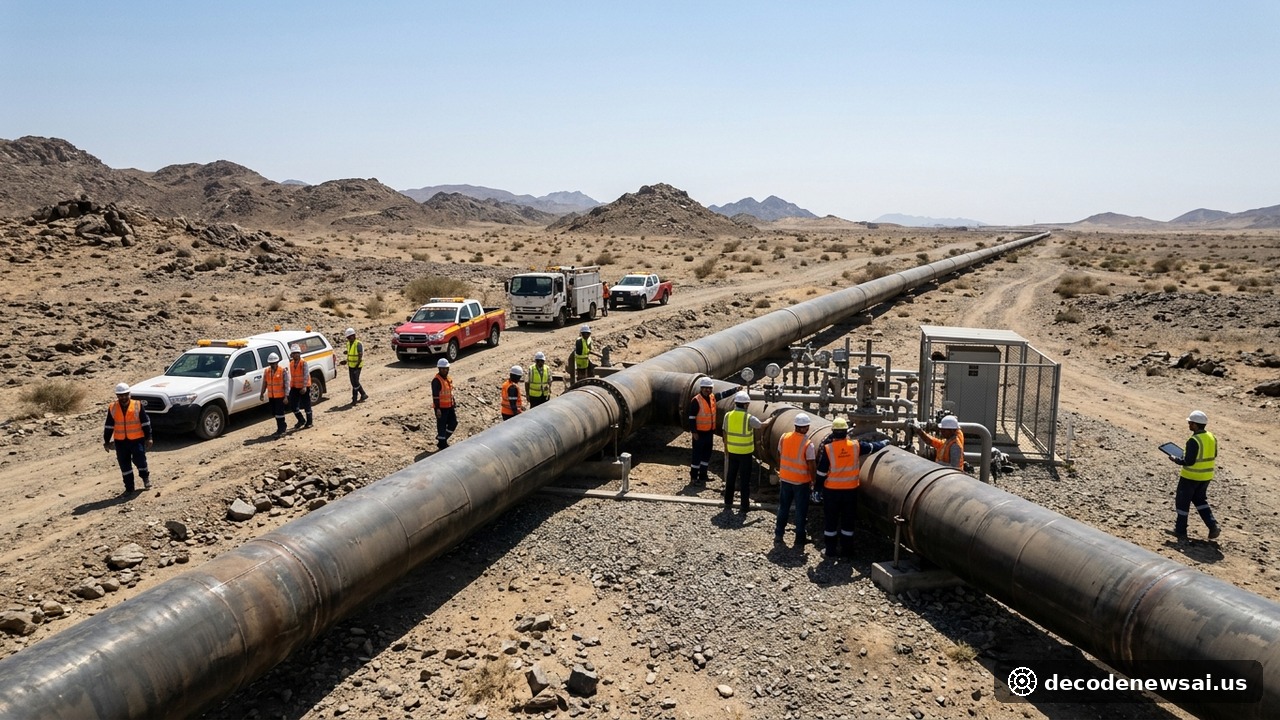
The aerial attack followed earlier drone harassment against pipeline pumping stations along the kingdom's East-West crude transmission corridor. Regional security analysts highlighted that prolonged missile exchanges deplete defensive missile inventories while elevating insurance premiums across Middle Eastern shipping terminals. Multinational naval assets stepped up radar patrols across the Persian Gulf and Red Sea to safeguard international commerce.
Regional defense analysts and Gulf security specialists emphasized that asymmetric ballistic missile proliferation continues to test integrated air and missile defense architectures across the Arabian Peninsula. Because ballistic trajectories introduce high terminal velocities, intercepting warheads directly over metropolitan centers requires rapid automated engagement protocols to minimize structural collateral hazards. Multinational energy trading confederations called for enhanced maritime radar coverage across regional chokepoints to ensure freedom of navigation. Saudi Aramco corporate safety directors confirmed that emergency repair crews completed comprehensive inspections across corporate headquarters facilities in Riyadh without interrupting commercial administrative workflows. Defense ministries across the Gulf Cooperation Council reiterated commitments to share real-time airspace monitoring telemetry to deter further cross-border strikes against critical infrastructure.
Furthermore, international maritime defense experts and petroleum transport federations indicated that protecting vital infrastructure assets against low-altitude unmanned aerial munitions requires distributed electronic warfare capabilities. Ground forces maintain high operational vigilance across suburban monitoring posts to rapidly identify anomalous radar signatures and protect civilian energy operations.
Energy security observers urge diplomatic stability
In addition, international energy security observers emphasized that diplomatic stability across the Arabian Gulf is essential for maintaining reliable crude supply commitments to global refining centers. Regional coalition forces continue enhancing automated tracking arrays to provide comprehensive defensive protection across metropolitan residential hubs. Diplomatic delegations and energy security task forces will maintain continuous coordination to safeguard vital commercial sea lanes.