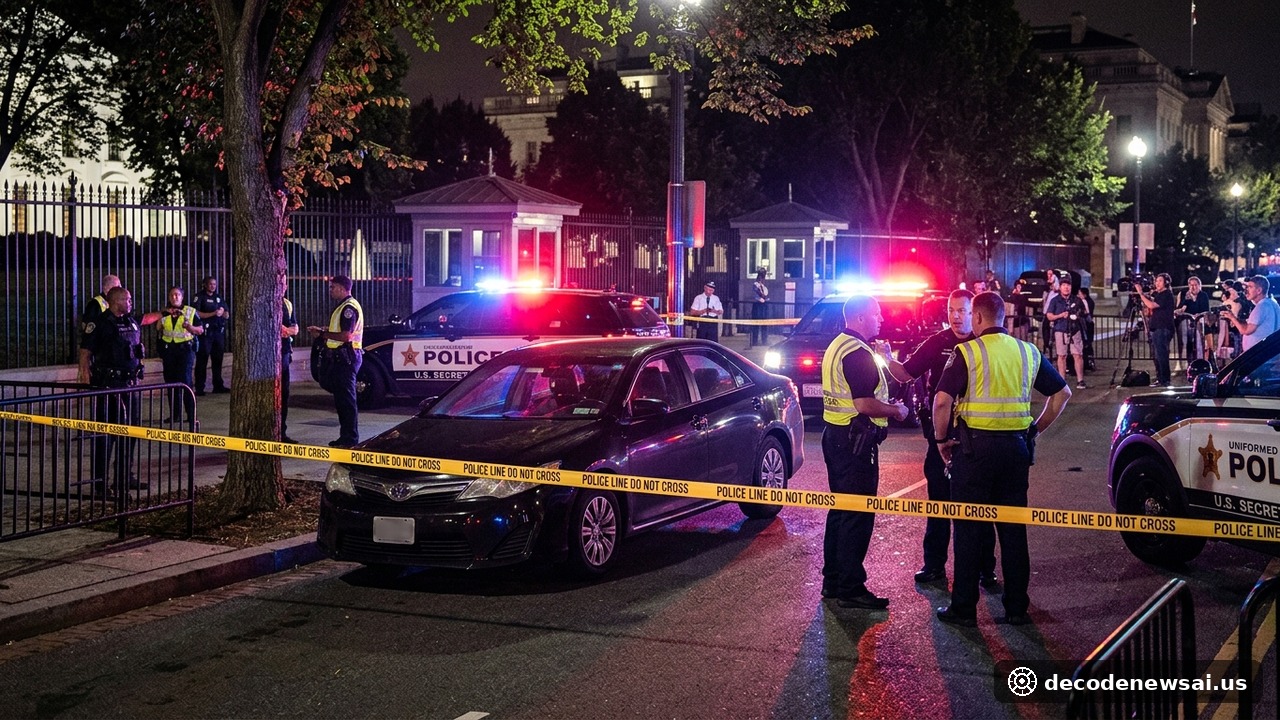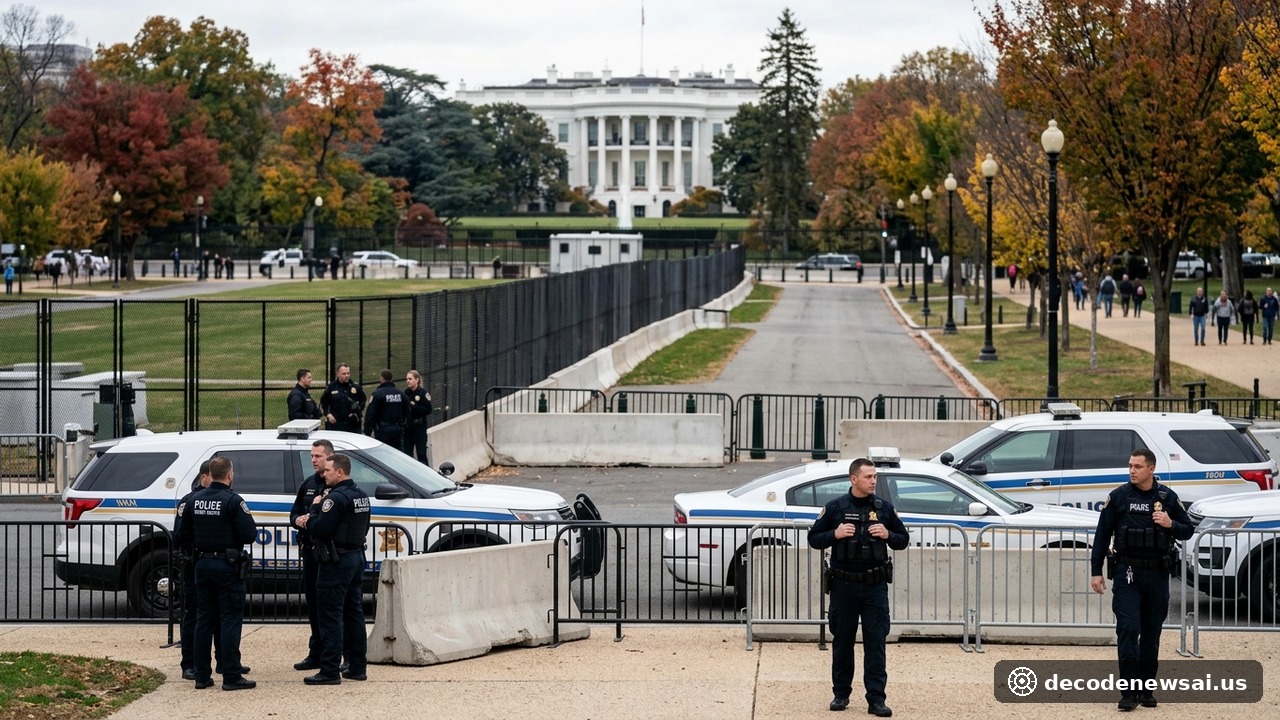
The United States Attorney's Office for the District of Columbia officially announced felony criminal charges on November 10, 2026, following the apprehension of an armed undocumented foreign national near the southern perimeter of the White House complex. Special agents of the United States Secret Service Uniformed Division intercepted the suspect directly adjacent to the Ellipse and South Executive Avenue. According to federal court filings unsealed in United States District Court, the individual was formally charged with transmitting interstate threats against President Donald Trump alongside federal counts of firearm possession by an undocumented alien.
Secret Service recovers firearm and ammunition in arrest
The suspect was detained immediately by alert perimeter patrol units after displaying erratic behavior and attempting to approach secured security checkpoints.
During the physical apprehension, law enforcement officers recovered a concealed, unregistered semi-automatic firearm and multiple rounds of live ammunition. Announcing the indictment in an official Department of Justice press release, United States Attorney for the District of Columbia stated: "Threats directed against the President of the United States or the executive complex will be met with immediate interdiction and vigorous federal prosecution. The rapid, decisive action of Secret Service officers eliminated a potential threat, and our office will enforce statutory firearm prohibitions to the fullest extent of the law."
The defendant was transferred into federal custody at the District of Columbia Central Detention Facility pending a preliminary detention hearing scheduled before a federal magistrate judge later this week.
Two Title 18 charges and maximum ten-year sentence
Court dockets detail two principal statutory charges under Title 18 of the United States Code: making threats against a federal protectee under Section 871, and possessing a firearm as an alien illegally present in the United States under Section 922(g)(5). If convicted on all statutory counts, the defendant faces a maximum statutory sentence of up to ten years in federal penitentiary facilities.
Congressional committees on homeland security and federal oversight requested comprehensive briefings regarding perimeter security protocols and firearm origin tracing. In response to the incident, the United States Park Police and the Metropolitan Police Department augmented joint patrols and deployed mobile vehicle barriers across central downtown avenues surrounding the National Mall.
Federal law enforcement researchers and executive protection analysts noted that rapid perimeter interdictions demonstrate the vital importance of multi-layered defensive security architectures around national executive grounds. Because public government complexes confront dynamic security environments, deploying integrated physical access controls, continuous visual surveillance, and highly trained perimeter response units provides indispensable deterrence against unauthorized armed incursions. Good-government organizations and public safety coalitions commended the vigilance of Uniformed Division officers, emphasizing that rigorous federal prosecution of statutory firearm violations reinforces national security and public safety throughout the federal district.
Analysts praise multi-layered perimeter defenses after incident
Corporate compliance officers and federal procurement specialists observed that proactive internal auditing safeguards contractors against civil liability while promoting ethical business standards. By institutionalizing rigorous cybersecurity verifications and transparent reporting mechanisms, commercial suppliers reinforce trusted partnerships with federal defense agencies. Legal scholars emphasized that proactive adherence to federal standards mitigates systemic operational risks across public and private sectors.
Furthermore, regional public safety coordinators commended the rapid interagency response and rigorous perimeter surveillance protocols. Federal security officials affirmed that regular threat assessments and advanced perimeter detection systems safeguard government facilities and surrounding communities.
In addition, federal security planners and municipal law enforcement analysts observed that rapid threat neutralizations demonstrate the critical efficacy of multi-layered perimeter defenses around high-priority government installations. Interagency coordination between the Secret Service, the Metropolitan Police Department, and federal prosecutors guarantees that security breaches are met with swift judicial accountability. Furthermore, criminologists and defense consultants emphasized that consistent legal enforcement deters potential unlawful intrusions, protecting both public officials and civilian visitors throughout the nation's capital. Civic leaders look forward to continued vigilance across all federal perimeters.