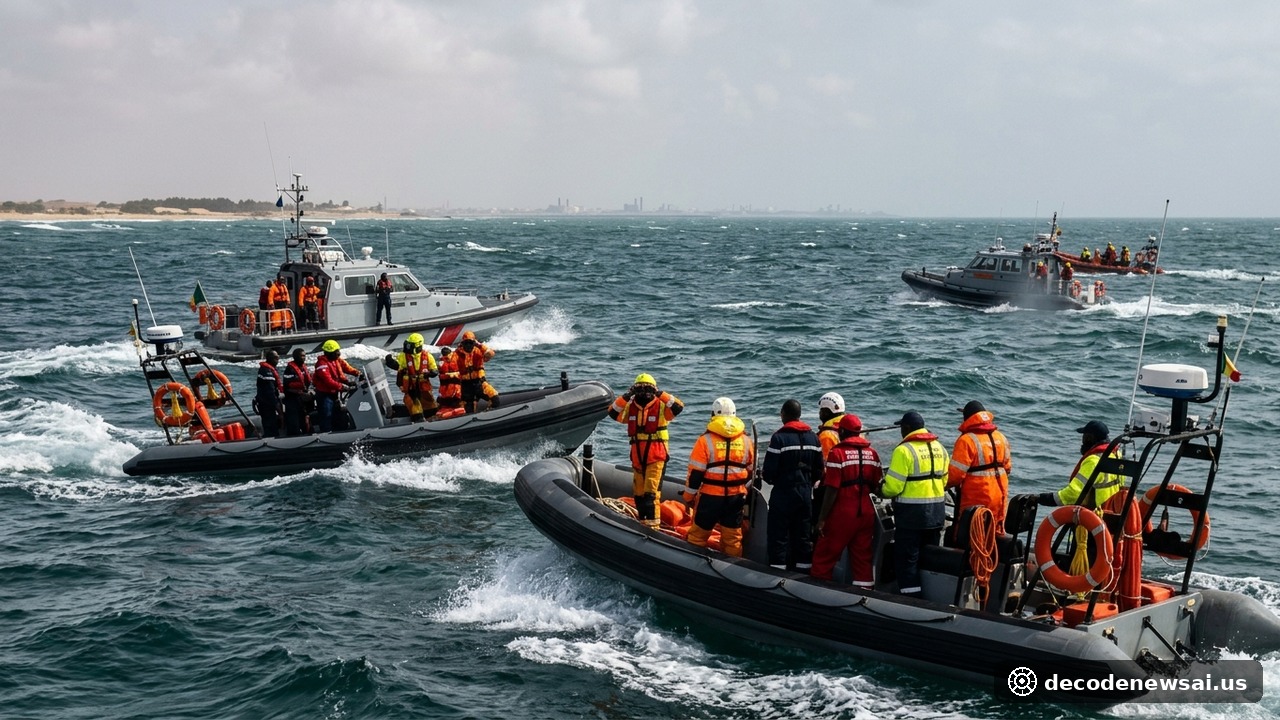
A crowded wooden vessel carrying over one hundred African migrants capsized off the coast of Saint-Louis in northern Senegal on November 9, 2026. Naval search teams and local artisanal fishermen have recovered 39 bodies from the turbulent coastal waters and shoreline. Rescue crews successfully pulled 23 survivors from the sea during intense emergency operations. Dozens of passengers remain unaccounted for as maritime patrols scour the Atlantic coastline.
Overloaded pirogue bound for Canary Islands overturns near Saint-Louis
The ill-fated pirogue had departed from fishing villages south of the capital Dakar several days earlier. The vessel aimed to complete the perilous Atlantic crossing toward Spain's Canary Islands. Most passengers were young men and adolescents from Senegal, Mali, and Guinea seeking economic survival in Europe. Severe ocean currents and gale-force gusts struck the overloaded vessel near Saint-Louis sandbars. The wooden keel cracked violently under successive waves, causing the craft to overturn rapidly in deep waters.
Local fishing crews were among the first maritime responders to arrive at the disaster zone. Rescuers hauled exhausted survivors onto wooden pirogues under deteriorating weather conditions. Survivors were immediately transported to regional medical facilities in Saint-Louis for critical care. Many rescued migrants suffered from acute hypothermia and severe seawater aspiration. Amadou, a 24-year-old survivor from Thies, described the harrowing ordeal to reporters at the dock. He recounted: "The massive wave flipped the boat in total darkness, and within seconds the air was filled with desperate screams for help."
The Atlantic migration corridor remains one of the world's most perilous maritime journeys. The United Nations High Commissioner for Refugees reported that more than 18,000 migrants reached the Canary Islands during the first ten months of 2026. Thousands more have perished unseen along the rough open-ocean trajectory. Aging wooden pirogues navigate across more than a thousand kilometers of treacherous ocean without adequate navigation gear, satellite communications, or life preservers. Engine failures and fuel exhaustion frequently leave migrant boats adrift for weeks in open water.
Senegal arrests three suspects and boosts coastal patrols
Human rights organizations condemned the ongoing loss of life off West Africa's coastline. In a formal press briefing in Dakar on Monday, Amnesty International Senegal executive director Seydi Gassama demanded an exhaustive judicial investigation into migrant smuggling syndicates. Gassama criticized governmental inaction toward youth unemployment and depleted coastal fisheries. He stated: "Tragedies along the Atlantic migration route cannot be normalized without accountability and systemic economic remedies."
Senegalese authorities responded to the tragedy with immediate security and judicial measures. The Ministry of the Interior ordered heightened joint patrols across coastal ports including Saint-Louis, Mbour, and Kayar. Specialized gendarmerie units arrested three suspected ringleaders believed to have financed and arranged the fatal voyage. Prime Minister Ousmane Sonko announced he will lead a high-level ministerial delegation to Saint-Louis on November 10 to meet with grieving families and oversee relief efforts.
Regional governments face increasing pressure to address the underlying socio-economic drivers fueling migration. Senegalese officials committed to deepening border enforcement cooperation with European Union partners to dismantle transnational smuggling rings. Community leaders in coastal villages urged national leaders to pair criminal crackdowns with vocational opportunities for disenfranchised youth. Intensive naval operations continue off Saint-Louis as families gather along the shore awaiting news of missing relatives.
International maritime migration specialists underscored that economic distress across coastal West African regions continues driving perilous sea crossings. Depleted artisanal fisheries and limited regional employment options compel young people to undertake high-risk voyages along unmonitored oceanic corridors. Humanitarian agencies emphasized that intergovernmental surveillance agreements must be paired with substantial community-level economic investments in coastal fishing ports. Regional maritime safety task forces continue coordinating with international relief organizations to enhance emergency search capabilities across hazardous shallow-water zones.