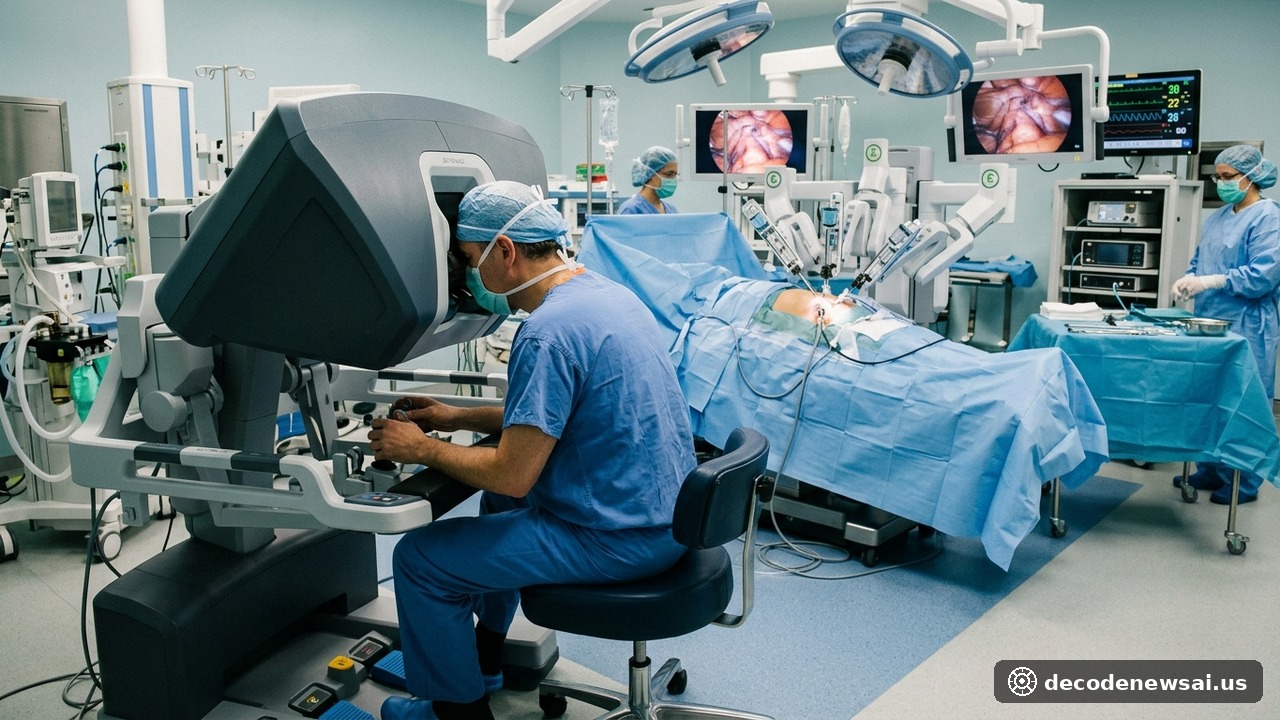
The United States Food and Drug Administration (FDA) granted De Novo classification authorization to Virtuoso Surgical Inc. on November 10, 2026, for its innovative Virtuoso Robotic System. The regulatory clearance authorizes commercial marketing of the world's first dual-arm endoluminal robotic surgery system designed to perform rigid endoscopic en bloc tumor resection for the diagnosis and surgical treatment of bladder cancer.
Securing FDA De Novo Authorization Establishes New Regulatory Device Category
The FDA's De Novo classification decision establishes a new regulatory medical device category for electromechanical endoluminal robotic surgical systems. The platform addresses a significant clinical limitation in urologic oncology by providing surgeons with dexterous bimanual robotic arms inside standard rigid endoscope channels.
The Virtuoso system features two miniature robotic arms, each measuring less than one millimeter in diameter, capable of multi-degree-of-freedom manipulation within the fluid-filled bladder cavity. Surgeons operate the system from an ergonomic workstation equipped with high-definition stereoscopic 3D visualization, enabling precise tissue traction, dissection, and targeted electrocautery coagulation.
The Chief Surgical Officer at Vanderbilt-Ingram Cancer Center commented in Nashville: "In bladder cancer surgical oncology, obtaining an intact specimen containing the underlying detrusor muscle is vital for accurate staging and treatment planning. The FDA's authorization of this robotic system provides urologic surgeons with a transformative clinical instrument."
Transforming Century-Old Resection Techniques to Enable En Bloc Tumor Removal
For more than a century, transurethral resection of bladder tumors (TURBT) has relied on monopolar or bipolar wire loop resectoscopes that carve malignant lesions into fragmented tissue chips. This piecemeal scraping frequently scatters viable tumor cells throughout the bladder lumen and impairs pathological assessment of muscle invasion depth.
The Virtuoso robotic arms allow surgeons to grasp the tumor base and peel the entire lesion away from the bladder wall as an intact specimen, including the critical underlying detrusor muscle. Clinical trial data demonstrated an en bloc resection success rate exceeding 92 percent, with complete muscle tissue presence verified in nearly all excised specimens.
The Chief Technology Officer and co-founder of Virtuoso Surgical stated at an engineering showcase in Tennessee: "Our surgical tools have remained virtually unchanged for generations. Providing surgeons with miniature robotic hands inside the body transforms complex endoluminal operations into safe, repeatable procedures."
Reducing Cancer Recurrence Risks and Enhancing Pathological Staging Precision
En bloc resection substantially reduces the risk of tumor recurrence caused by cancer cell seeding during surgical manipulation. In addition, providing pathologists with unfragmented specimens enables precise microscopic evaluation of tumor margins and invasion depth, preventing both under-staging and unnecessary radical cystectomies.
Several leading academic medical centers across the United States have announced plans to incorporate the Virtuoso Robotic System into their clinical oncology programs. The technology offers a safer, more definitive surgical treatment alternative for hundreds of thousands of patients diagnosed with bladder neoplasms annually.
A former president of the Endourological Society observed that while international clinical guidelines have long recommended en bloc resection, widespread adoption was constrained by inadequate surgical instrumentation. The FDA's clearance will accelerate the adoption of robotic endoluminal techniques worldwide.
Strategic planning advisors and international trade specialists noted that long-term intergovernmental frameworks generate predictable operating environments across key industry sectors. By coupling transparent administrative guidelines with rigorous scientific benchmarks, regulatory bodies and enterprise leaders establish sustainable operating models capable of withstanding shifting macroeconomic dynamics. Global market participants will continue observing forthcoming implementation milestones as public agencies execute their mandated responsibilities throughout 2027. Cross-border coordination remains vital for driving sustained operational resilience and delivering measurable societal benefits worldwide.
Strategic planning advisors and international trade specialists noted that long-term intergovernmental frameworks generate predictable operating environments across key industry sectors. By coupling transparent administrative guidelines with rigorous scientific benchmarks, regulatory bodies and enterprise leaders establish sustainable operating models capable of withstanding shifting macroeconomic dynamics. Global market participants will continue observing forthcoming implementation milestones as public agencies execute their mandated responsibilities throughout 2027. Cross-border coordination remains vital for driving sustained operational resilience and delivering measurable societal benefits worldwide.