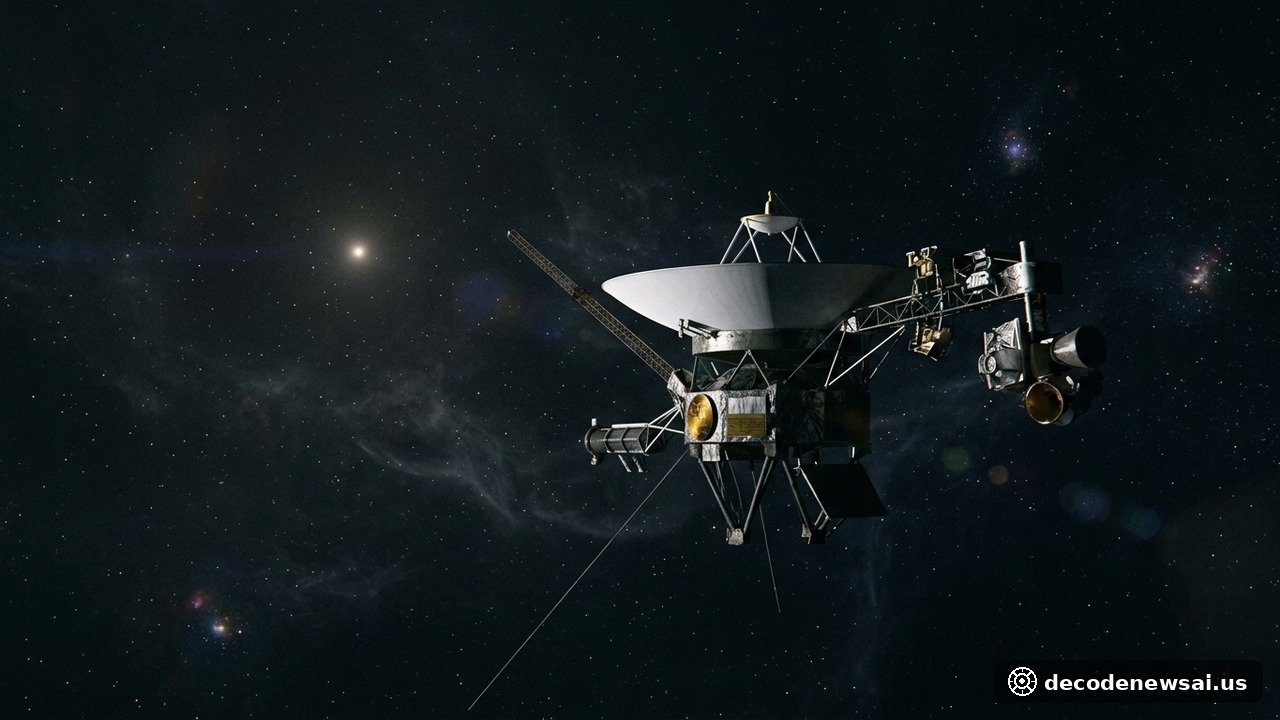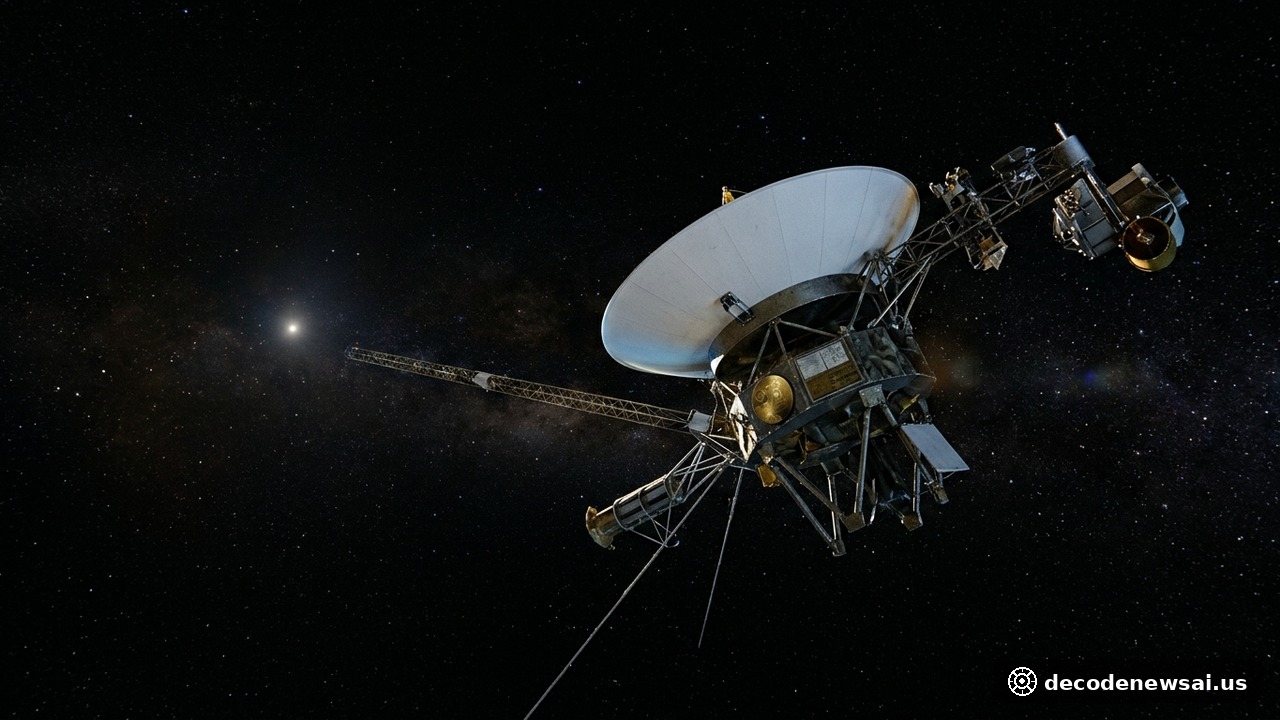
NASA and the Jet Propulsion Laboratory announced global public outreach activities on November 10, 2026. The occasion commemorates a historic deep-space exploration milestone. Voyager 1 reached a distance of exactly one light-day from Earth. The spacecraft has traveled through interstellar space since 2012.
Voyager 1 is now situated 25.902 billion kilometers (16.095 billion miles) away. Radio signals travel at the speed of light. They require a full 24 hours to bridge the distance.
Radio Telemetry Signals Take Exactly 24 Hours to Cross Interstellar Space to Voyager 1
Voyager 1's milestone represents an unprecedented human engineering achievement. It redefines the physical reach of robotic exploration. The probe launched from Cape Canaveral in September 1977. It has traversed the cosmos for more than 49 years.
The resilient spacecraft outlasted its original primary planetary flyby mission. That mission ended over four decades ago.
A light-day serves as an intuitive astrophysical benchmark. It illustrates immense interstellar scales. Ground controllers at the Deep Space Network transmit an uplink command. Radio waves travel at 300,000 kilometers per second.
The waves journey through the vacuum of space for an entire day. They then arrive at the spacecraft's high-gain antenna. A round-trip communication cycle now spans 48 full hours.
The Voyager Project Manager at NASA's Jet Propulsion Laboratory stated in Pasadena: "Voyager 1 reaching one light-day of travel represents an awe-inspiring triumph of human curiosity and engineering endurance. For nearly half a century, this remarkable spacecraft has expanded our fundamental understanding of interstellar space."
JPL Flight Engineering Team Manages Thruster Pulses and Battery Power Reserves
Maintaining continuous contact with Voyager 1 requires extraordinary dedication from NASA's flight operations team. The probe's radioisotope thermoelectric generators (RTGs) experience continuous radioactive decay. They shed approximately 4 watts of electrical power annually.
Engineers have systematically powered down non-essential heaters and secondary scientific instruments. This preserves electricity for the primary transmitter and core magnetic field sensors. Flight controllers carefully pulse aging hydrazine propellant thrusters. They successfully maintain the spacecraft's 3.7-meter parabolic dish antenna.
The antenna stays precisely oriented toward Earth across billions of miles.
The Chief Scientist of NASA's Astrophysics Division observed: "When sunlight and communications pulses take a full twenty-four hours to reach Voyager 1, humanity has truly touched the profound threshold of interstellar space. The pioneering legacy of this mission will inspire deep-space scientific exploration for generations to come."
Public Engagement and Scientific Symposia Celebrate Half a Century of Deep-Space Legacy
NASA will host international live-streamed educational broadcasts and scientific symposia. These events explore Voyager 1's profound discoveries across Jupiter, Saturn, and the heliopause boundary. Members of the public can access real-time telemetry tracking dashboards via the Deep Space Network Now portal.
Radioactive power degradation will eventually silence the probe's scientific transmitters around 2028. Voyager 1 will continue coasting silently through the Milky Way galaxy for billions of years. It carries its iconic Golden Record as a timeless message from human civilization to the stars.
A professor of planetary astronomy at the California Institute of Technology reflected on the mission. Voyager 1 serves as an enduring testament to human ingenuity. Determined scientific exploration can transcend the furthest boundaries of our solar system.
Macroeconomic analysts and international policy researchers highlighted structured institutional collaboration. Such collaboration establishes long-term operational certainty across global markets. Regulatory agencies and commercial stakeholders align statutory guidelines with rigorous technical standards. They cultivate resilient operational ecosystems capable of navigating evolving economic conditions.
Global industry participants look forward to tracking forthcoming milestone developments. Organizations will implement their strategic priorities throughout 2027. Cross-sector coordination remains essential for driving sustainable innovation. It also delivers tangible economic benefits across public and private sectors.
Strategic planning advisors and international trade specialists noted long-term intergovernmental frameworks. These frameworks generate predictable operating environments across key industry sectors. Regulatory bodies and enterprise leaders couple transparent administrative guidelines with rigorous scientific benchmarks. They establish sustainable operating models capable of withstanding shifting macroeconomic dynamics.
Global market participants will continue observing forthcoming implementation milestones. Public agencies will execute their mandated responsibilities throughout 2027. Cross-border coordination remains vital for driving sustained operational resilience. It also delivers measurable societal benefits worldwide.