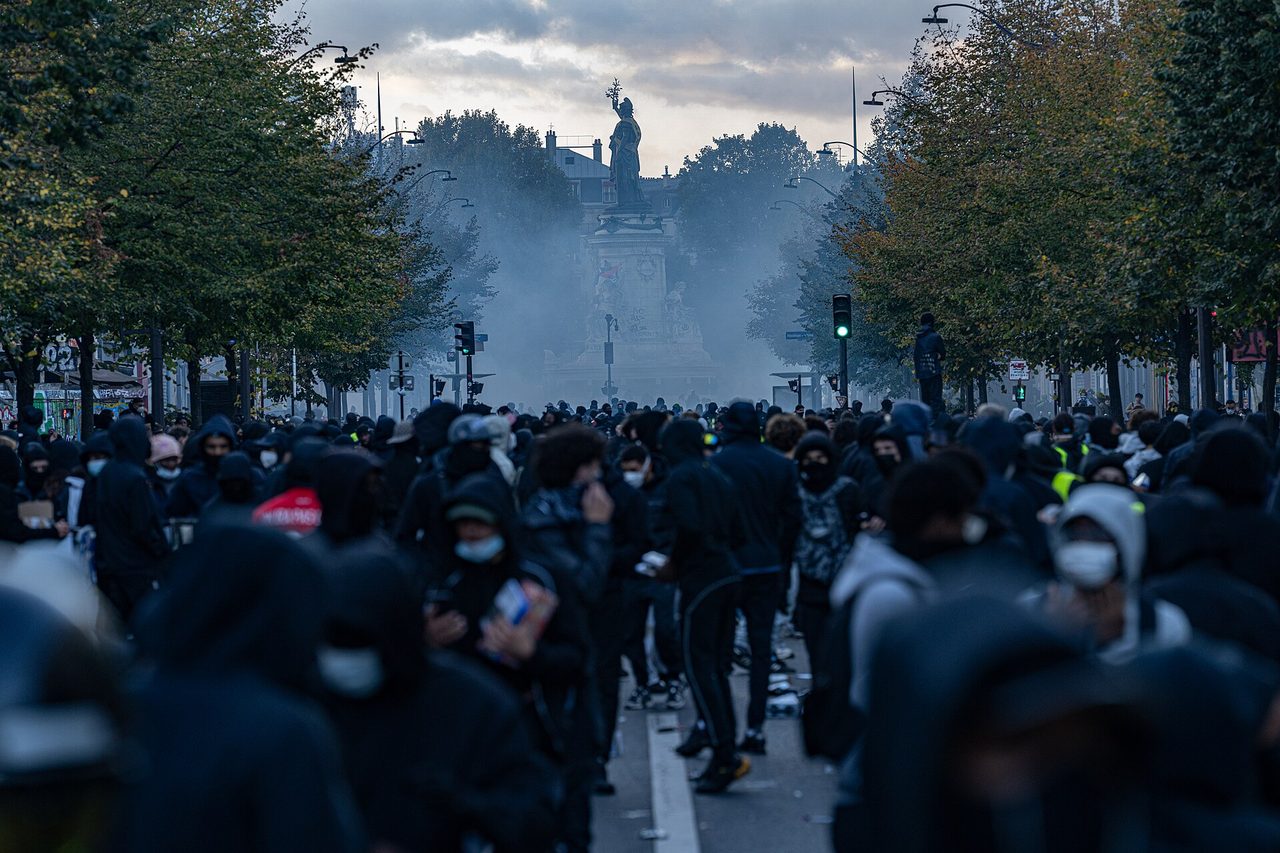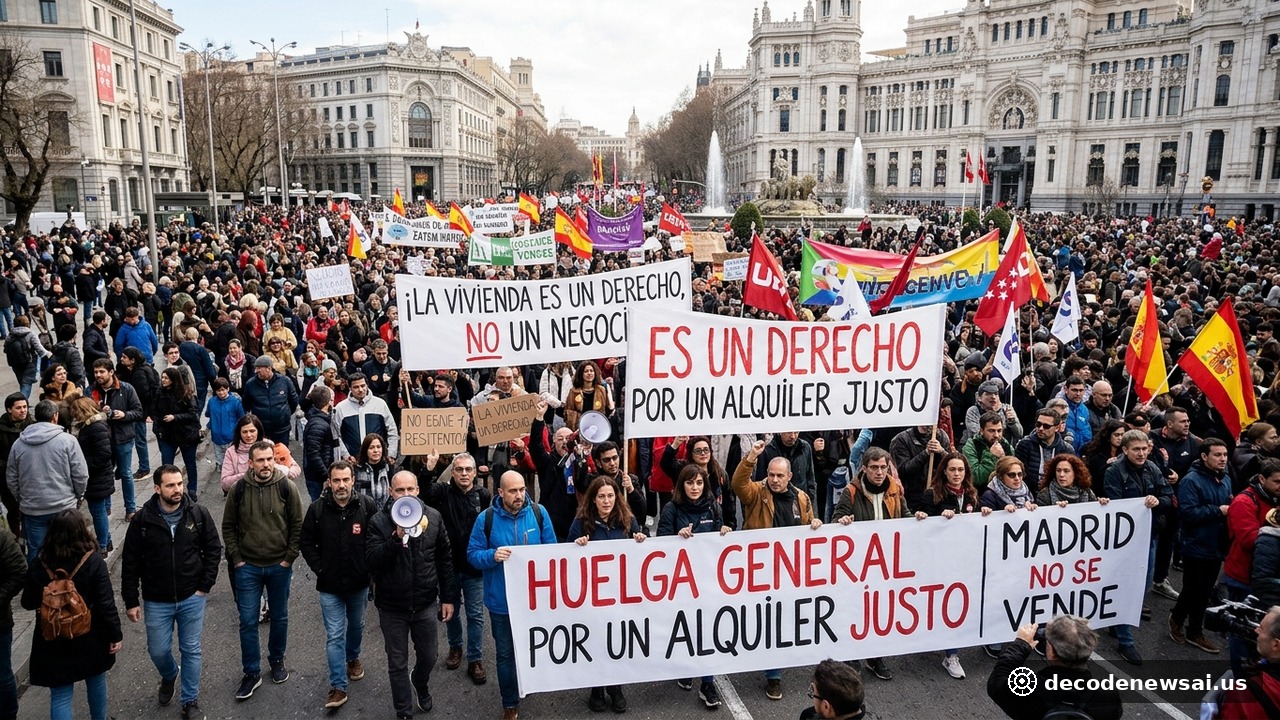
Millions of Spanish workers and civil society activists staged a nationwide 24-hour general strike on Wednesday, November 11, 2026. They were protesting surging housing rental costs and declining living standards. Major labor confederations and tenant advocacy syndicates organized the action jointly. It was Spain's first general walkout since November 2012.
The strike hit passenger rail corridors, metropolitan transit networks, and commercial transport hubs. Spain is the Eurozone's fourth-largest economy. Disruptions spread across the country.
Nationwide Walkout Halts Regional Transit and Logistics Networks
The General Union of Workers and Workers' Commissions coordinated the action. It paralyzed significant portions of national economic infrastructure.
Regional transportation authorities published minimum service schedules. Commuter rail, metro lines, and bus operations ran at between 30 and 50 percent of standard capacity. Flights at Madrid-Barajas and Barcelona-El Prat airports saw widespread cancellations and re-routings. Major logistics warehouses and industrial manufacturing facilities across Catalonia, Andalusia, and Madrid reported widespread worker participation.
Demonstrators packed city plazas carrying banners demanding statutory rent caps. Unai Sordo is General Secretary of the Workers' Commissions. He addressed mass crowds gathered at Puerta del Sol in Madrid.
"The housing crisis has crossed every reasonable threshold for working-class households," he said. "Young workers are spending over 70 percent of their monthly wages on rent alone. This strike is not an act of disruption for its own sake, but an urgent demand for statutory rent controls and an immediate halt to speculative evictions."
Parliamentary Defeat of Emergency Housing Decrees Intensifies Pre-Election Political Conflict
The general walkout comes at a highly sensitive moment. Spain's early general elections are scheduled for November 29, 2026.
Tensions escalated after the Congress of Deputies rejected emergency decree-laws. Prime Minister Pedro Sanchez's minority coalition had introduced them to freeze rents. The legislative defeat prompted the government to advance national elections. Conservative and right-wing opposition parties accused the administration of utilizing union strikes for partisan campaigning.
Opposition leaders argued that left-wing rent policies have discouraged property investments. They said the policies have exacerbated supply shortages over the past eight years.
Spanish Prime Minister Pedro Sanchez defended the labor action in a televised video statement. "The 40-hour workweek and national healthcare were hard-won achievements of the workers' movement," he said. "When faced with runaway real estate speculation, our administration stands firmly with tenants and working families. The return of conservative austerity would dismantle basic social protections."
Housing Affordability Pressures Resonate Across Southern European Metropolises
The social unrest in Spain reflects broader affordability tensions. Metropolitan populations throughout southern Europe face them.
Recent Eurostat monitoring reports indicate that residential rental prices across major southern European urban centers have increased by more than 42 percent over the past three years. The sharp disconnect between headline inflation and real wage growth has prompted the European Trade Union Confederation to call for mandatory housing rights benchmarks across the European Union. Sociologists observe that housing has surpassed conventional workplace issues as the primary catalyst of European political polarization.
A senior professor of political sociology at the Autonomous University of Barcelona commented to international media. "The eviction of vulnerable residents was merely the visible trigger," the professor said. "When young adults cannot afford independent shelter in major cities, macroeconomic growth figures lose all credibility in the eyes of the public." Union federations scheduled transition meetings Wednesday evening.
Strategic planning advisors and international trade specialists noted that long-term intergovernmental frameworks generate predictable operating environments across key industry sectors. By coupling transparent administrative guidelines with rigorous scientific benchmarks, regulatory bodies and enterprise leaders establish sustainable operating models capable of withstanding shifting macroeconomic dynamics. Global market participants will continue observing forthcoming implementation milestones as public agencies execute their mandated responsibilities throughout 2027. Cross-border coordination remains vital for driving sustained operational resilience and delivering measurable societal benefits worldwide.