Published: 2026-11-11 04:57 EST
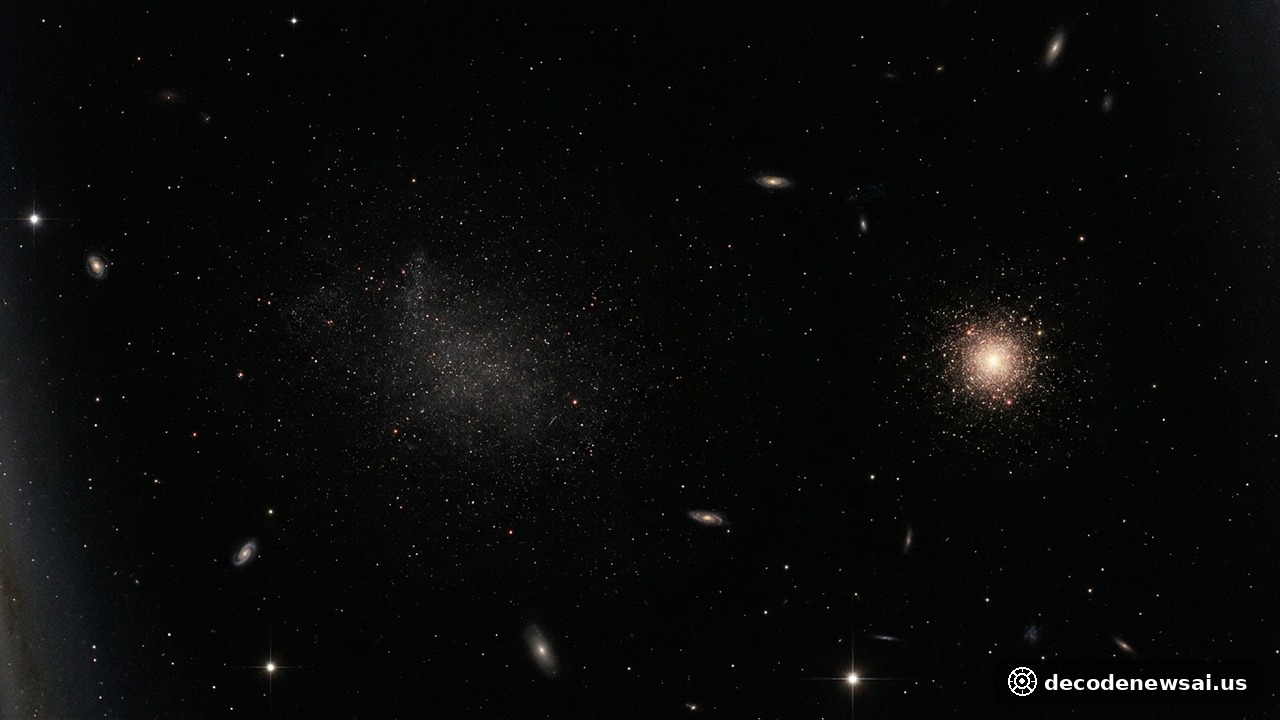
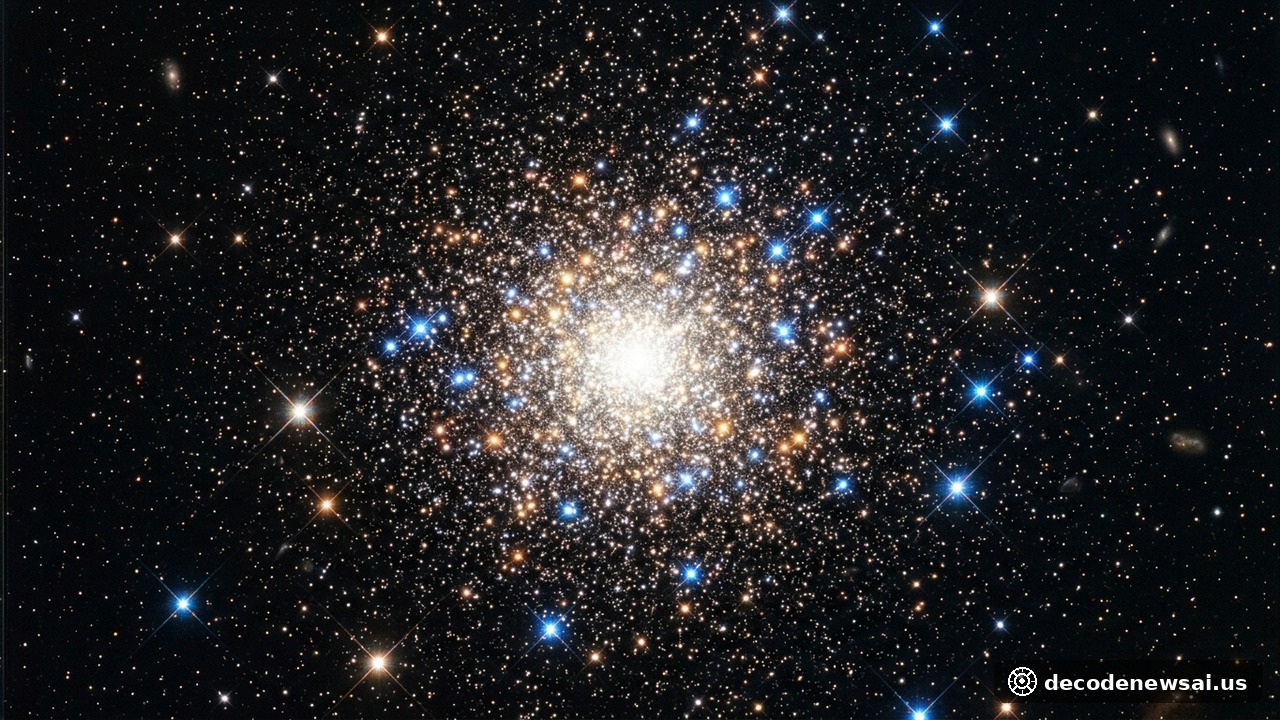
An international astrophysical research consortium led by the European Southern Observatory (ESO) announced a landmark galactic evolution discovery on November 10, 2026. Utilizing the VISTA infrared survey telescope at Paranal Observatory in Chile, astronomers pierced dense obscuring cosmic dust in the central galactic bulge to discover an ancient globular cluster dating back over twelve billion years.
Deep Infrared Imaging Penetrates Obscuring Gas Clouds in Galactic Center
In conventional optical astronomy, the inner regions of the Milky Way galaxy remain veiled by impenetrable clouds of interstellar dust grains and molecular gas that block more than 99 percent of visible starlight. Dense optical extinction historically obscured the earliest fossil remnants of galactic assembly.
Astronomers deployed the Visible and Infrared Survey Telescope for Astronomy (VISTA) in Chile's Atacama Desert, leveraging its sensitive near-infrared panoramic imager over a decade of observational surveys. The near-infrared wavelength sensitivity pierced interstellar dust clouds. Scientists isolated an extraordinarily dense, compact cluster comprising tens of thousands of low-mass stars orbiting near the galactic center. An ESO research fellow remarked in Santiago: "This observational discovery is comparable to uncovering the foundational bedrock beneath a modern metropolis. The cluster's unique chemical metallicity and orbital kinematics confirm it represents an authentic fossil relic from the earliest assembly of our galaxy."
Stellar evolution modeling indicates that the stellar system coalesced during the cosmic dawn, barely one billion years after the Big Bang. Its cohesive structural integrity preserves physical evidence of primordial dwarf galaxy accretion.
Metallicity Spectroscopy Confirms Population II Fossil Relic of Primordial Galaxy Mergers
To establish the cluster's provenance, follow-up spectroscopic observations were conducted using the high-resolution FLAMES multi-object spectrograph on the Very Large Telescope (VLT). Physical characterizations revealed definitive evolutionary traits.
Empirical measurements confirmed that constituent stars exhibit iron abundances less than one three-hundredth of the solar metallicity baseline, classifying them definitively as ancient Population II stars. The chemical signature demonstrates that these stars coalesced directly from primordial gas clouds enriched solely by initial generations of core-collapse supernovae. The observational profile corroborates standard hierarchical Lambda-CDM cosmological models of galactic structure formation.
Referees in Astronomy & Astrophysics praised the precision mapping, emphasizing that uncovering primordial globular clusters within the central bulge provides a vital observational anchor for calibrating the age of the galactic core.
Gaia Astrometry Cross-Matching Reconstructs Ancient Dwarf Galaxy Accretion Histories
With the spatial coordinates cataloged, the team cross-referenced the cluster's members with ultra-precise proper motion measurements from the European Space Agency's Gaia space astrometry mission. Data synthesis expands structural understanding.
Astrophysicists executed relativistic N-body gravitational simulations reconstructing the cluster's galactic orbit over the preceding twelve billion years. Dynamical models suggest the cluster represents the surviving nuclear core of Kraken, an ancient dwarf galaxy consumed by the nascent Milky Way in early cosmic epochs. The research provides definitive empirical confirmation that major spiral galaxies assembled through sequential tidal captures.
A senior galactic dynamicist at the Institute of Astronomy at Cambridge University concluded: "Deep infrared imaging continues rewriting textbook models of our home galaxy. Discovering this ancient cluster provides a window into the universe's formative epochs, advancing our understanding of early galactic nucleation." Follow-up variable star monitoring programs will launch next month.
Strategic planning advisors and international trade specialists noted that long-term intergovernmental frameworks generate predictable operating environments across key industry sectors. By coupling transparent administrative guidelines with rigorous scientific benchmarks, regulatory bodies and enterprise leaders establish sustainable operating models capable of withstanding shifting macroeconomic dynamics. Global market participants will continue observing forthcoming implementation milestones as public agencies execute their mandated responsibilities throughout 2027. Cross-border coordination remains vital for driving sustained operational resilience and delivering measurable societal benefits worldwide.
Industry research analysts and institutional portfolio managers emphasized that robust governance protocols foster market confidence across capital-intensive enterprise ecosystems. When commercial operators maintain disciplined capital allocation standards while proactively addressing regulatory compliance obligations, supply chains achieve greater durability against external macroeconomic shocks. Executive leadership teams across North America and Europe continue prioritizing long-term strategic alignment over transient cyclical fluctuations, ensuring that core infrastructure deployments remain on schedule throughout the coming fiscal periods.