- Survey Parameter: Rubin Observatory Early Data Preview 2 (EDP2)
- Lead Academic Institution: Yale University Department of Astronomy consortium;Studies accepted by RNAAS and The Astrophysical Journal Letters
- Theoretical Significance: Provides testing ground for Cold Dark Matter (Lambda-CDM);Addresses the long-standing "missing satellites" problem
Yale Team Detects Two Milky Way Satellites
The Vera C. Rubin Observatory, the flagship ground-based astrophysical facility located on the summit of Cerro Pachón in northern Chile, has yielded its first major cosmological discoveries prior to the formal initiation of its 10-year Legacy Survey of Space and Time (LSST). An international astronomical research team led by astrophysicists at Yale University announced the detection of two previously hidden satellite companions of the Milky Way, identified within early test data covering a mere 7% of the southern celestial sphere.
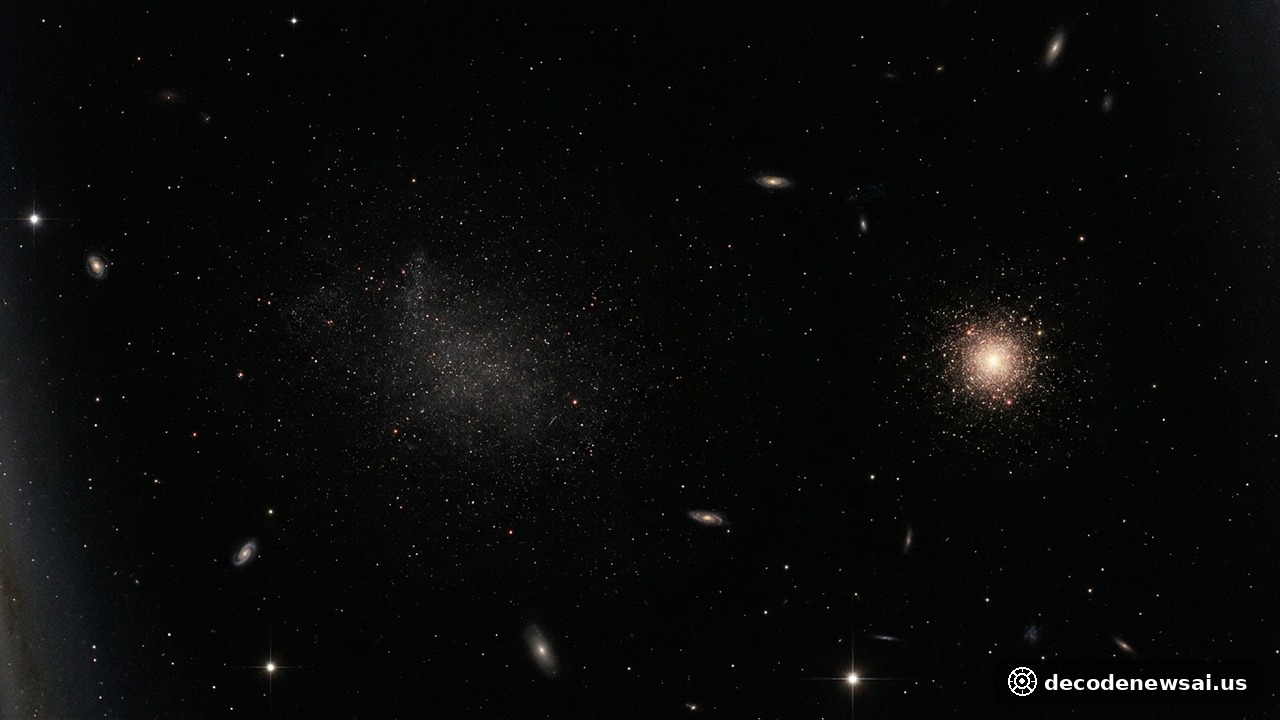
The foremost discovery is an ultra-faint dwarf galaxy designated "Aquarius IV," situated in the distant outer reaches of the Milky Way’s galactic halo approximately 355,000 light-years from Earth. Ultra-faint dwarf galaxies represent the most extreme stellar systems known to cosmologists: they possess the lowest luminosities, contain minimal stellar metallicity, and are overwhelmingly dominated by invisible dark matter halos. Historically, discovering such systems proved virtually impossible due to the dispersed nature of their ancient stars against crowded cosmic background fields. Rubin Observatory's 3.2-gigapixel LSST camera—the largest digital sensor array ever constructed for optical astronomy—succeeded in resolving individual stellar members with unprecedented photometric precision.
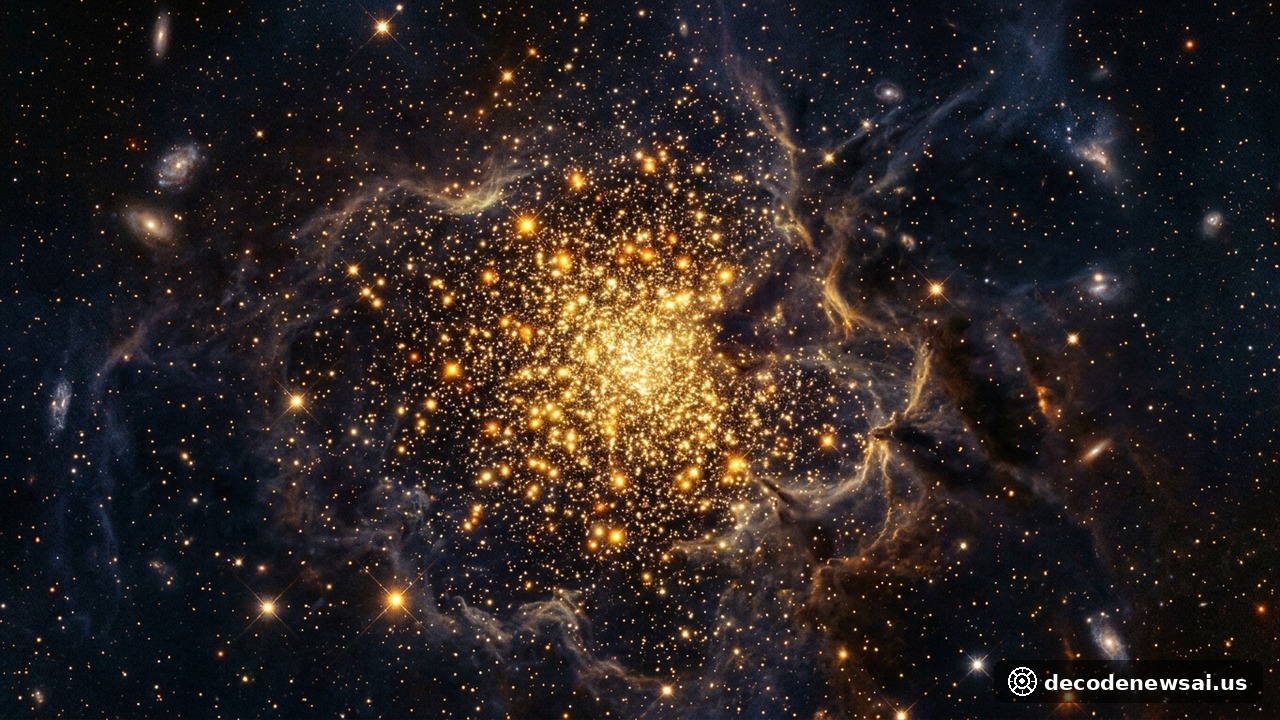
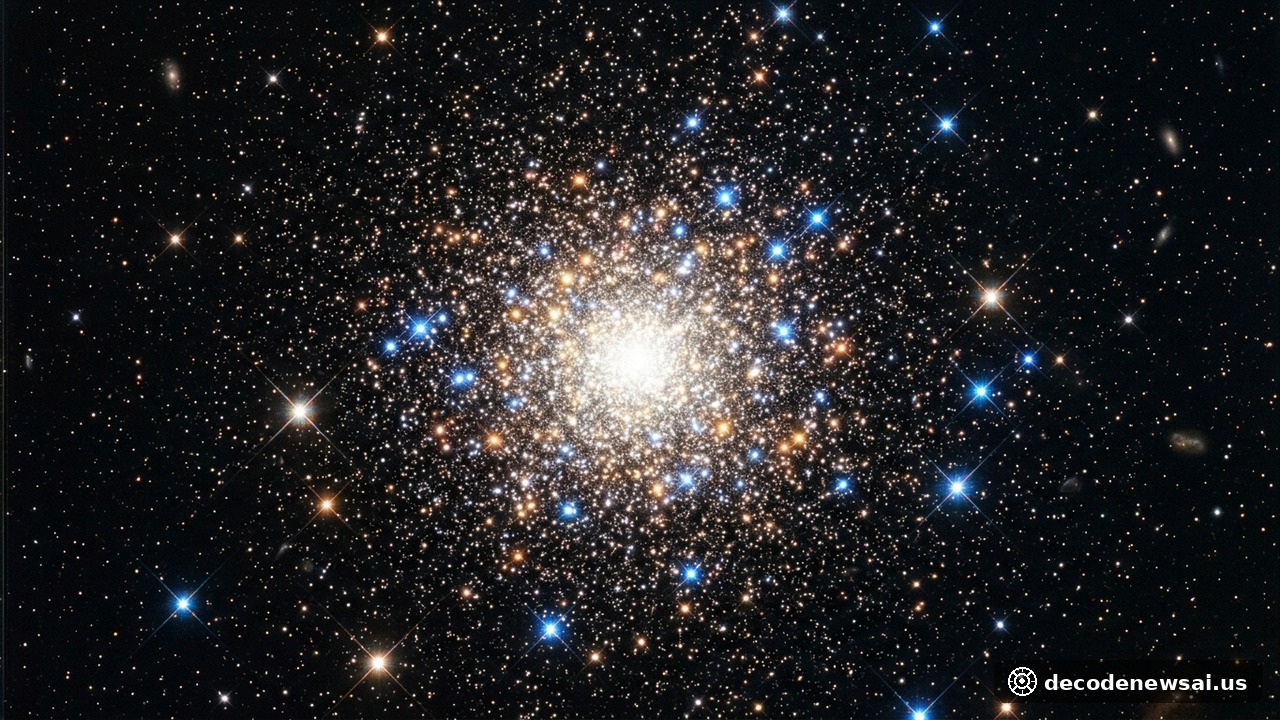
Simultaneously, the research consortium uncovered a second companion system: a heavily obscured, ancient globular star cluster dubbed "Rubin-GC1." Located on the opposing quadrant of the galactic plane, Rubin-GC1 had remained completely shielded from prior wide-field sky surveys by dense clouds of interstellar gas and dust. Lead author William Cerny, an astronomy researcher at Yale’s Graduate School of Arts and Sciences, confirmed that the empirical findings have been accepted for publication across the Research Notes of the AAS (RNAAS) and The Astrophysical Journal Letters.
Two Satellites Address Missing Satellites Problem
Theoretical cosmologists noted that these dual detections provide vital physical evidence directly addressing the decades-old "missing satellites problem." Under the standard cosmological model—Lambda Cold Dark Matter (Lambda-CDM)—hierarchical galaxy formation theories predict that giant spiral galaxies like the Milky Way should be enveloped by a halo containing hundreds of primordial dwarf galaxies. Yet, over decades of astronomical observations, fewer than 65 satellite candidates had been conclusively documented.
The reality that Rubin Observatory identified two elusive companions within preliminary engineering data encompassing just 7% of the night sky suggests that an undiscovered population of ultra-faint stellar assemblies orbits our home galaxy. Over the coming decade of continuous, wide-fast-deep observation, Rubin is poised to deliver an exhaustive census of Milky Way satellites, transforming our empirical understanding of galaxy assembly and the microscopic nature of dark matter.
Astrophysicists and observational astronomers emphasized that the discovery of Aquarius IV and Rubin-GC1 demonstrates the transformative discovery potential of wide-field time-domain astronomy. By identifying elusive galactic satellites in a preliminary engineering dataset encompassing merely seven percent of the celestial sphere, Rubin Observatory has confirmed its capacity to resolve faint stellar populations across unprecedented cosmological volumes. The empirical data will provide indispensable boundary conditions for numerical cosmological simulations, offering critical empirical tests for dark matter clustering and dwarf galaxy formation models over the coming decade.