Published: 2026-11-11 02:48 EST
The Global Carbon Project, coordinated by climate research teams at the University of Exeter, released the definitive 2026 Global Carbon Budget report on November 10, 2026. Global scientific projections indicate that worldwide fossil carbon dioxide emissions will register a minor 0.2 percent decrease in 2026, signaling that clean technology adoption is beginning to plateau fossil demand.
Exponential Solar and Wind Deployments Decouple Economic Growth from Coal Consumption
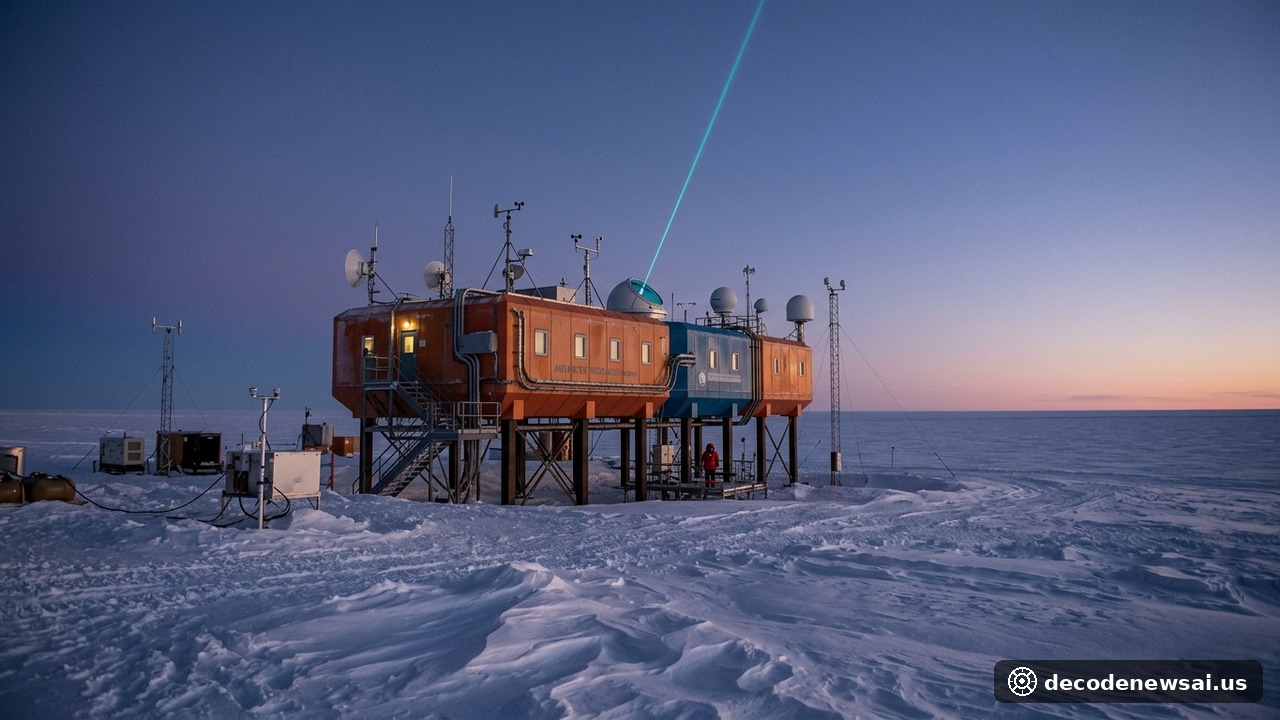
The peer-reviewed annual synthesis compiles empirical emission measurements and atmospheric tracking data from over one hundred climate scientists spanning eighty institutions worldwide. The research provides the authoritative global baseline for evaluating international emission trajectories.
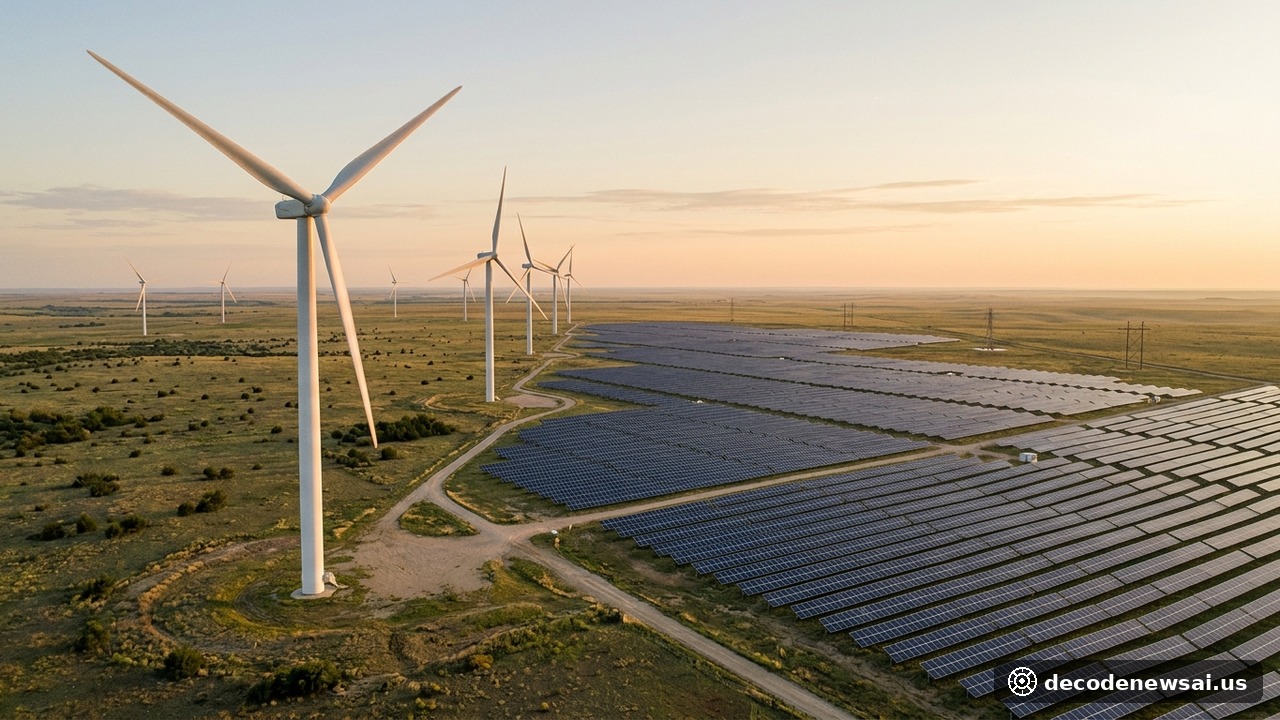
The empirical findings show that historic additions of utility-scale solar photovoltaics and onshore wind turbines successfully capped coal consumption, even as global economic output expanded at moderate historical rates. Concurrently, electric vehicles captured over 25 percent of international light-duty passenger vehicle sales, effectively arresting road transport fuel demand growth. The lead author stated during the formal press presentation: "While a 0.2 percent contraction does not guarantee an immediate downward tipping point, it provides conclusive physical evidence that the velocity of clean technology deployment is outpacing aggregate global energy growth."
Regional emissions trajectories displayed notable divergences across primary economic centers. Fossil emissions across the European Union declined by 3.5 percent year-over-year, while industrializing emerging markets experienced continued power demand growth.
Ocean and Terrestrial Carbon Sink Degradation Offsets Human Mitigation Progress
Alongside encouraging industrial clean energy benchmarks, the synthesis issued urgent warnings regarding the deteriorating absorption capacity of the Earth's natural terrestrial and marine carbon sinks. Natural buffer mechanisms are weakening under thermal stress.
Prolonged drought conditions and cumulative global warming reduced the net carbon absorption efficiency of boreal and tropical forest biomes by nearly 10 percent over the preceding twelve months. Catastrophic mega-fires across sub-Arctic regions released hundreds of millions of metric tons of supplementary greenhouse gases into the upper atmosphere. In parallel, marine heatwaves and escalating oceanic acidification suppressed biological carbon pump sequestration across surface ocean layers.
Isotopic modeling conducted by atmospheric scientists demonstrated that a temporary moderation in fossil burning must not be mistaken for structural climate stabilization. If terrestrial biomes transition from net absorption buffers into carbon sources, climate stabilization will become vastly more difficult to achieve.
Remaining 1.5-Degree Carbon Budget Contracts Below 180 Billion Metric Tons
The synthesis calculates that to maintain a 50 percent probability of limiting long-term global warming to 1.5 degrees Celsius above pre-industrial levels, humanity's remaining cumulative carbon budget has shrunk to less than 180 billion metric tons. The allowable atmospheric margin is dangerously narrow.
At the current annualized burning velocity of nearly 40 billion metric tons per year, the remaining global budget would be entirely exhausted within four to five years. The urgent physical reality demands immediate acceleration of heavy industrial decarbonization, hydrogen-fueled ironmaking, and commercial direct air capture deployments.
The Secretary-General of the World Meteorological Organization emphasized the definitive policy implications: "The 2026 emission plateau represents an encouraging sign of technological transition, but genuine planetary stability demands sustained annual reductions exceeding 5 percent. We must accelerate the transition away from fossil fuels to safeguard a habitable planet for future generations." The complete observational dataset was published via open-access international repositories.