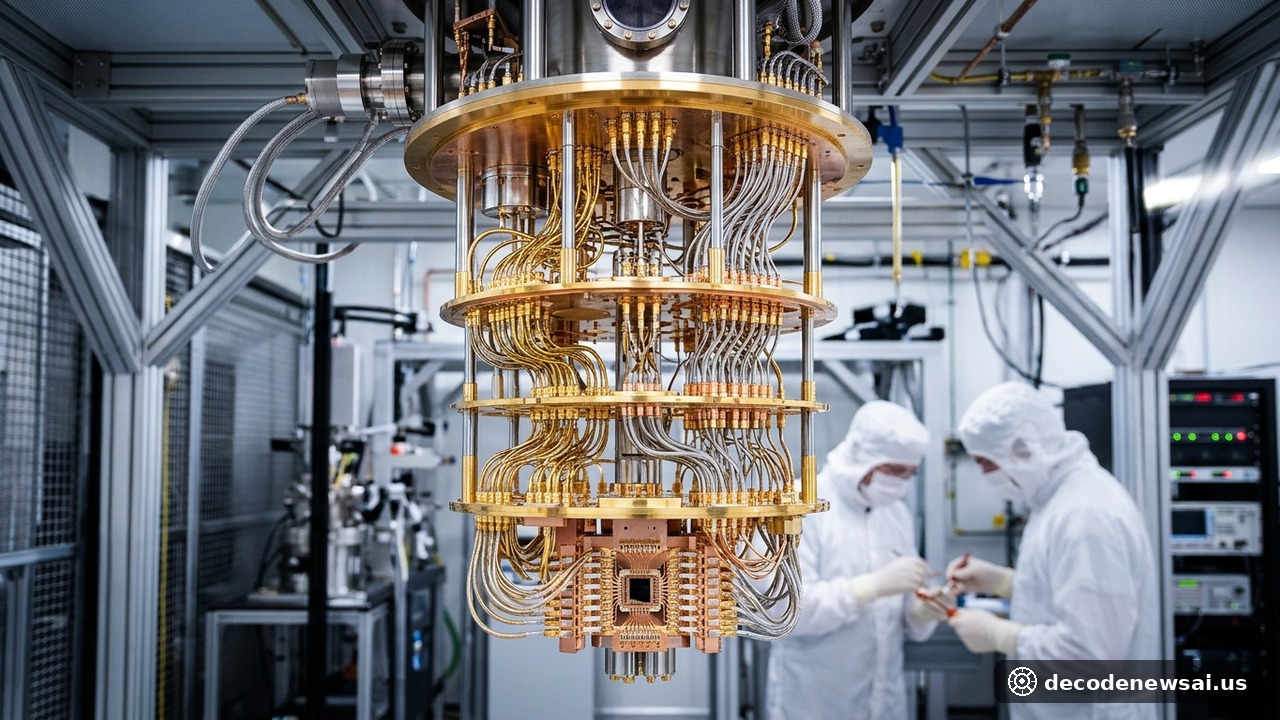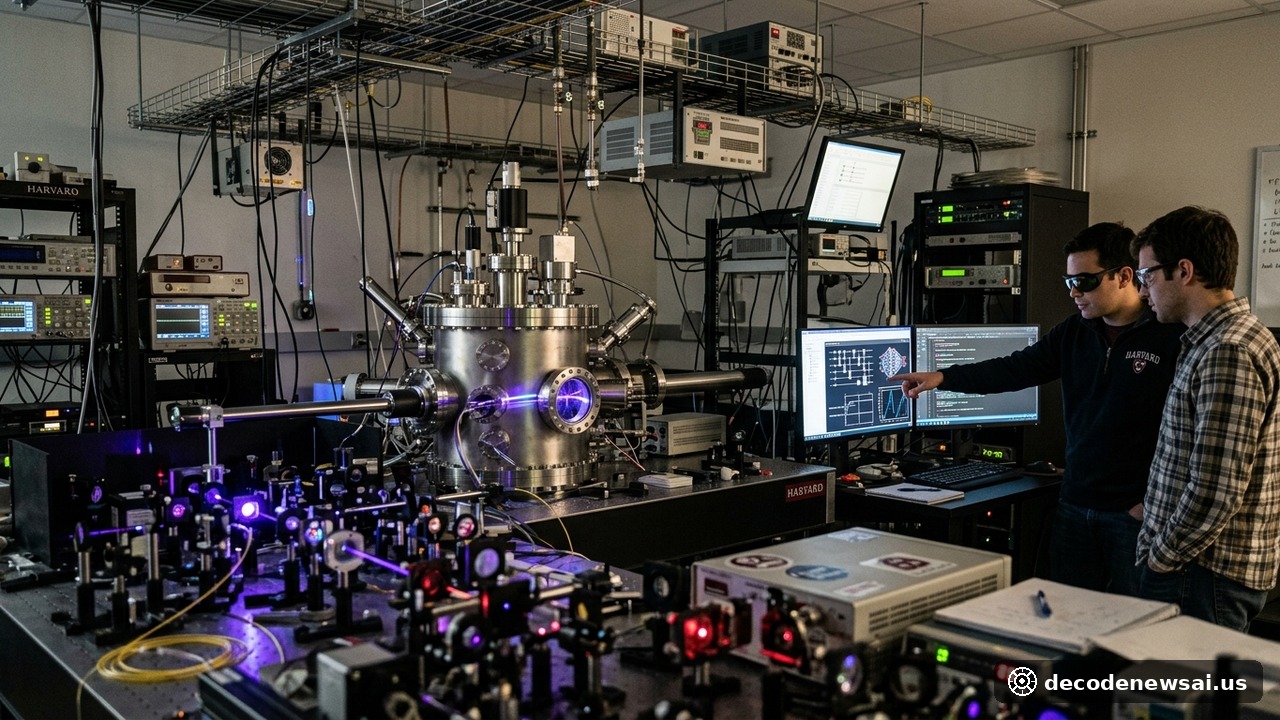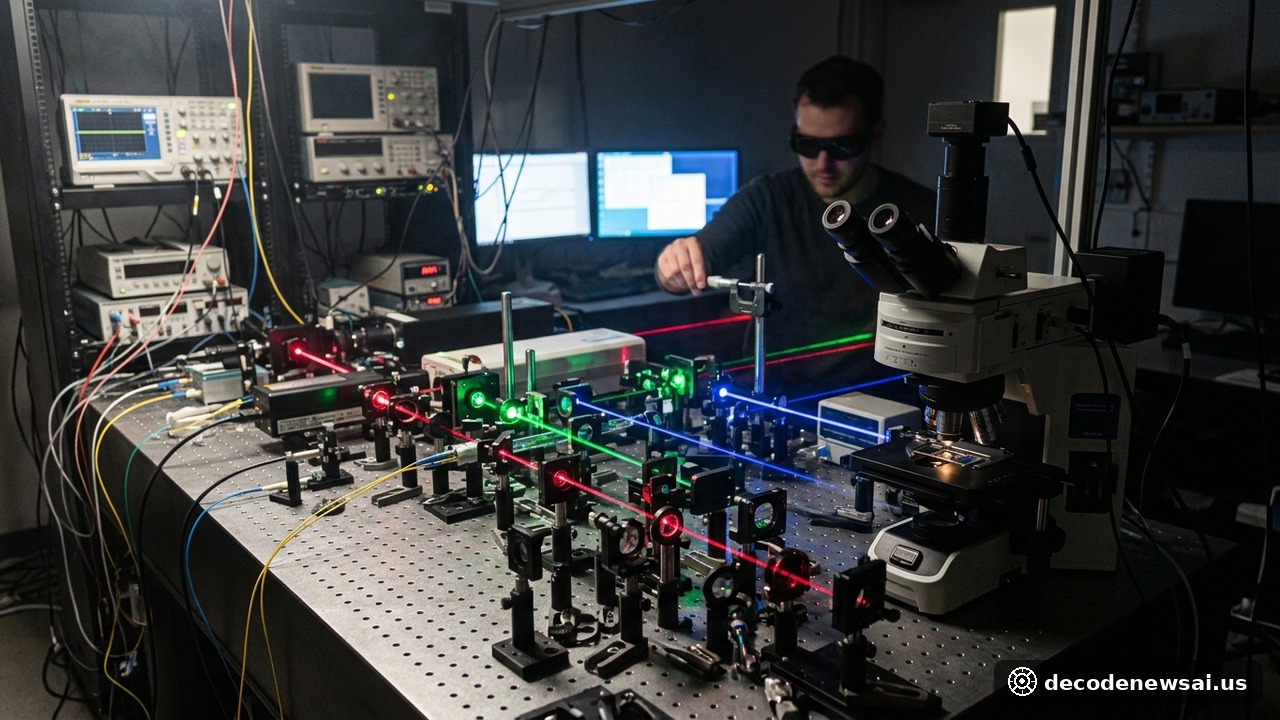
Photonic quantum computing developer Xanadu Quantum Technologies and integrated photonics pioneer HyperLight Corporation announced an experimental breakthrough in quantum hardware design. The announcement came on Tuesday, November 10, 2026. The partners used HyperLight's thin-film lithium niobate platform. They demonstrated an ultra-low-loss optical switch. It achieved an insertion loss of just 7 millidecibels (7 mdB). The result is a nearly threefold loss reduction compared to previous state-of-the-art benchmarks. It resolves a critical engineering obstacle toward building fault-tolerant photonic quantum computers.
Thin-Film Lithium Niobate Platform Overcomes Cascaded Optical Attenuation in Quantum Networks
Photonic quantum computing offers unique structural advantages. These include room-temperature processor operation. They also include seamless integration with fiber-optic communication infrastructure.
Conventional silicon photonic architectures face a problem. Single photons traversing thousands of cascaded optical switches experience cumulative attenuation. This rapidly destroys fragile quantum entanglement states. The engineering team used proprietary nanophotonic etching techniques on wafer-scale thin-film lithium niobate. This virtually eliminated optical scattering at waveguide boundaries. The optical switch also delivers sub-nanosecond switching speeds. Its optical extinction ratios exceed 99.9 percent.
Christian Weedbrook is Founder and Chief Executive Officer of Xanadu. He stated in Toronto: "Photonic loss has historically represented the single greatest physical barrier to scalable quantum computing. Every lost photon degrades computational fidelity. Demonstrating a 7-millidecibel optical switch confirms that our architectural roadmap toward millions of error-corrected qubits is fully achievable."
Industrial Foundry Compatibility Ensures Mass Manufacturing of Coherent Optical Arrays
Beyond raw physical performance, the breakthrough's primary significance lies in its compatibility with commercial semiconductor wafer fabrication processes.
HyperLight engineers confirmed the manufacturing details. The nanophotonic switches were made on commercial 8-inch CMOS-compatible foundry lines. Wafer yields were high. This solid-state manufacturing approach eliminates labor-intensive fiber-coupling alignment. It enables monolithic integration of tens of thousands of reconfigurable optical switches on a single semiconductor die. Standardized foundry production dramatically reduces component manufacturing costs. It also ensures microscopic component uniformity.
The Chief Technology Officer of HyperLight remarked during a presentation in Cambridge, Massachusetts: "Thin-film lithium niobate is experiencing a transformative industrial transition analogous to the early days of silicon electronics. We have translated an exceptional scientific discovery into a reproducible manufacturing process compatible with commercial foundries."
Accelerating Fault-Tolerant Architectures for Commercial High-Performance Quantum Computing
Optical switch loss is now drastically curtailed. Xanadu is integrating the advanced switching components into its three-dimensional cluster-state quantum architecture.
Engineering roadmaps indicate a deployment plan. The partners plan to deploy prototype multi-chip quantum modules by late 2027. These modules will feature over 100,000 low-loss optical nodes. The scalable architecture will be applied to complex quantum simulation in material science. It will also serve molecular catalyst optimization and post-quantum cryptographic security. The hardware validation solidifies North American technological leadership in photonic quantum information systems.
A distinguished professor of quantum information at the University of Waterloo observed: "Compressing optical switch loss to single-digit millidecibels was long considered an elusive theoretical ideal. This achievement transitions photonic quantum computing from scientific exploration into an actionable engineering discipline." Experimental datasets were submitted to scientific preprint repositories on Tuesday.
Strategic planning advisors and international trade specialists noted something about long-term frameworks. Long-term intergovernmental frameworks generate predictable operating environments across key industry sectors. Regulatory bodies and enterprise leaders couple transparent administrative guidelines with rigorous scientific benchmarks. This establishes sustainable operating models capable of withstanding shifting macroeconomic dynamics. Global market participants will continue observing forthcoming implementation milestones. Public agencies will execute their mandated responsibilities throughout 2027. Cross-border coordination remains vital for driving sustained operational resilience. It also remains vital for delivering measurable societal benefits worldwide.