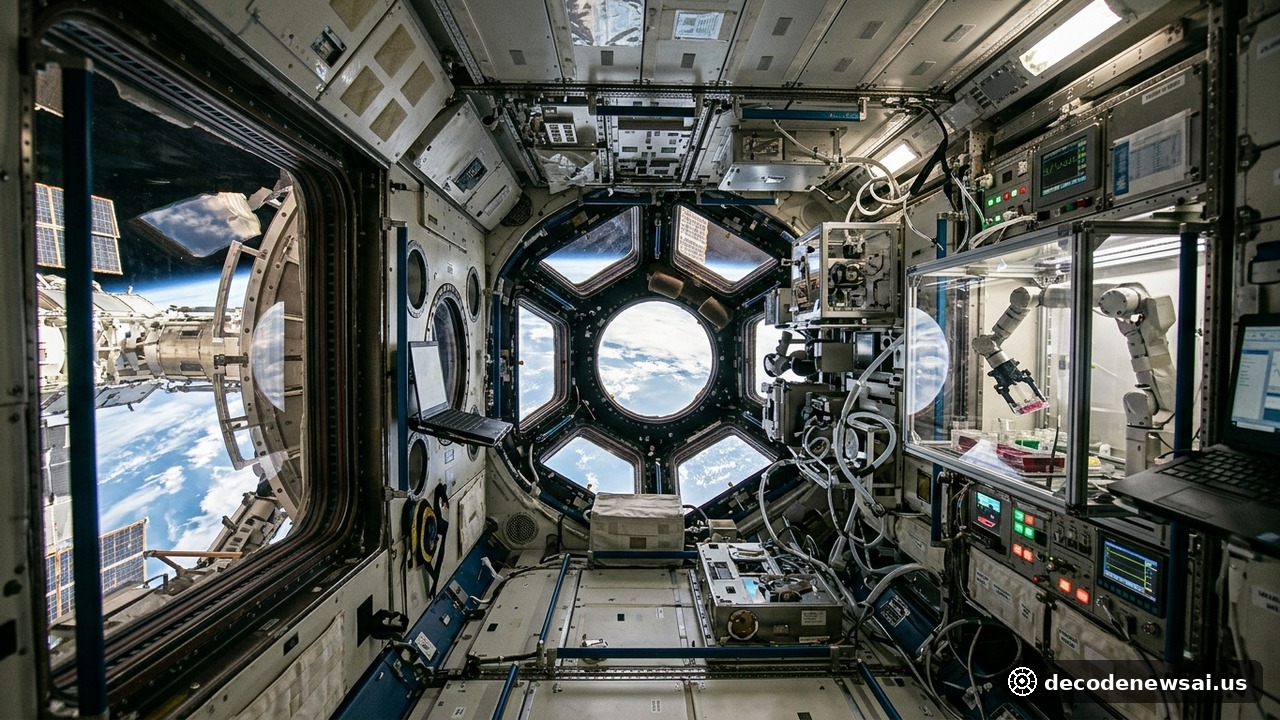
Commercial space infrastructure developer Axiom Space, Inc. and advanced materials company Nitride Global Inc. announced a strategic memorandum of understanding. The signing date was Tuesday, November 10, 2026. The partners will use Axiom's commercial orbital laboratories in low Earth orbit. They will conduct microgravity crystal growth and epitaxial refinement of ultra-wide bandgap aluminum nitride semiconductor wafers. The deal covers orbital work for high-value terrestrial industrial uses.
Microgravity Suppresses Convective Instabilities in Crystal Growth
Aluminum nitride semiconductors have exceptional thermal conductivity. They also offer strong electrical insulation and breakdown voltage. These properties matter for defense radar, deep ultraviolet optoelectronics, and power grid switches.
Axiom Space technical briefs describe the problem on the ground. Buoyancy-driven thermal convection hampers aluminum nitride crystal growth. Gravity-induced sedimentation and lattice dislocations also limit yields. Those limits hit commercial wafers of three inches and above. In microgravity 400 kilometers above Earth, surface tension forces dominate fluid behavior. That enables near-perfect atomic layer epitaxy. Crystalline defect densities fall by more than two orders of magnitude versus ground methods.
The Vice President of In-Space Manufacturing and Applications at Axiom Space commented in Houston: "Low Earth orbit is evolving from an exploration destination into an orbital manufacturing incubator for high-performance materials. Partnering with Nitride Global allows us to harness the physics of microgravity to deliver breakthrough semiconductor capabilities that cannot be replicated on Earth."
Automated In-Space High-Temperature Furnace Scheduled for Launch in 2027
Engineering teams have commenced fabrication of an automated furnace. The unit is a space-qualified high-temperature crystal growth furnace. The memorandum details the project schedule.
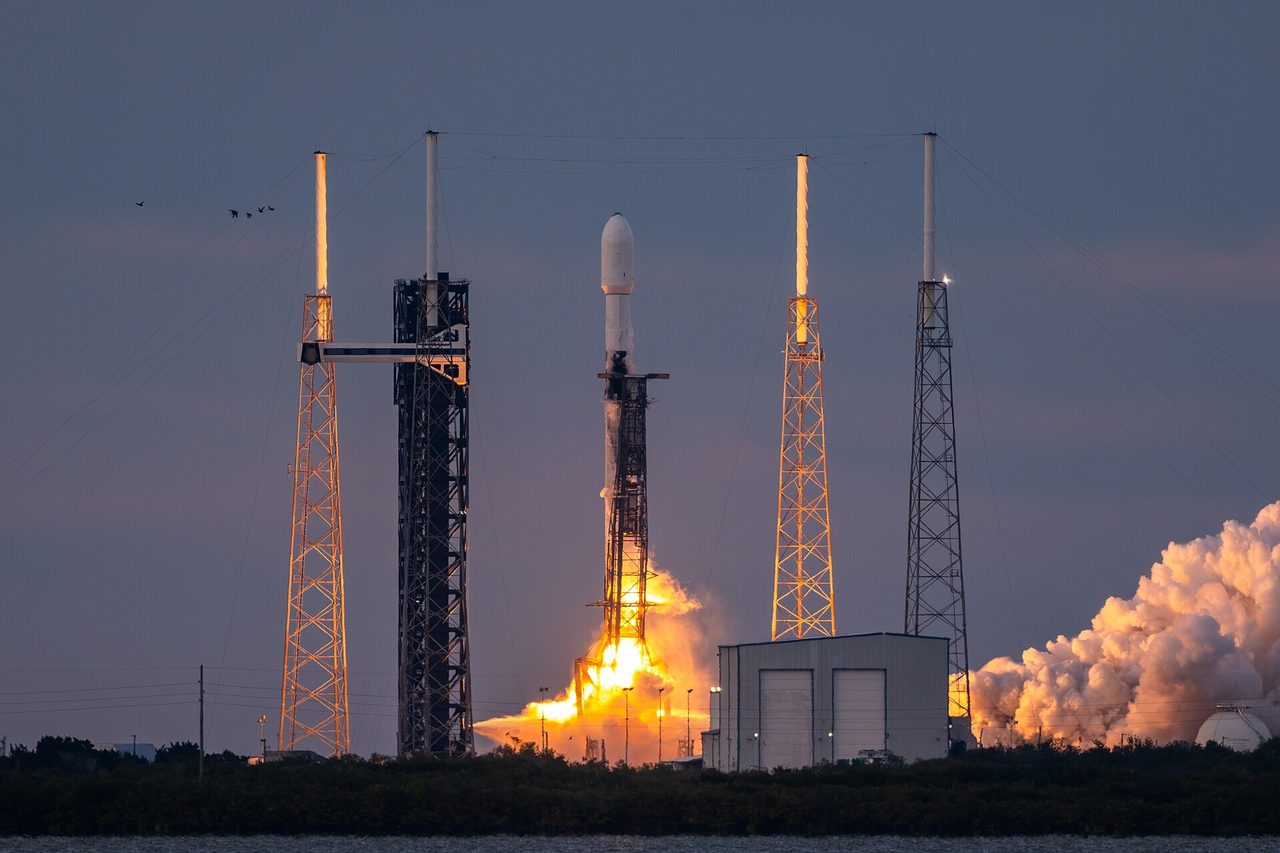
The experimental payload features a hermetically sealed, induction-heated chamber. It is engineered for minimal power consumption. It is also built for severe acoustic launch profiles. The payload is designed to fly aboard a commercial cargo mission. That mission goes to Axiom's orbital module in the third quarter of 2027. Onboard astronauts will perform cassette exchanges and telemetry checks. Terrestrial control rooms monitor the heating and crystallization cycle autonomously. Recovered space-grown wafers will undergo synchrotron X-ray diffraction testing upon return.
A principal research scientist at the MIT Microsystems Technology Laboratories remarked: "Orbital manufacturing is transitioning from scientific novelty into industrial reality. Validating microgravity epitaxy for aluminum nitride could fundamentally reshape the technological frontier for high-power electronics and quantum computing hardware." The partners have begun formal interface reviews with spaceflight authorities.
Orbital Material Logistics to Support Commercial Downlink Supply Chains
Axiom Space is establishing specialized operational corridors. These corridors connect orbital manufacturing facilities with terrestrial semiconductor fabs. Payload fabrication is advancing.
The memorandum outlines a phased expansion roadmap from 2028 to 2030. The target is multi-furnace orbital suites. These suites would produce thousands of high-purity single-crystal wafers annually. Manufactured wafers will be secured within specialized thermal-controlled re-entry capsules. The capsules are designed for precision maritime recovery. They also support immediate delivery to fabrication cleanrooms. This closed-loop logistics model integrates orbital technology directly into terrestrial defense and microelectronics supply chains.
The co-chair of the Space Economy Council at the Aerospace Industries Association noted in Washington: "Transitioning in-space manufacturing into a commercial business requires focusing on products with immense value-to-mass ratios. Orbital semiconductor growth provides a compelling operational thesis for commercial space stations." Technical steering panels scheduled preliminary design reviews for next month.
Strategic planning advisors and international trade specialists noted that long-term intergovernmental frameworks generate predictable operating environments across key industry sectors. By coupling transparent administrative guidelines with rigorous scientific benchmarks, regulatory bodies and enterprise leaders establish sustainable operating models capable of withstanding shifting macroeconomic dynamics. Global market participants will continue observing forthcoming implementation milestones as public agencies execute their mandated responsibilities throughout 2027. Cross-border coordination remains vital for driving sustained operational resilience and delivering measurable societal benefits worldwide.
Strategic planning advisors and international trade specialists noted that long-term intergovernmental frameworks generate predictable operating environments across key industry sectors. By coupling transparent administrative guidelines with rigorous scientific benchmarks, regulatory bodies and enterprise leaders establish sustainable operating models capable of withstanding shifting macroeconomic dynamics. Global market participants will continue observing forthcoming implementation milestones as public agencies execute their mandated responsibilities throughout 2027. Cross-border coordination remains vital for driving sustained operational resilience and delivering measurable societal benefits worldwide.