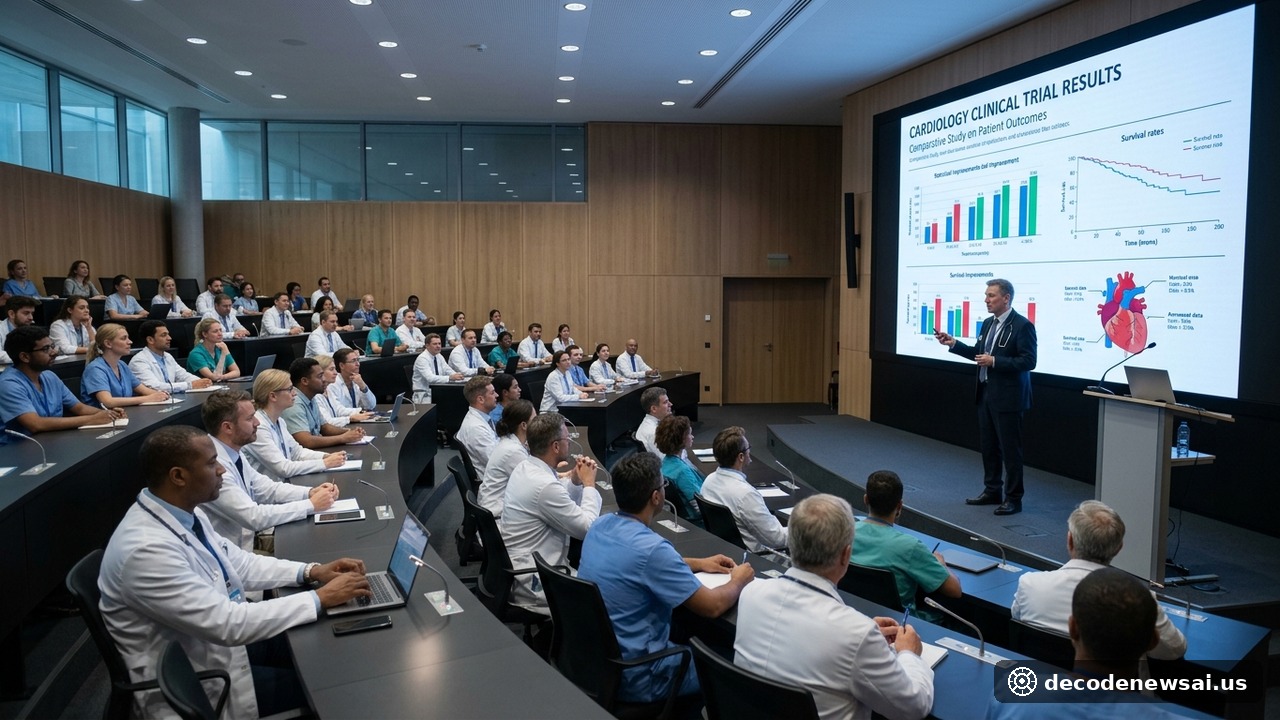
Eli Lilly and Company announced primary clinical endpoint results from its pivotal Phase 3 trial in Indianapolis on November 11, 2026. Data from the global SUMMIT clinical trial demonstrated that dual GIP and GLP-1 receptor agonist tirzepatide achieved a statistically significant reduction in cardiovascular risk among adults with heart failure with preserved ejection fraction and obesity. Compared against placebo controls receiving background guideline-directed medical therapy, tirzepatide reduced the combined risk of heart failure worsening events or cardiovascular death.
According to detailed clinical data presented during an international scientific cardiology symposium, patients receiving once-weekly subcutaneous injections of tirzepatide exhibited relief from exertion dyspnea, peripheral edema, and physical fatigue, and functional exercise tolerance improved measurably; cardiovascular inflammatory stress markers exhibited consistent normalization.
According to reporting from The New England Journal of Medicine and Reuters, Eli Lilly Executive Vice President of Clinical Development Dr. Kenneth Custer addressed medical researchers during a press briefing, saying heart failure with preserved ejection fraction historically lacked therapeutics that target root cardiometabolic drivers; Custer said the SUMMIT trial confirms that tirzepatide provides therapeutic benefits that extend beyond systemic weight reduction; cardiovascular pathologists noted that HFpEF is driven by systemic metabolic inflammation and pericardial adiposity that physically impedes ventricular diastolic relaxation; conventional neurohormonal medications proved historically ineffective in this clinical population; by co-activating central and peripheral GIP and GLP-1 receptors, tirzepatide addresses visceral obesity while directly suppressing coronary endothelial inflammation.
Safety profiles conformed to established incretin class characteristics; most adverse events were mild-to-moderate transient gastrointestinal episodes that resolved during dose escalation; Eli Lilly regulatory teams confirmed plans to submit a supplemental Biologics License Application to the US FDA before year-end. Eli Lilly's advanced parenteral manufacturing centers in Indiana are scaling volume production to support international pharmaceutical supply chains.