Autonomous Fault Protection Halts Primary X-Band as S-Band Signal Traverses 24 Billion Kilometers
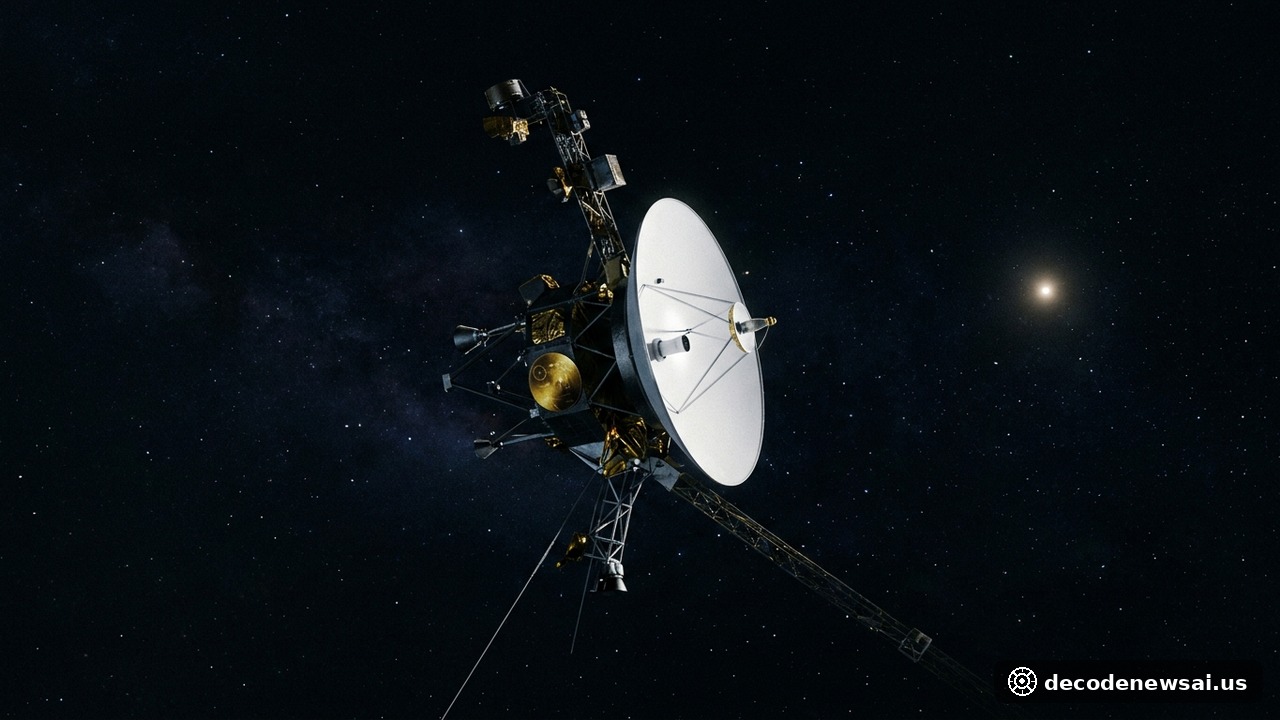
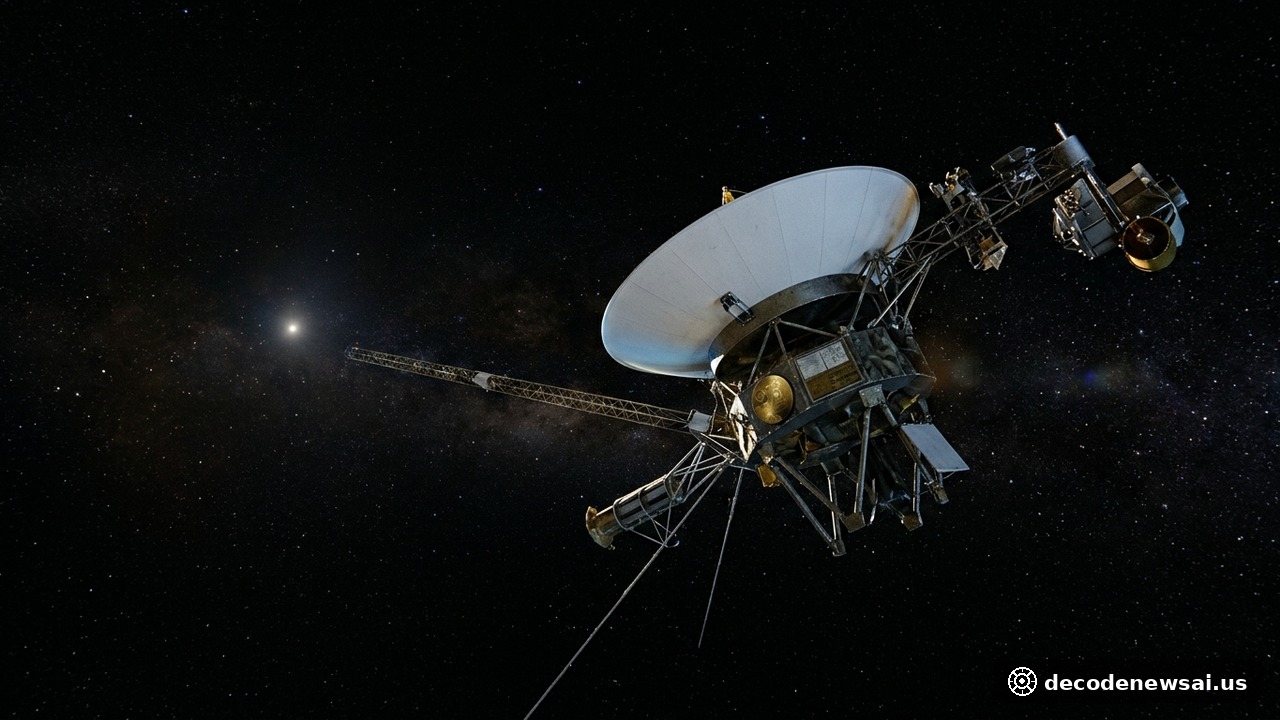
NASA announced on November 15, 2026, that flight controllers restored regular communications with Voyager 1 using a secondary S-band radio transmitter unpowered since 1981. Voyager 1, more than 24 billion kilometers from Earth, triggered automated onboard fault protection systems that shut down its primary X-band transmitter. Deep Space Network ground station engineers tracked the faint radio beacon to restore operational telemetry. According to operational communiques released by NASA's Jet Propulsion Laboratory in Pasadena, California, the incident began in mid-October when controllers uplinked routine commands to activate an internal heater. The command overloaded onboard power margins; the probe's radioisotope thermoelectric generators lose roughly four watts annually through radioisotope decay; the power transient tripped autonomous fault protection software, automatically shedding non-essential electrical loads.
Subsequent diagnostic checks indicate the fault software triggered additional safeguards, ultimately deactivating the high-capacity X-band radio transmitter utilized continuously since the probe completed its flyby encounter with Saturn in 1981, and the system autonomously powered on the dormant S-band radio transmitter, which operates at lower power consumption.
NASA Voyager Mission Manager Suzanne Dodd said the Deep Space Network antennas detected the faint S-band signal. The low-gain S-band transmitter transmits at significantly lower signal intensity, and deep space telemetry was nearly obscured by cosmic background noise over the 15-billion-mile distance. Engineers operating the 70-meter parabolic dish antenna at the Goldstone Deep Space Communications Complex executed digital signal filtering to lock onto the spacecraft's carrier wave. Radio signals traveling at the speed of light require approximately 23 hours to travel from Earth to Voyager 1 and an identical 23-hour return transmission, imposing a two-way light travel time of roughly 46 hours for each diagnostic command cycle.