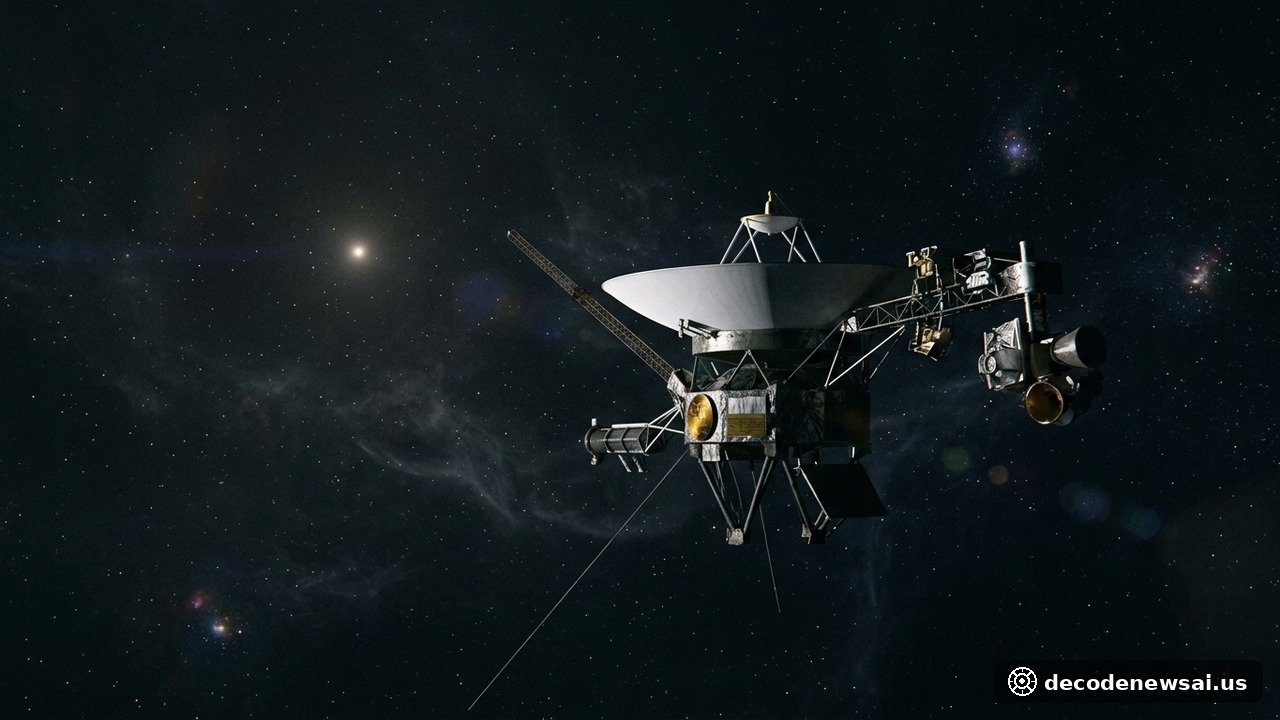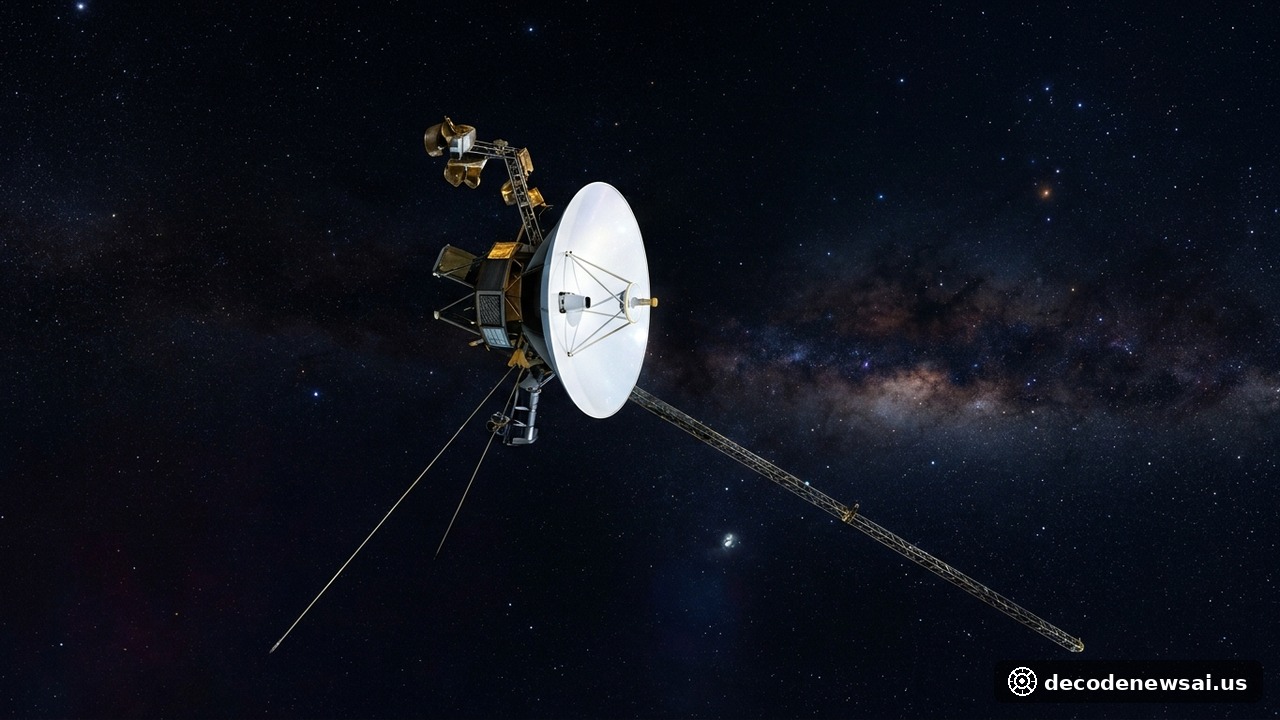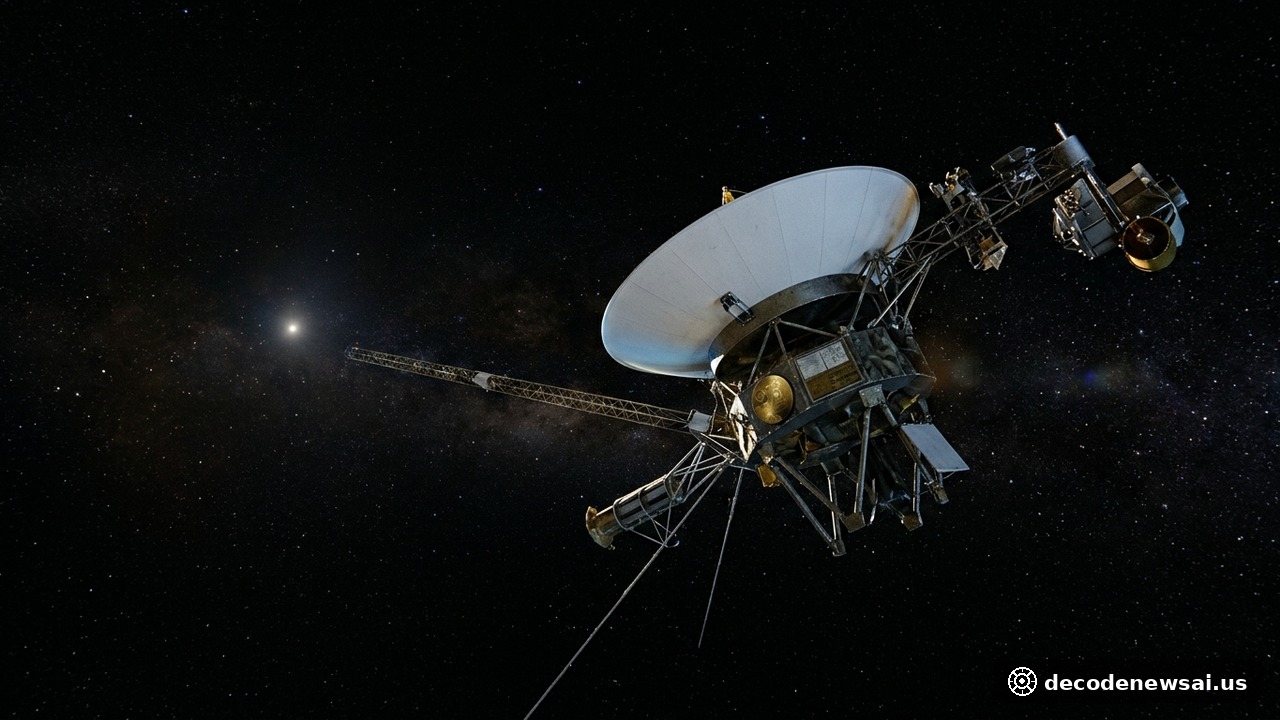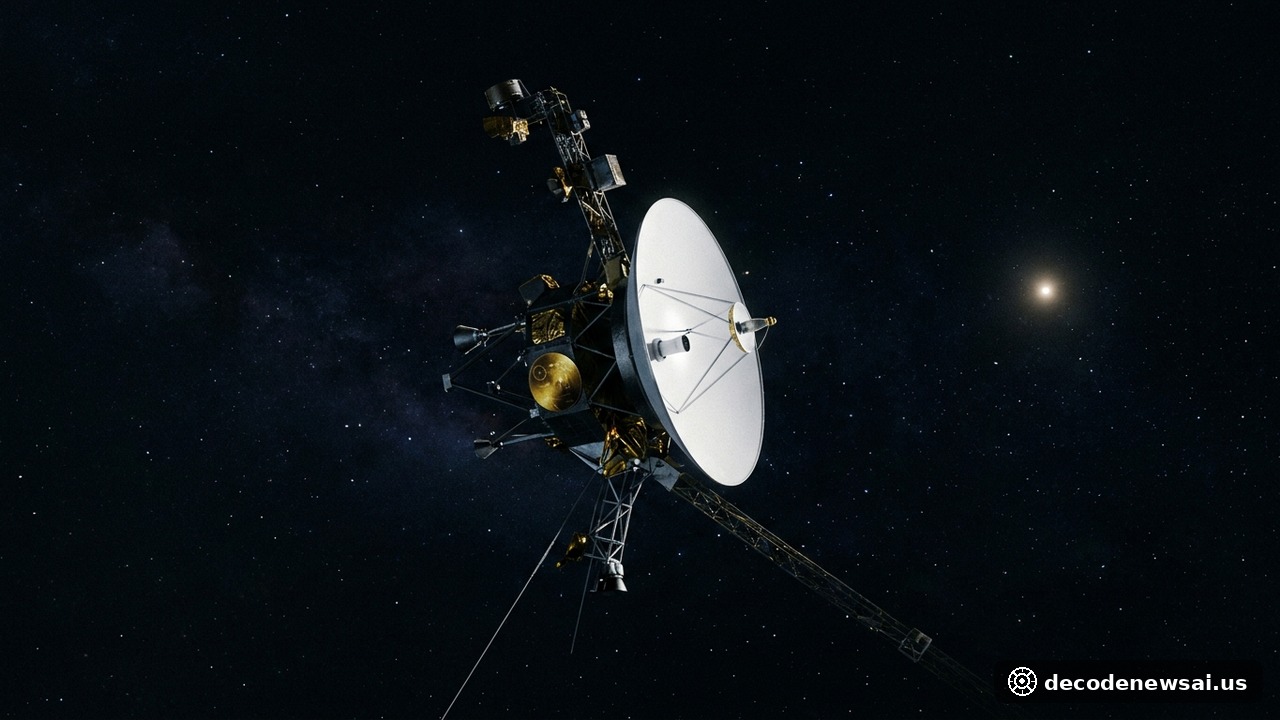
PASADENA, Calif. — NASA mission trackers updated countdown telemetry on Thursday, November 12, 2026. The iconic Voyager 1 spacecraft will cross a historic cosmic threshold on Wednesday, November 18, at 5:16:07 a.m. Eastern Standard Time. It will reach exactly one light-day from Earth. That distance is 16.094 billion miles, or 25.902 billion kilometers. Voyager 1 becomes the first human-built vessel to travel that far into space.
Orbital tracking logs are maintained by NASA's Jet Propulsion Laboratory (JPL). One light-day equals the distance light travels in a vacuum over 24 hours. That is roughly 173 times the distance between Earth and the Sun. Voyager 1 coasts outward at 60,905 kilometers per hour relative to the Sun. The probe currently sits 23 hours and 59 minutes away by one-way radio transmission. Every engineering command from NASA's Deep Space Network will then require more than 48 hours round-trip.
Voyager 1's plutonium power supply loses roughly four watts annually. Engineers deactivated its cosmic ray instrument in February 2025. They deactivated its low-energy particle sensor in April 2026. Two critical science instruments remain active. Its magnetometer and plasma wave subsystem continue transmitting interstellar medium measurements. The rate is 160 bits per second. NASA has invited planetariums and amateur astronomers worldwide to participate in "Shine Bright for Voyager" events after sunset on November 17. JPL forecasts indicate Voyager 1 will power down its final science instrument in the 2030s. It will fall completely silent beyond Deep Space Network sensitivity around 2036.
Voyager 1 and its twin Voyager 2 launched 16 days apart in 1977. They transformed planetary astronomy with humanity's first close-up portraits of Jupiter, Saturn, Uranus, and Neptune. Voyager 2 is not projected to reach the one light-day boundary until roughly 2035. That is long after its onboard nuclear generators are expected to power down.