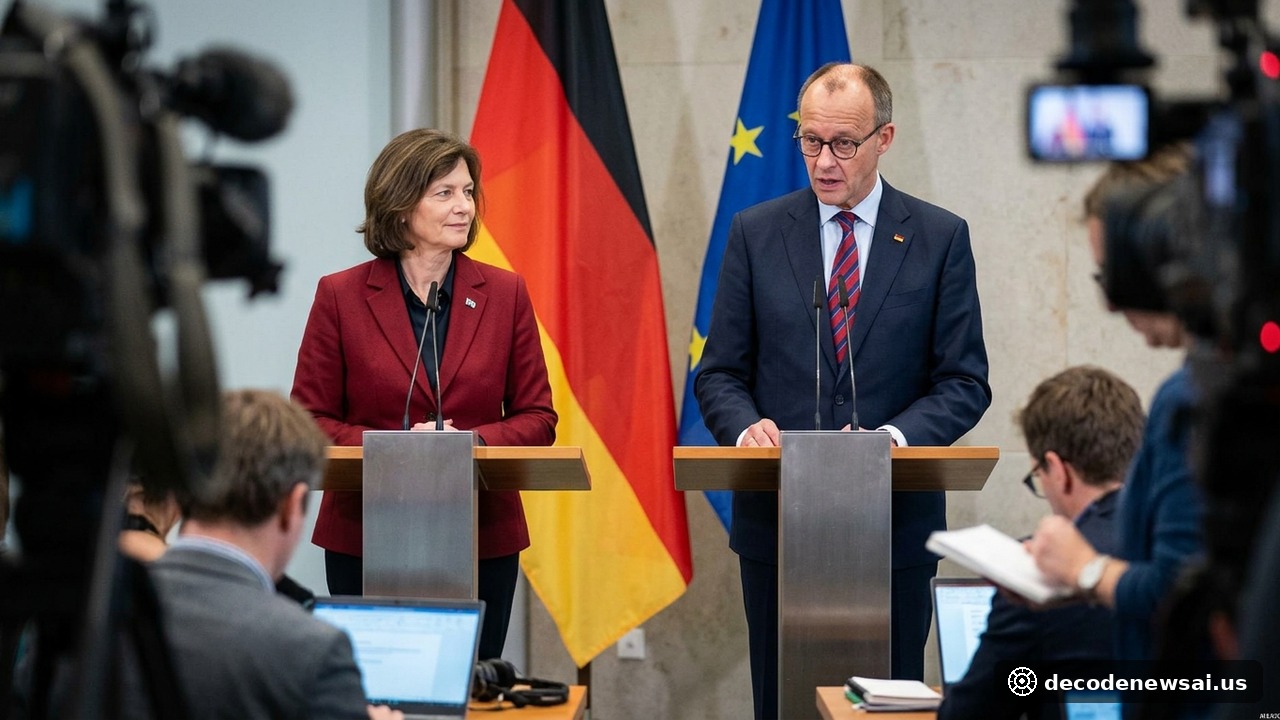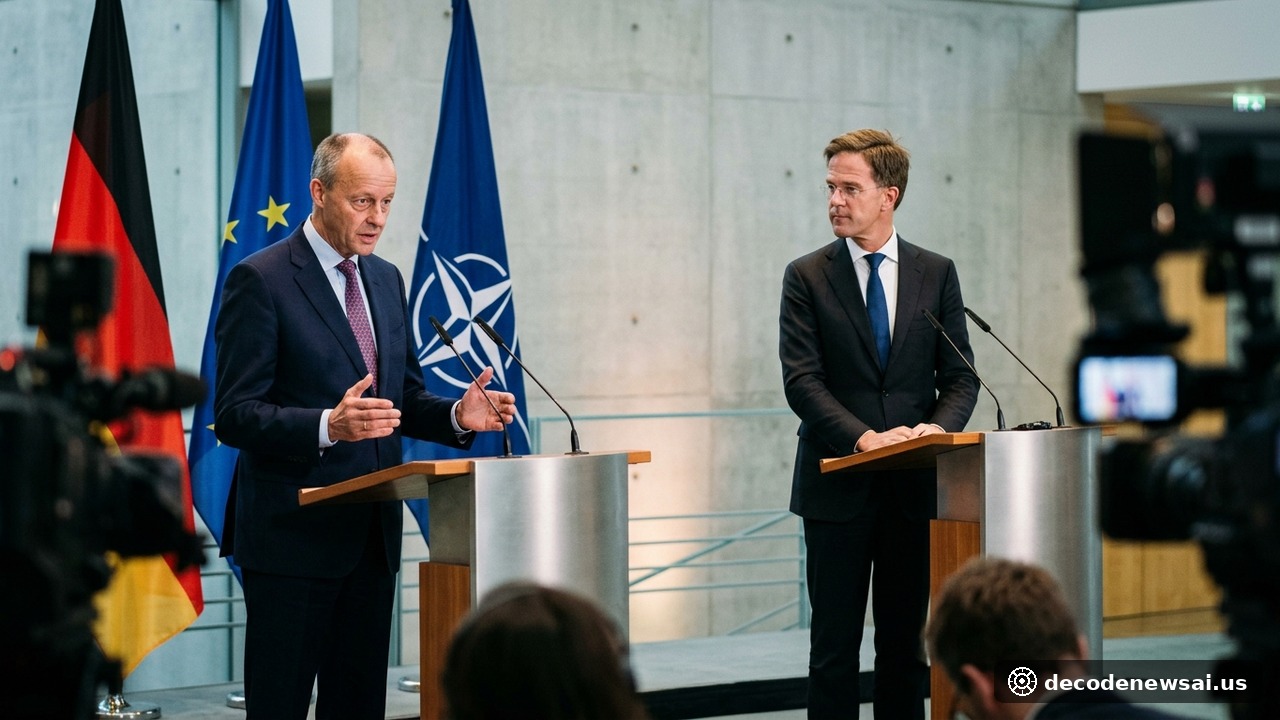
German Chancellor Friedrich Merz convened an extraordinary defense cabinet meeting at the Federal Chancellery in Berlin on November 6, 2026, followed by a high-profile joint press conference with visiting NATO Secretary General Mark Rutte. During the briefing, both leaders formally confirmed that NATO allies have locked in financing mechanisms for a landmark 70 billion euro (approximately 78.3 billion US dollars) joint military and defense assistance package for Ukraine for the 2026 calendar year. Furthermore, Chancellor Merz officially announced that the German federal cabinet has approved a revised long-term defense investment framework that permanently elevates Germany's baseline national defense expenditure to 3.5% of gross domestic product starting in fiscal year 2029. This momentous policy shift cements Europe's largest industrial economy into a comprehensive military restructuring and industrial rearmament posture not witnessed since the height of the Cold War.
Key Strategic Metrics: NATO Assistance Commitment and German Defense Budget
- Berlin Coalition Air Defense Munitions: Initial €4.5 Billion Artillery & Missile Tranche
- European Joint Munitions Ramp-up: 2.4x Expansion in Heavy Artillery Output
- Permanent NATO Eastern Flank Brigade: 5,000 Stationed Bundeswehr Soldiers in Lithuania
How Does the €70 Billion Package Establish a Sustainable Support Architecture?
Addressing reporters alongside NATO Secretary General Rutte, Chancellor Merz stressed that the finalized 70 billion euro defense commitment marks an irreversible transition away from short-term ad-hoc donations toward an institutionalized, multi-year sustainment framework. Operational logistics, weapons standardization, and interoperability certification will now be coordinated directly through the NATO Security Assistance and Training for Ukraine (NSATU) command established in Wiesbaden.
Under the agreed cost-sharing model, NATO member nations will contribute capital proportionally based on national gross domestic product figures, ensuring continuous procurement pipelines for advanced air defense interceptors, Western-standard 155mm heavy artillery munitions, and mechanized armored combat platforms. Secretary General Rutte emphasized that clear and locked-in fiscal appropriations eliminate strategic ambiguity, removing any expectation in opposing capitals that Western resolve will erode under prolonged geopolitical attrition. The program provides frontline defensive units with concrete operational visibility and reliable ammunition logistics extending across multiple operational quarters.
Why Did Berlin Commit to an Ambitious 3.5% GDP Defense Baseline by 2029?
Explaining Germany's far-reaching doctrinal evolution, Chancellor Merz asserted that the historic 2% NATO spending target established at the Wales Summit is no longer adequate to deter contemporary multidirectional security threats on the European continent. Decades of structural underinvestment left the German Bundeswehr facing systemic shortages in munitions stockpiles, degraded armored vehicle readiness, and fragmented digital battlefield communications infrastructure.
By enshrining 3.5% of GDP as Germany's permanent defense spending benchmark starting in 2029, the federal government guarantees financial continuity after the expiration of the temporary 100 billion euro special military modernization fund (Sondervermögen) in 2027. The expanded fiscal allocation will directly fund the permanent deployment of Panzerbrigade 45 in Lithuania, representing the first permanent overseas basing of German combat troops since 1945. Merz underscored that a formidable, technologically advanced Bundeswehr serves as the indispensable European pillar of the trans-Atlantic alliance, asserting that European nations must build the autonomous capability to execute conventional collective deterrence independently.
What Lies Ahead for European Defense Industrial Base Expansion?
In conjunction with the budget announcement, the German defense cabinet formally endorsed joint procurement pacts linking German industrial defense giants with counterparts in France, the United Kingdom, and the Nordic nations. Priority initiatives focus on accelerating mass production of next-generation long-range precision fires, unified drone swarm countermeasures, and fortified satellite communications constellations. Data released by the European Defence Agency shows that European annual production of large-caliber artillery projectiles has reached 1.4 million rounds, yet structural bottlenecks in critical raw materials such as propellant and specialized forging steel persist.
To eliminate industrial capacity barriers, Berlin announced ten-year guaranteed procurement contracts for major domestic defense contractors while streamlining export licensing for standardized military hardware. European defense analysts observed that the Berlin Coalition summit and trans-Atlantic budget commitments reflect a paradigm shift toward enduring deterrence, institutionalizing high-capacity military preparedness across Europe for the remainder of the decade.