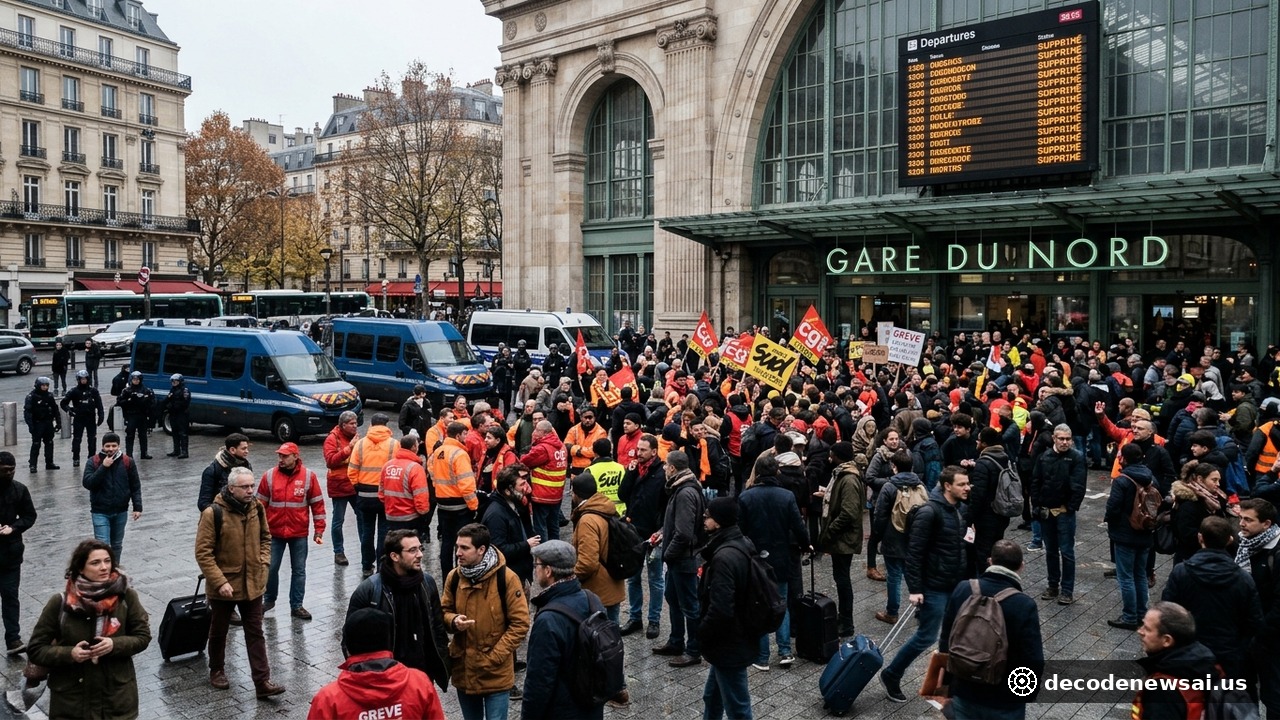
Transport labor unions across France joined coordinated demonstrations on November 8, prompting widespread passenger travel stoppages across the greater Paris metropolitan region. More than five critical regional rail arteries experienced complete service cancellations throughout the weekend. Over 1.2 million commuters faced transit delays as crowds protested rising transit tariffs and austerity measures. Tensions mounted outside central terminals.
Madrid Berlin Brussels rallies back Paris transit strike
According to operational notices released by the Ile-de-France transport authority, passenger rail links between Paris Nord and Creil were severed as rail maintenance technicians walked off shifts. High-capacity suburban transit lines including RER line D and suburban rail line K suffered acute schedule reductions. Police units instituted strict passenger metering across primary downtown underground interchanges. Congestion reached critical levels within station concourses.
The transit protests quickly resonated across other European metropolitan centers. Trade union delegations in Madrid, Berlin, and Brussels mobilized solidarity rallies protesting national utility subsidy contractions. European worker confederations demanded that national ministries freeze planned transit fare increases affecting low-income workers. Escalating living expenses continue to strain household budgets across the continent.
Pierre Dupont, regional coordinator for the joint transport union assembly, addressed reporters during a live Paris demonstration. He stated firmly: "Working families cannot absorb compounding tariff increases across essential public transit systems. If regional authorities refuse to halt planned price hikes, coordinated industrial actions will expand nationwide."
Paris deploys 300 buses amid rolling slowdowns
Municipal transit authorities scrambled emergency replacement shuttle fleets across urban corridors. The Paris autonomous transit operator deployed over 300 auxiliary buses to connect outer commuter suburbs with functioning metro terminals. However, surface convoys encountered heavy gridlock as labor motorcades conducted rolling slowdowns along inner ring motorways. Gendarmerie detachments monitored sensitive traffic interchanges.
Members of the European Parliament transport committee called for coordinated public utility tariff stabilization mechanisms across member states. Lawmakers emphasized that escalating electricity expenses and contracted wage increases should not fall disproportionately upon working commuters. Modal shifts toward public transit require predictable sovereign financial backing. If rail commuting costs remain prohibitive, urban travelers will inevitably return to personal passenger automobiles, undermining municipal carbon reduction targets.
National confederations of labor across France distributed preliminary mobilization directives for expanded industrial actions. Should upcoming mediation conferences stall, trade unions plan to extend demonstrations across civil aviation hubs, postal networks, and inter-city logistics corridors next Friday. The French civil aviation authority issued early flight schedule advisory warnings. Airport operators are drafting passenger contingency plans.
EU data show 24 percent transport tariff rise
Urban planners in Paris noted that multi-modal transit dependencies heighten operational vulnerability during synchronized transit strikes. Commuters who usually rely on high-frequency suburban rail corridors were forced onto local bus lines, creating unprecedented passenger bottlenecks across northern terminal hubs. Regional transport authorities coordinated with private ride-hailing services and municipal bicycle sharing operators to increase fleet availability near affected stations. Municipal police monitored central pedestrian thoroughfares to prevent unauthorized encampments. Commuter advocacy groups emphasized that sustained service reliability must accompany future tariff discussions.
Regional economic monitors warned that chronic passenger transport stoppages carry compounding productivity costs across suburban retail corridors. Small commercial shops near disrupted suburban rail hubs recorded substantial customer traffic reductions during the weekend peak. Business trade federations appealed to national labor mediators to accelerate formal arbitration sessions. Municipal leaders across surrounding departments urged ministerial delegates to propose constructive tariff compromises. Regional transit authorities emphasized that sustainable commuter infrastructure requires dedicated fiscal investment to ensure reliable everyday transport operations.
Data published by the European Union statistical office revealed that urban transport and energy tariffs expanded by nearly 24 percent over the past two years. Real disposable incomes for salaried employees contracted steadily under persistent inflation. Continental labor federations scheduled multilateral coordination sessions for Tuesday to plan expanded industrial mobilizations.