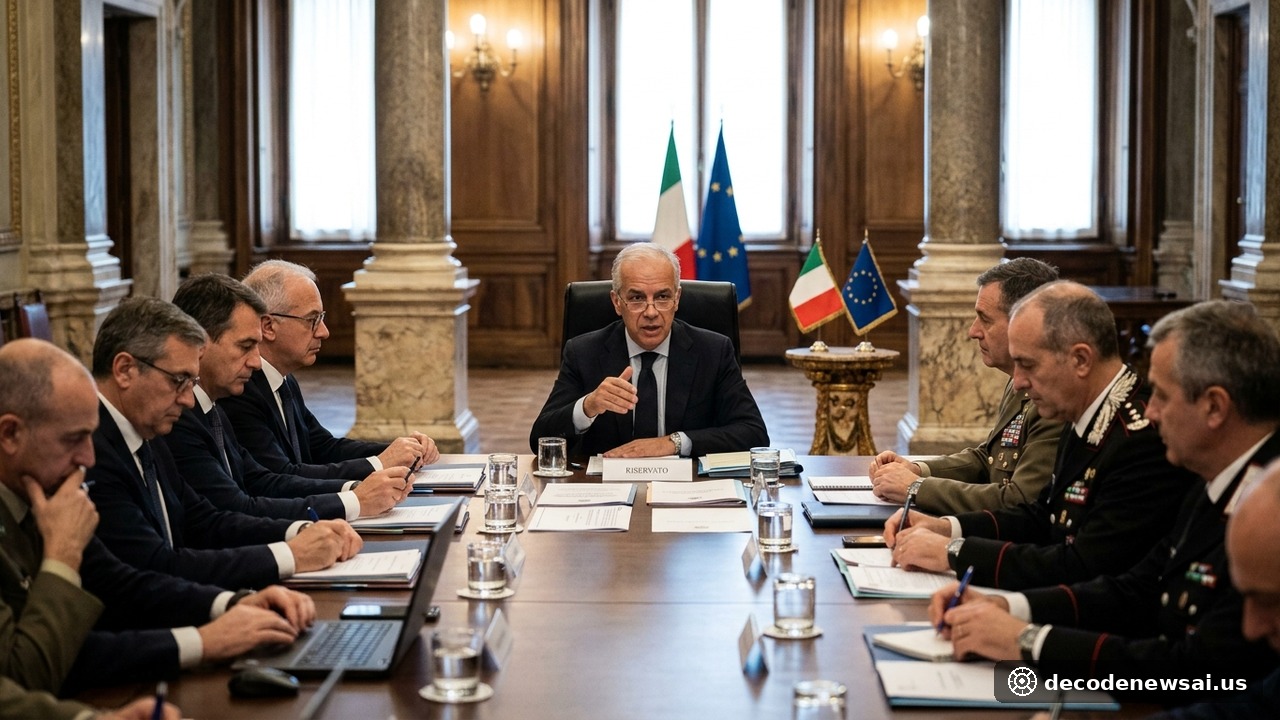
Italian Minister of the Interior Matteo Piantedosi formally convened an emergency national security conference on November 8, summoning leadership across state defense and intelligence agencies. The high-level meeting of the National Committee for Public Order and Security is scheduled for November 10 at the Interior Ministry headquarters in Rome. Government ministers will assess escalating cyber risks targeting critical public infrastructure. National infrastructure faces complex threats. Italian authorities are constructing inter-agency defensive perimeters. Proactive defense measures remain essential.
Cyberattacks target Tajani and Italian ministries
The emergency security convening follows a sequence of sophisticated digital disruptions directed at Italian government leadership. Over preceding days, malicious cybercriminal syndicates leaked confidential personal and family information belonging to Foreign Minister Antonio Tajani across dark web forums. Industrial telemetry controls governing transportation corridors reported unauthorized network scanning. Security alarms sounded across ministries. Italian intelligence agencies linked the hostile activity to broader geopolitical confrontations.
Italian Minister of Defense Guido Crosetto emphasized in an official public statement: "National security agencies cannot remain passive until irreversible damage occurs. The Italian Republic must cease reacting retrospectively to digital aggression, transitioning toward proactive mitigation to establish comprehensive cognitive cybersecurity as our highest strategic priority."
Cognitive warfare tactics intersect increasingly with conventional infrastructure sabotage. Minister Crosetto explained that hostile state-affiliated groups weaponize targeted disinformation campaigns alongside personal credential exfiltration to destabilize public confidence. Traditional perimeter defenses prove insufficient against hybrid tactics. The National Committee for Public Order and Security will evaluate inter-agency intelligence-sharing protocols during Tuesday's plenary session.
EU partners monitor Rome hybrid threat response
Allied capitals throughout the European Union are monitoring Rome's strategic response closely. Overseas intelligence partners shared technical threat indicators detailing similar scanning against industrial control systems and commercial banking interfaces across Mediterranean corridors. International intelligence cooperation remains urgent. Italian cyber command personnel maintain continuous operational liaison with the European Union Agency for Cybersecurity.
Geopolitical defense scholars observed that hybrid campaigns targeting cabinet ministers and energy distribution grids represent standard tactics within contemporary grey-zone conflict. Generating persistent, low-intensity operational friction across public utilities allows adversaries to drain executive administrative resources efficiently. Defensive vulnerabilities require prompt remediation. Italy's inter-agency mobilization provides valuable operational playbooks for European partners managing hybrid interference.
Technical advisory groups within the Interior Ministry are drafting binding baseline security directives for critical infrastructure operators. The mandatory compliance standards require municipal water authorities, energy utilities, and financial networks to enforce zero-trust network architectures and real-time behavioral telemetry monitoring. Industry compliance proceeds systematically. Regulatory authorities are scheduling multi-phase penetration testing simulations across key regional facilities.
Parliament reviews classified threat assessments
Parliamentary intelligence oversight committees in Rome reviewed classified threat assessments during closed legislative sessions. Lawmakers observed that targeted cyber operations directed against cabinet officials have become standard instruments within broader geopolitical competition. Modernizing baseline security protections across critical governmental ministries requires comprehensive statutory funding. Legislative delegations pledged cross-party support for infrastructure defenses. Coordinated operational readiness remains paramount.
Mediterranean strategic defense think tanks published policy briefs evaluating Italy's national cybersecurity posture. Security analysts emphasized that cognitive warfare seeks to undermine public confidence in democratic constitutional institutions through coordinated information manipulation. Defensive protocols must evolve continuously. The extraordinary convening of the National Security Council signals an assertive transition toward active deterrence against asymmetric hybrid interference.
The extraordinary national security summit in Rome will convene Tuesday morning under Minister Piantedosi's chairmanship. Findings will be incorporated into a classified digital defense assessment submitted to Prime Minister Giorgia Meloni. Institutional coordination proceeds rapidly. Italian political leadership is forging unified consensus to defend national critical digital sovereignty. Sustained inter-agency vigilance remains fundamental to safeguarding national public stability throughout dynamic geopolitical environments. Bilateral technical committees confirmed that subsequent ministerial evaluations will focus on sustaining active diplomatic liaison throughout upcoming regional summits.