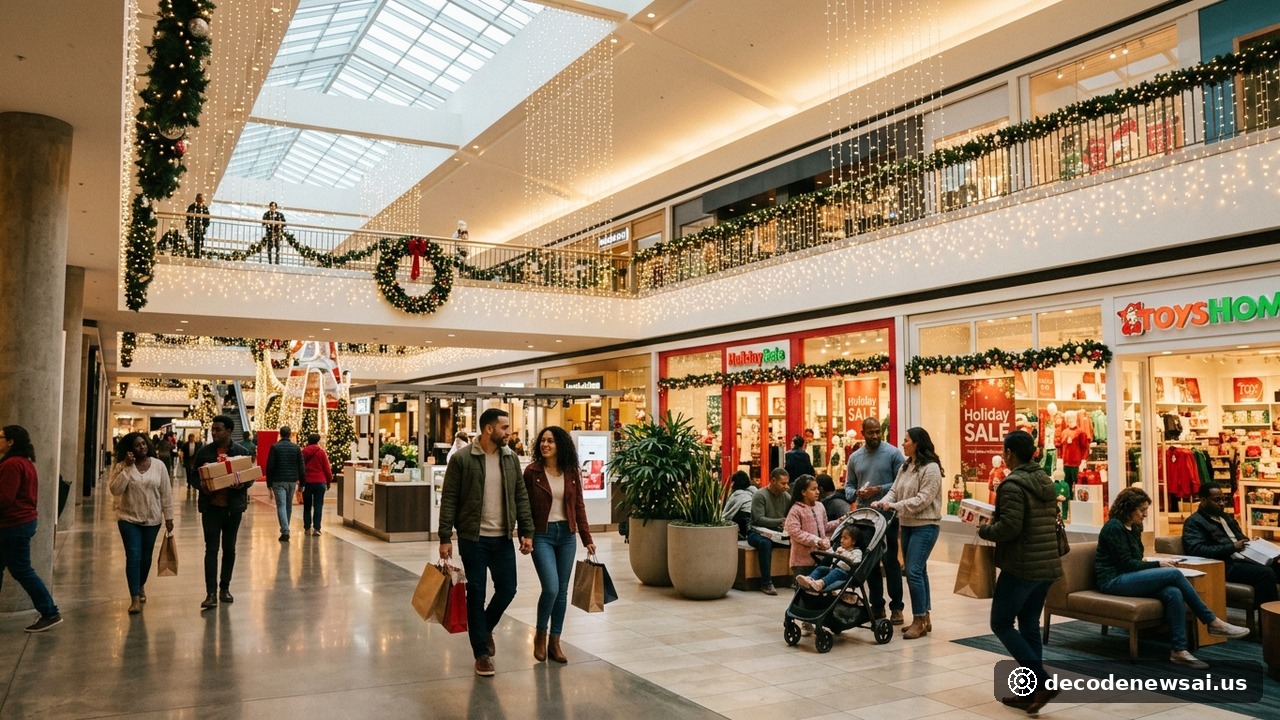
Holiday retail spending across the United States is projected to eclipse the historic one-trillion-dollar threshold for the first time during the November-December shopping corridor. According to the comprehensive annual holiday economic forecast released Sunday by the National Retail Federation (NRF), core retail sales will expand by 4.2% compared with 2025 levels, reaching an estimated $1.013 trillion. The projection represents a marked acceleration from the 3.1% annual growth recorded during the 2025 winter holiday season.
NRF forecasts 4.2% growth and 325,000 to 375,000 seasonal hires
Historically, holiday retail receipts account for approximately 19% of annual commercial revenue across mainstream merchants. NRF economists noted that the 4.2% growth trajectory represents the fastest seasonal spending acceleration recorded since the post-pandemic consumer surge in 2021. The trade organization's macroeconomic calculation models disposable personal income, wage trajectories, monthly core retail performance, and broad inflationary trends while excluding automotive dealers, gasoline filling stations, and restaurants.
In alignment with anticipated store traffic and fulfillment volume, commercial retail enterprises nationwide plan to hire between 325,000 and 375,000 seasonal workers. The hiring target aligns closely with the estimated 356,000 seasonal positions staffed during the 2025 holiday period. Retail hiring directors emphasized that logistics hubs, automated fulfillment centers, and in-store customer support desks constitute primary employment categories.
NRF President and Chief Executive Officer Matthew Shay addressed commercial media representatives regarding shifting household sentiment: "This forecast reflects our confidence that consumers will prioritize the holiday season even as they remain mindful of household budgets. Retailers are fully prepared to meet customer demand with competitive pricing structures and exceptional promotional value." Industry executives stressed that underlying commercial fundamentals remain fundamentally resilient.
% shop early, 53% online, gift cards top at 47%
Consumer behavior metrics compiled by Prosper Insights & Analytics reveal evolving seasonal purchasing strategies. Approximately 43% of surveyed shoppers reported initiating holiday browsing and purchase activities prior to November, compared with 42% last year, driven by efforts to mitigate concentrated December household expenses. Nevertheless, Thanksgiving weekend and Black Friday maintain formidable gravitational pull, with 64% of shoppers planning to capitalize on major holiday weekend promotions.
Channel preference analytics indicated that digital storefronts remain the foremost destination, with 53% of holiday participants planning online purchases. However, that figure marks a modest consolidation from past peaks as consumers re-engage with brick-and-mortar holiday experiences. Physical department stores and discount outlets each captured 43% of consumer intent. Shoppers cited merchandise tactile inspection and immediate in-store fulfillment as critical factors favoring physical venues.
Product categorization data showed universal gift cards topping consumer wish lists for the eighteenth consecutive year at 47%, followed by apparel and accessories at 44%, printed books and physical media at 25%, and personal beauty goods at 24%. Industry analysts noted that consumer resilience supports supply chain operators and regional logistics distribution centers across the continent throughout late winter.
Inventory out-of-stock rates drop to lowest in three years
Supply chain intelligence organizations reported that maritime freight gateways and inland intermodal rail terminals experienced orderly container turnover throughout October. Leading retail enterprises completed early inventory staging across regional distribution warehouses to prevent localized stockouts during peak promotional weekends. Inventory availability metrics indicate that out-of-stock rates for seasonal merchandise dropped to their lowest levels in three years. Logistics networks demonstrated solid operational resilience.
Consumer financial health organizations simultaneously advised households to exercise budgetary discipline amid persistent inflationary pressures on food and residential housing. Industry analysts noted that discount department stores and wholesale warehouse clubs will likely capture outsized transaction share as price-conscious families actively compare per-unit pricing. Commercial retail executives reiterated that delivering compelling product value remains the defining imperative of the holiday shopping season.
Retail technology consultancies noted that automated warehouse fulfillment workflows and dynamic inventory staging platforms have fundamentally transformed holiday merchandise logistics. Merchants are leveraging predictive inventory analytics to calibrate local promotional velocity while preventing margin erosion from unnecessary end-of-season clearance markdowns. Industry analysts anticipate steady retail turnover throughout the critical year-end shopping calendar.