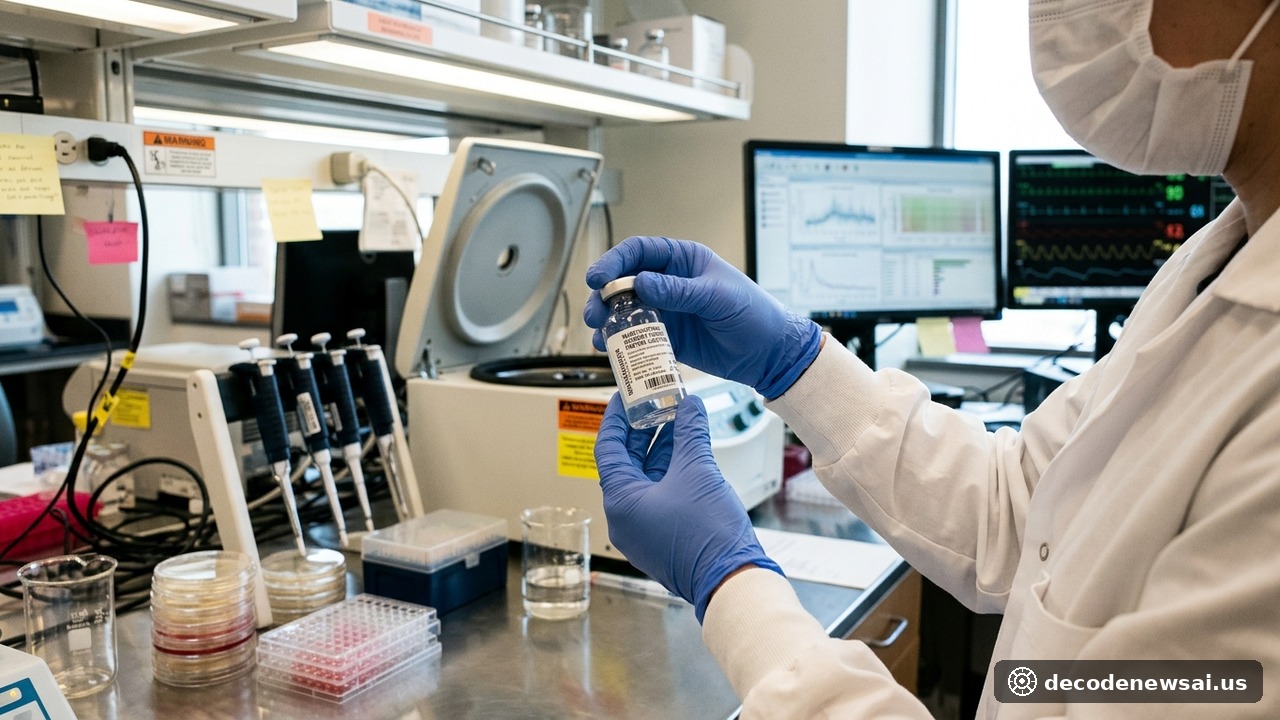
Johnson & Johnson released clinical outcome findings from its Phase 2 DAHLIAS trial evaluating investigational FcRn blocker nipocalimab in adults living with moderate-to-severe Sjögren's disease. The patient-reported data, scheduled for presentation at the American College of Rheumatology Convergence 2026, confirmed that 96% of surveyed patients identified mouth dryness as their primary debilitating symptom. The clinical findings complement previously reported objective measures demonstrating that nipocalimab doubled the proportion of patients achieving a 50% or greater increase in stimulated saliva production compared to placebo.
Sjögren's Disease Affects Four Million Individuals Globally
Autoantibody-Driven Disorder Affects Four Million Individuals Globally
Sjögren's disease is a chronic, systemic autoantibody-mediated autoimmune condition that impairs exocrine glands across multiple organ systems. The disease primarily targets the salivary and lacrimal glands, severely impairing tear and saliva production. The biological burden remains profound across affected populations.
Epidemiological estimates indicate that approximately four million individuals live with Sjögren's disease worldwide, with females representing roughly 90% of all diagnosed cases. Despite its high prevalence among systemic rheumatologic disorders, no therapeutic agents currently exist that address the underlying autoimmune etiology. Targeted therapies remain urgently needed.
Patients experience chronic xerostomia and keratoconjunctivitis alongside severe systemic complications, including inflammatory arthritis, disabling fatigue, and increased risks of lymphoma. Existing therapeutic approaches remain limited to topical lubrication, saliva stimulants, and non-targeted immunosuppressive agents. Standard symptom management provides incomplete functional relief.
DAHLIAS Trial Demonstrates Clinically Meaningful Symptom Relief
DAHLIAS Trial Demonstrates Clinically Meaningful Symptom Relief
The company's clinical research group published the qualitative and functional patient assessment data on Saturday, November 7, 2026. The findings represent one of 23 scientific abstracts evaluating nipocalimab accepted for presentation at the ACR Convergence symposium. Clinical researchers affirmed the evidentiary weight of the data.
Quantitative surveys established that oral dryness represented the most impactful functional symptom, followed by severe ocular dryness, physical exhaustion, and inflammatory joint stiffness. Objective salivary measurements demonstrated that patients receiving intravenous nipocalimab achieved statistically superior saliva secretion volume relative to placebo recipients. Measured flow improvements exceeded protocol thresholds.
Terence Rooney, Vice President and Rheumatology Disease Area Leader at Johnson & Johnson Innovative Medicine, emphasized the clinical significance of the findings: "Insights gathered directly from patient interviews demonstrate that restoring glandular secretory function generates immediate, measurable improvements in speech, swallowing, and overall quality of life." The clinical insights will guide ongoing regulatory planning.
Selective FcRn Blockade Facilitates Clearance of Pathogenic IgG Antibodies
Nipocalimab functions as a fully human, high-affinity monoclonal antibody directed against the neonatal Fc receptor (FcRn). By binding FcRn, the therapeutic inhibits the recycling of immunoglobulin G (IgG) antibodies, promoting the catabolic clearance of pathogenic autoantibodies from circulation. Targeted molecular clearance prevents tissue degradation.
Clinical biomarkers gathered throughout the 24-week evaluation demonstrated rapid and sustained reductions in circulating total IgG and disease-associated autoantibodies without triggering generalized immunosuppression. Tissue imaging indicated a corresponding reduction in lymphocytic infiltration across glandular tissue. Cellular preservation was confirmed via baseline biopsy comparison.
The investigational therapy maintained a favorable safety and tolerability profile across treated cohorts. Reported adverse events were primarily mild to moderate in severity, with low rates of treatment discontinuation and no observed increases in opportunistic infections. Safety monitoring established clean tolerability profiles.
Phase 3 Registration Program Initiates Global Patient Enrollment
Phase 3 Registration Program Initiates Global Patient Enrollment
The positive Phase 2 findings established the empirical basis for Johnson & Johnson's ongoing Phase 3 clinical program, designated the DAFFODIL study. The Phase 3 trial design incorporates functional patient-reported endpoints alongside traditional physician-assessed clinical scores. Trial investigators are finalizing regional site activations.
The registration study is currently screening and enrolling participants across academic rheumatology networks in North America, Europe, and Asia. Investigators will assess composite clinical indices alongside quantitative salivary flow and fatigue scales over a 52-week duration. Trial protocols reflect rigorous regulatory standards.
Assuming confirmatory trials meet primary efficacy criteria, Johnson & Johnson anticipates submitting a Biologics License Application to the U.S. Food and Drug Administration in late 2027. The clinical program represents the most advanced targeted therapeutic currently in development for Sjögren's disease. Global patient advocacy communities continue to monitor trial milestones closely.