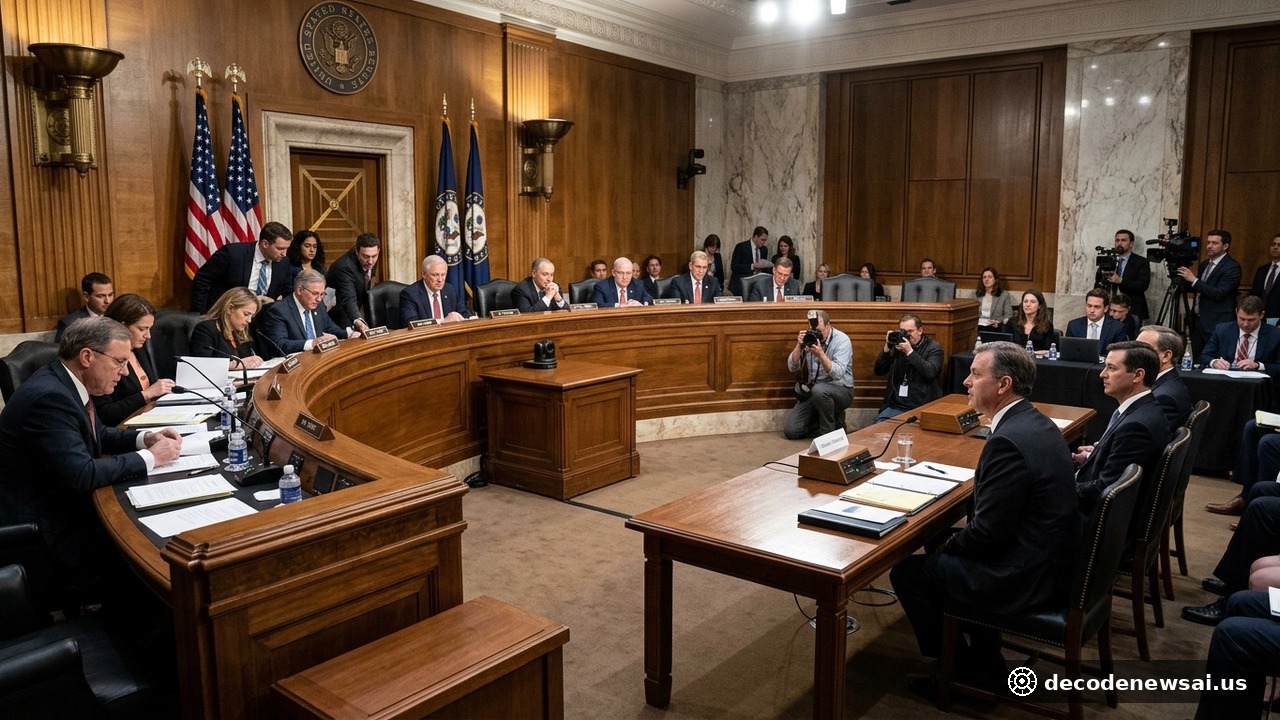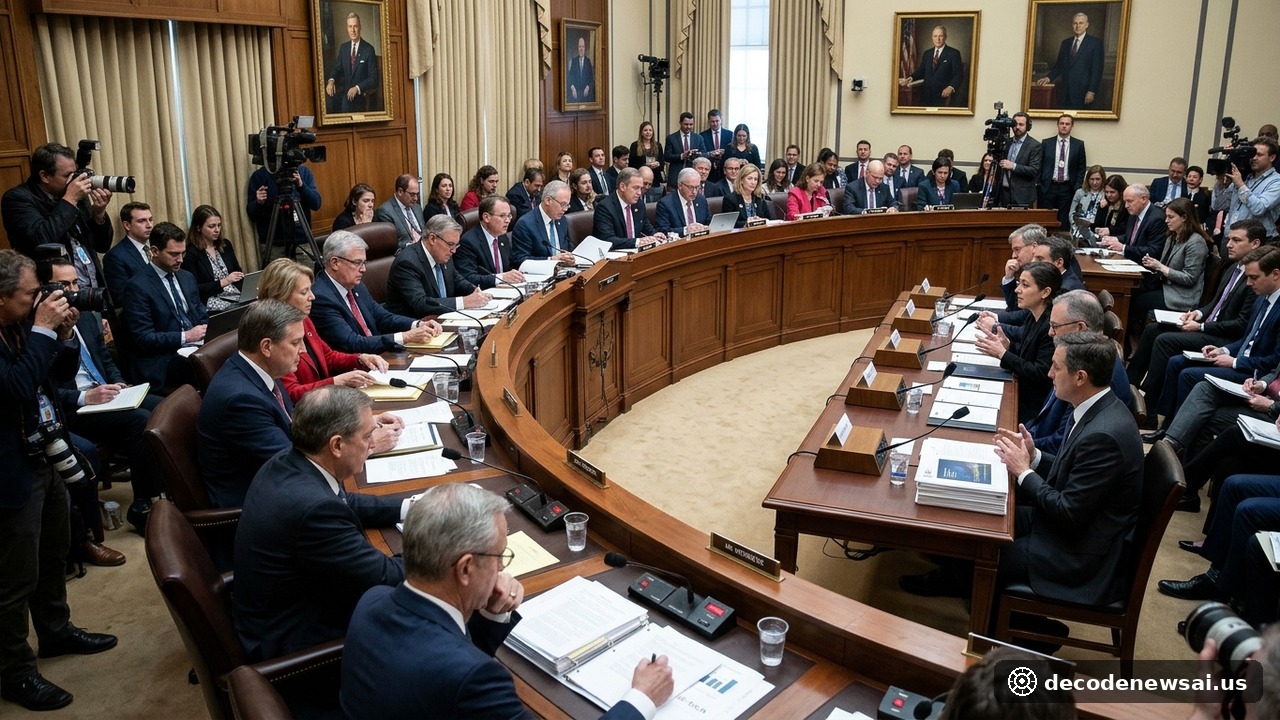
Representative Scott Fitzgerald (R-WI), Chairman of the House Judiciary Subcommittee on the Administrative State, Regulatory Reform, and Antitrust, has introduced a discussion draft of legislation titled the National Merger Uniformity and Federal Exclusivity Act. The proposed statute would establish exclusive federal authority over major multistate and international corporate transactions, empowering the Federal Trade Commission (FTC) and the Department of Justice (DOJ) as the sole regulators authorized to investigate, challenge, approve, or settle covered mergers. By explicitly preempting state antitrust laws and barring state attorneys general from bringing independent lawsuits to block or condition interstate deals, the bill sets up an intense clash between Capitol Hill and state authorities over federal preemption and antitrust enforcement powers.
Federal Preemption Bars State AG Merger Suits
Federal Exclusivity and Preemption of State Enforcement
Under Congressman Fitzgerald's legislative draft, federal exclusivity would apply directly to two broad categories of "covered transactions." The first category includes mergers and acquisitions reasonably likely to have substantial direct economic effects in five or more States. The second encompasses transactions reasonably likely to have substantial direct effects on international commerce, foreign markets, international supply chains, imports, exports, or trade between the United States and foreign nations. The statutory text defines "substantial direct economic effects" as material effects on competition, prices, output, employment, wages, innovation, investment, production, distribution, consumer welfare, or commerce.
For all covered transactions, the draft legislation establishes strict federal preemption. It explicitly preempts state antitrust statutes and state-level premerger notification requirements that apply to covered transactions. Furthermore, the bill prohibits state attorneys general and state regulatory agencies from initiating, maintaining, intervening in, joining, or continuing any judicial or administrative proceeding designed to prevent, delay, condition, or unwind a covered transaction. The legislation mandates that any state action commenced in violation of this exclusive jurisdiction must be dismissed with prejudice upon a motion by any party, the U.S. Attorney General, or the FTC. Under this framework, state attorneys general are relegated to an advisory role, permitted only to submit comments, economic analyses, or evidence to federal regulators, or to participate in federal proceedings upon explicit invitation. Mergers that are inherently intrastate remain unaffected.
Fitzgerald Cites State Challenges to Cleared Mergers
Growing Multi-Jurisdictional Friction and State Intervention
Chairman Fitzgerald introduced the draft in response to an unprecedented surge in independent merger challenges mounted by state officials. In his official statement, Fitzgerald criticized state-level enforcement actions against transactions that had already cleared federal reviews. “Over the last two years, we have witnessed multiple attempts by Democrat state attorneys general to challenge mergers and acquisitions that have already been approved by multiple federal and foreign regulators,” Fitzgerald stated. “These lawsuits—which are based entirely on political disagreements rather than legitimate antitrust concerns—provide uncertainty to businesses and harm consumers who would otherwise benefit from the efficiencies of a completed transaction. State AGs should not be able to delay mergers that extend beyond their territorial borders. My bill promotes federalism by asserting the federal government's role as the sole authority in transactions effecting interstate commerce.”
Data compiled by the National Association of Attorneys General highlights the growing frequency of state intervention. A prominent example occurred during Paramount's acquisition of Warner Bros. Discovery. Although the merger received regulatory clearance from 68 national competition authorities worldwide—including the U.S. Department of Justice—a multi-state coalition of 12 attorneys general led by California mounted an independent challenge. That lawsuit culminated in a separate settlement requiring the merged entity to make a five-year commitment to expand film output, pledge a minimum of $1.5 billion to bolster domestic film production, and establish a $47.5 million fund for workers impacted by the consolidation. State coalitions have similarly intervened in Nexstar Media Group's merger with Tegna and participated in Tunney Act proceedings to challenge Hewlett Packard Enterprise's approved purchase of Juniper Networks.
States Enact Algorithmic Pricing Laws as FTC Pulls Back
State activism has also expanded into digital tech and algorithmic commerce. While the FTC has moved deliberately with preliminary guidance, New York implemented legislation in November 2025 requiring businesses to disclose personalized pricing strategies. Maryland, Connecticut, and New Jersey subsequently enacted laws prohibiting surveillance pricing algorithms under specified conditions. Attorneys general from California, New York, Washington, Nevada, and Oregon issued a joint statement affirming that states are intensifying antitrust enforcement of “illegal” mergers “as the federal government has pulled back on corporate oversight.”
Evaluating Regulatory Efficiency Against State Police Powers
According to transaction data from the Hart-Scott-Rodino (HSR) Annual Report for fiscal year 2025, just over 70 percent of notified transactions carry a deal value exceeding $300 million. If enacted, Chairman Fitzgerald's bill would place the vast majority of substantial commercial mergers under exclusive federal jurisdiction, shielding companies from overlapping state proceedings.
Debate Erupts Over Federal Preemption and State Police Powers
The legislative proposal has ignited intense debate among antitrust practitioners and legal scholars. Proponents contend that subjecting national and multinational transactions to potential review by 50 individual state attorneys general creates severe regulatory drag and invites politicized litigation. Conversely, critics argue that state attorneys general serve as an essential democratic check on federal agencies. Eliminating state enforcement authority, opponents warn, could leave localized labor markets, regional healthcare facilities, and vulnerable consumers unprotected if federal regulators choose not to challenge anticompetitive consolidations. As the discussion draft circulates for public feedback, the struggle between federal preemption and states' historic police powers will define the future architecture of American antitrust enforcement.