The National Congress of American Indians (NCAI) has adopted Resolution PSC-26-048. The group is the oldest, largest, and most representative organization of American Indian and Alaska Native tribal governments. The resolution demands that the United States Department of Justice (DOJ) immediately begin formal government-to-government consultation on federal cannabis rescheduling. Tribal delegates approved it at the organization's 83rd Annual Convention & Marketplace. The resolution calls on federal authorities to recognize tribal sovereignty under the Controlled Substances Act (CSA). It also seeks parity for tribally regulated cannabis programs with state-licensed commercial operators.
NCAI Resolution Demands Government-to-Government Consultation with DOJ
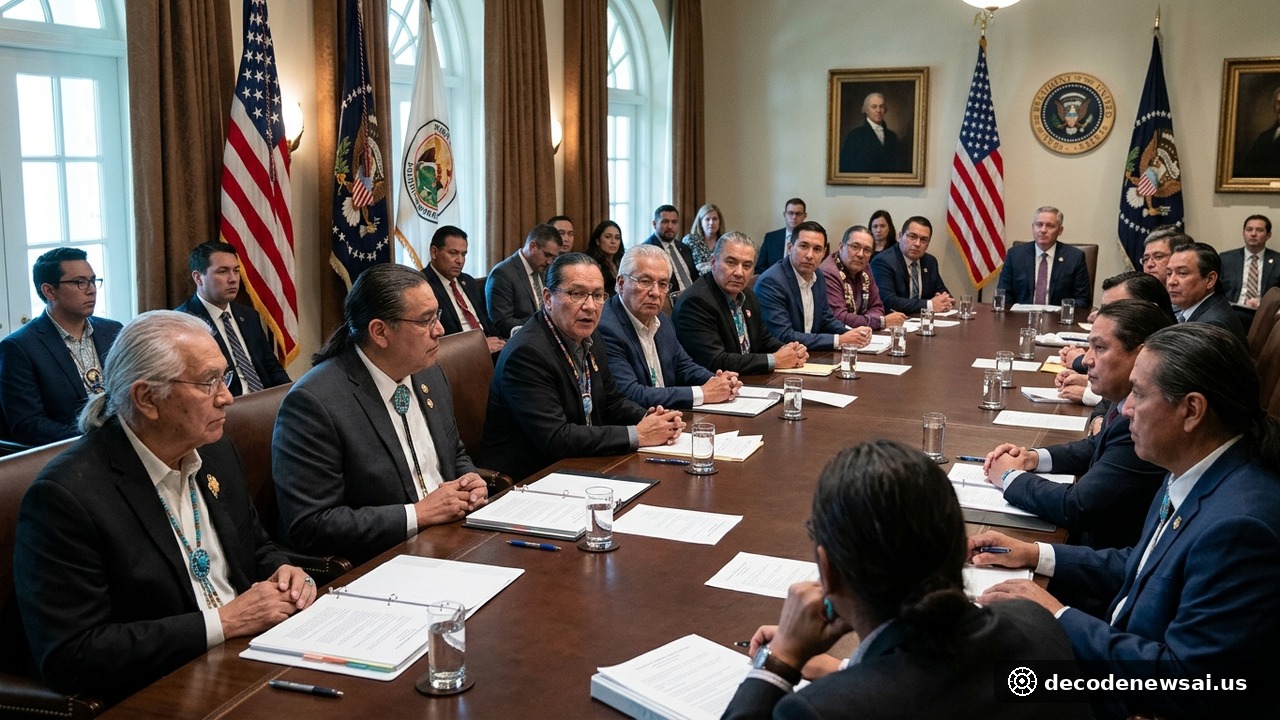
Resolution PSC-26-048 explicitly demands in-person, pre-decisional Tribal consultation with the DOJ. The consultation would cover tribal nations engaged in the cannabis industry. It would evaluate the implications of CSA rescheduling. It would also examine how federal agency administrative actions affect Indian Country. Tribal leaders stressed that Native nations are inherent sovereign governments. They hold statutory authority to regulate commerce, health care, and public safety on their lands. The resolution states that tribal commercial cannabis participation has grown each year. Sovereign nations continue to enact regulatory codes and licensing systems for cannabis and related products.
After adopting the measure, NCAI sent the resolution and an official letter to Attorney General Todd Blanche. The letter requests expedited consultation meetings. The resolution urges the DOJ to amend its existing final rescheduling order. The amendment would explicitly cover tribally licensed cannabis operations. Alternatively, the DOJ could issue a separate federal rulemaking. That rulemaking would move tribally licensed cannabis and cannabis-derived products from Schedule I to Schedule III. The resolution affirms that federal agencies must include tribal governments in any prospective cannabis policy action. This applies whether the rulemaking addresses CSA classification or broader regulatory oversight. The text cites scores of tribes actively exercising self-determination through regulated cannabis enterprises.
Final Rescheduling Order Excludes Tribally Regulated Cannabis Programs
The dispute stems from the DOJ's final rescheduling order. It was signed on April 22, 2026, and took legal effect on April 28, 2026. Under the directive, the DOJ reclassified certain marijuana products from Schedule I to Schedule III of the CSA. These were FDA-approved drug products containing marijuana. They also included medical cannabis regulated under state medical cannabis licenses. The order also set an expedited federal registration pathway for state-licensed commercial entities. However, the order's text omitted any statutory mention of Indian tribes or tribally licensed medical cannabis systems. The strict administrative phrasing potentially leaves tribally authorized cannabis businesses and their patients outside protections given to state-licensed counterparts.
The resolution also criticizes the federal government for failing to conduct mandatory intergovernmental tribal consultation before issuing the order. Executive Order 13175 is titled "Consultation and Coordination With Indian Tribal Governments." It was issued during the Clinton administration. Along with the DOJ's own internal operating policies, it requires meaningful consultation before regulations with tribal implications take effect. In its Federal Register regulatory analysis, the DOJ asserted the rule lacked tribal implications under Executive Order 13175. The DOJ said the rule did not impose substantial direct effects on one or more Indian tribes. NCAI strongly rejected this assertion. It noted that scores of sovereign tribes engaged with federal officials throughout the rulemaking process. The tribes were exercising their inherent authority to regulate commercial markets within tribal jurisdictions.
Rapid Tribal Market Expansion and Projected Two-Billion-Dollar Economic Impact
Excluding tribal enterprises from federal regulatory parity threatens a fast-developing sector of tribal economic self-sufficiency. The Indigenous Cannabis Industry Association (ICIA) published a national map with cannabis law firm Vicente LLP. The map documents that about 26 percent of the 358 federally recognized tribes in the continental United States run regulated cannabis or hemp enterprises. That is more than one-fourth. Nationwide, 574 tribes hold federal recognition. 52 tribal communities operate federally authorized industrial hemp programs. The Squaxin Island Tribe in Washington State opened the country's first tribally owned retail dispensary in 2015. Since then, dozens of sovereign nations have used cannabis commercial revenues to fund tribal governance, health clinics, and elder services.
HedgeRow Analysis published economic research on October 28, 2026. The research highlights the financial potential of tribal cannabis commerce. According to the firm's econometric modeling, tribes that establish early, deliberate market entries are projected to capture between $300 million and $600 million in annual revenues within five years. That builds toward an aggregate annual market potential exceeding $2 billion across Indian Country. NCAI encouraged tribal leaders to convene at the Indigenous Cannabis Industry & Policy Summit. The summit is scheduled for November 9 to 11, 2026, at the Washington Plaza Hotel in Washington, D.C. The goal is to unify tribal strategies and advocate for federal policy adjustments. The meeting aims to ensure sovereign nations present a unified stance on federal cannabis reform.