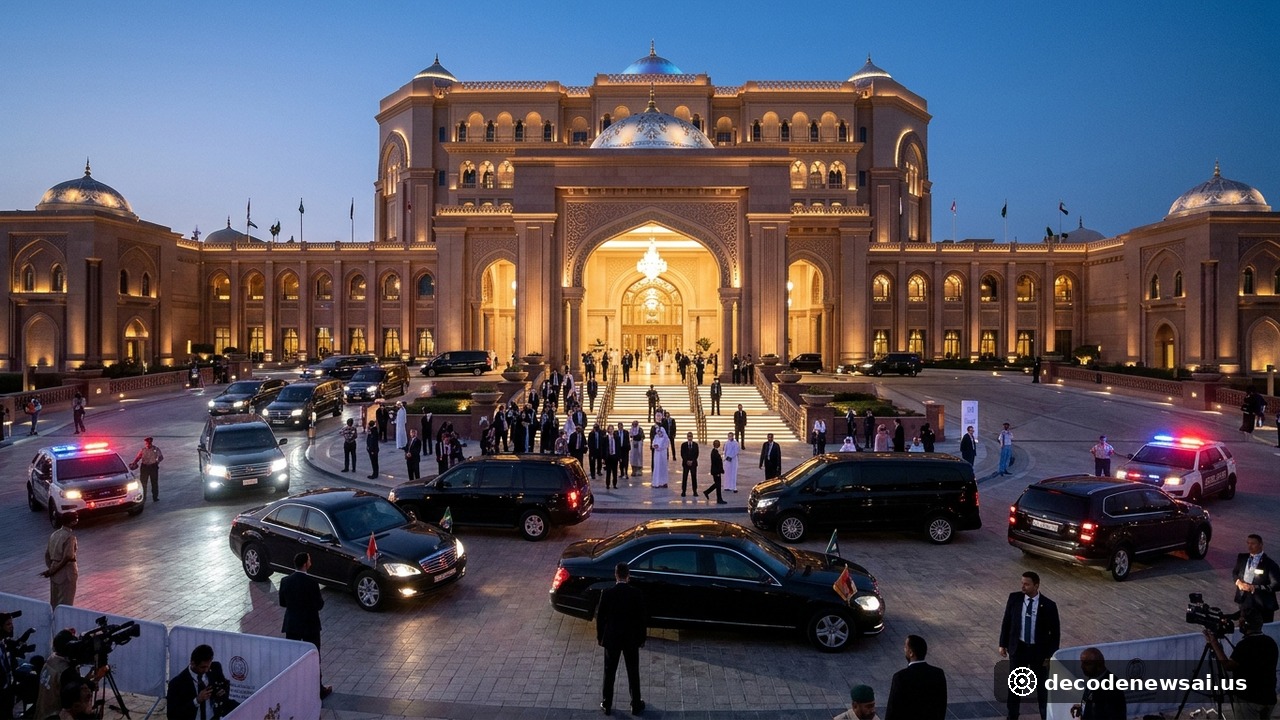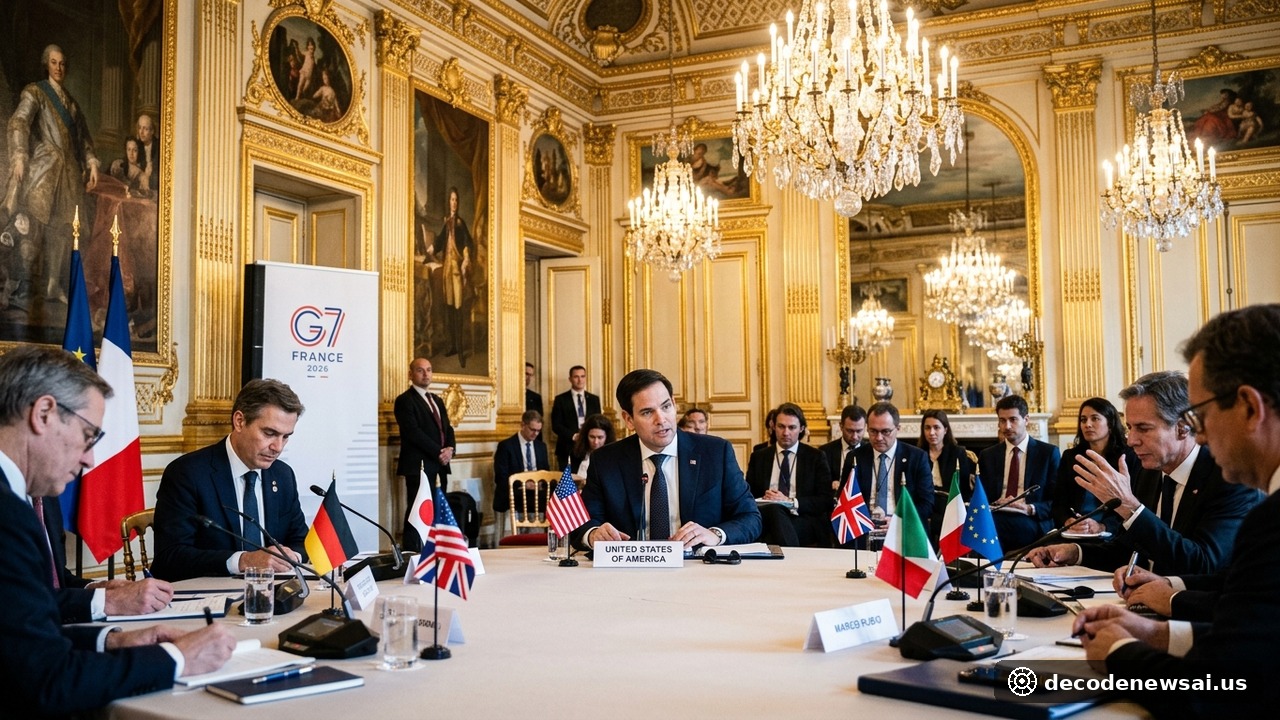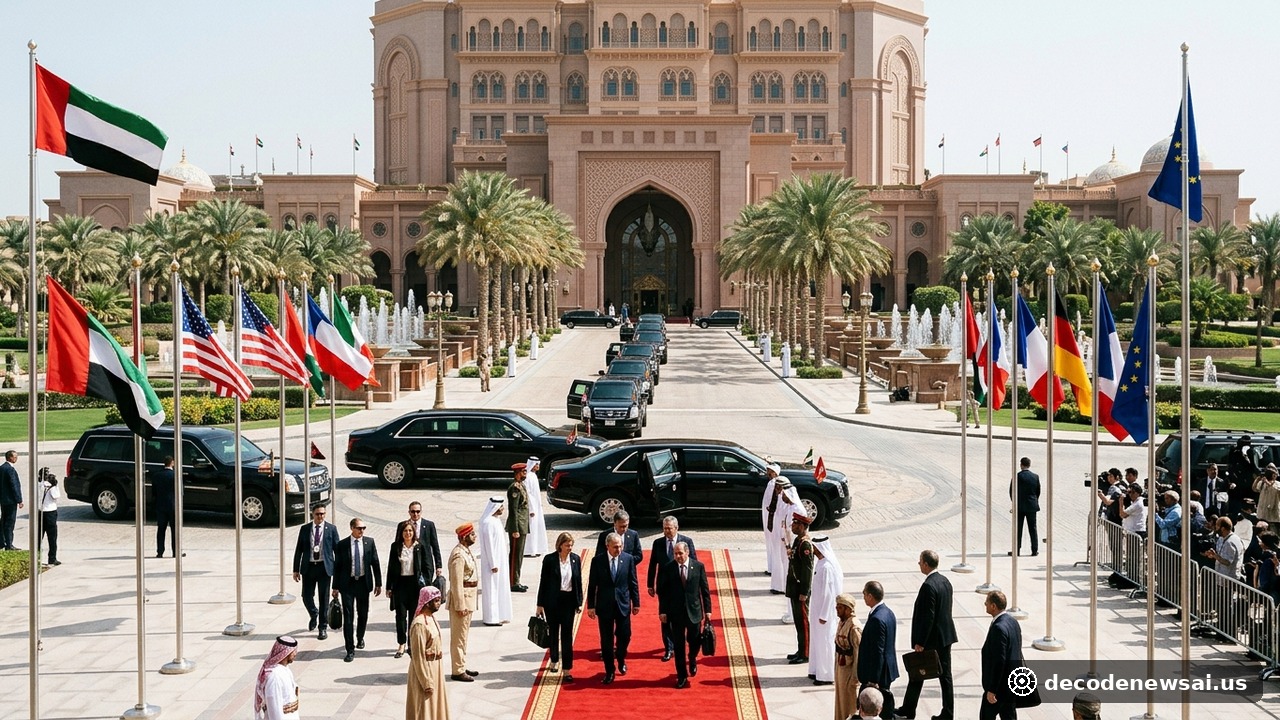
ABU DHABI - Senior American diplomatic envoys convened comprehensive closed-door security discussions with European diplomatic representatives in Abu Dhabi on Monday, November 9, to review operational frameworks for regional ceasefire verification and diplomatic crisis management. The US delegation was led by senior envoys Jared Kushner and Steve Witkoff. Diplomatic and security delegations from the United Kingdom, France, Germany, and Italy participated in the multi-stage technical meetings. Delegations reached an operational understanding on establishing a joint military communications channel.
Kushner and Witkoff lead eight-hour technical working groups
The high-level gathering convened at a dedicated diplomatic facility adjacent to the presidential complex in Abu Dhabi. Kushner presented a conceptual architecture outlining long-term European deterrence posture and mutual security guarantees. Witkoff coordinated technical working groups focused on weapon withdrawal zones and automated verification systems. Working groups conducted continuous negotiations extending over eight hours. American negotiators maintained that durable diplomatic compromises require transparent, multi-domain surveillance protocols.
European delegations offered measured evaluations regarding the technical progress achieved in the Emirates. Envoys from the British Ministry of Defence and the French Foreign Ministry presented joint criteria concerning sovereign border integrity and monitoring timelines. Participating governments agreed in principle to establish a designated buffer zone extending thirty kilometers along active frontlines. The host government provided full administrative and communications infrastructure.
Witkoff stated to assembled journalists: "Our primary objective in Abu Dhabi is establishing direct communication channels so that any ceasefire framework rests on enforceable, technical operating foundations." Allied delegations acknowledged the priority placed on crisis hotlines.
Paris and Berlin push multilateral monitoring and 2027 integration
Delegates from Paris and Berlin prioritized multilateral monitoring mandates over future demarcation boundaries. German diplomats stressed that Ukrainian sovereign territorial integrity remains non-negotiable under international law. French officials proposed deploying multinational non-combatant observer contingents across vulnerable transport corridors. Italian representatives examined maritime protection standards across Black Sea commercial agricultural shipping routes. Expert teams harmonized digital verification protocols.
Technical specialists carried out practical simulations utilizing commercial satellite imaging and automated radar feeds. Washington agreed to facilitate secure access to designated early-warning tracking streams for allied analytical centers. European command facilities are scheduled to finalize surveillance integration before the second quarter of 2027. Intelligence planners reviewed draft boundary coordinates safeguarding commercial power generation sites.
Prolonged armed conflict continues to impose acute fiscal costs across European public finance systems. European Central Bank economic assessments document hundreds of billions of euros allocated toward emergency energy subsidies and displaced civilian assistance. The four major European economies require verifiable post-war operational certainty. The Abu Dhabi talks provided a structured forum to resolve divergent transatlantic operational priorities.
UAE backchannel and emergency links tested before late November
Defense analysts in London and Washington noted that operational coordination among Western allies has faced strategic strain as military assistance programs mature. The establishment of dedicated bilateral liaison desks in the Gulf provides a durable backchannel insulated from public political pressure. European procurement agencies are coordinating emergency stockpile replenishment timetables alongside transatlantic aerospace contractors to preserve logistical depth.
Regional security observers highlighted that the United Arab Emirates has steadily positioned itself as an indispensable intermediary bridging Eastern European adversaries and Western leadership. Diplomatic missions in the Emirates possess established security protocols capable of managing complex multinational delegations. The involvement of Gulf financial institutions also signals potential private capital participation in post-conflict reconstruction bonds.
Following the conclusion of closed negotiations, participants released a joint procedural statement. The communique confirmed that direct emergency communication links will complete technical diagnostic testing before late November. A second cycle of expert-level technical deliberations is scheduled for mid-December in Geneva or Abu Dhabi. Delegations formally committed to preserving strict confidentiality regarding working draft clauses. The diplomatic agenda now proceeds to domestic ministerial review.
Diplomatic analysts in Washington and Brussels observed that multilateral deterrence coordination represents an essential prerequisite for durable ceasefire compliance. By establishing verifiable crisis hotlines and coordinating automated sensor networks across the Gulf, allied planners ensure that operational anomalies along demilitarized frontlines can be rapidly de-escalated before triggering wider military confrontation. European defense ministries confirmed that technical liaison teams will maintain round-the-clock coordination with American counterparts throughout the winter negotiating cycle.