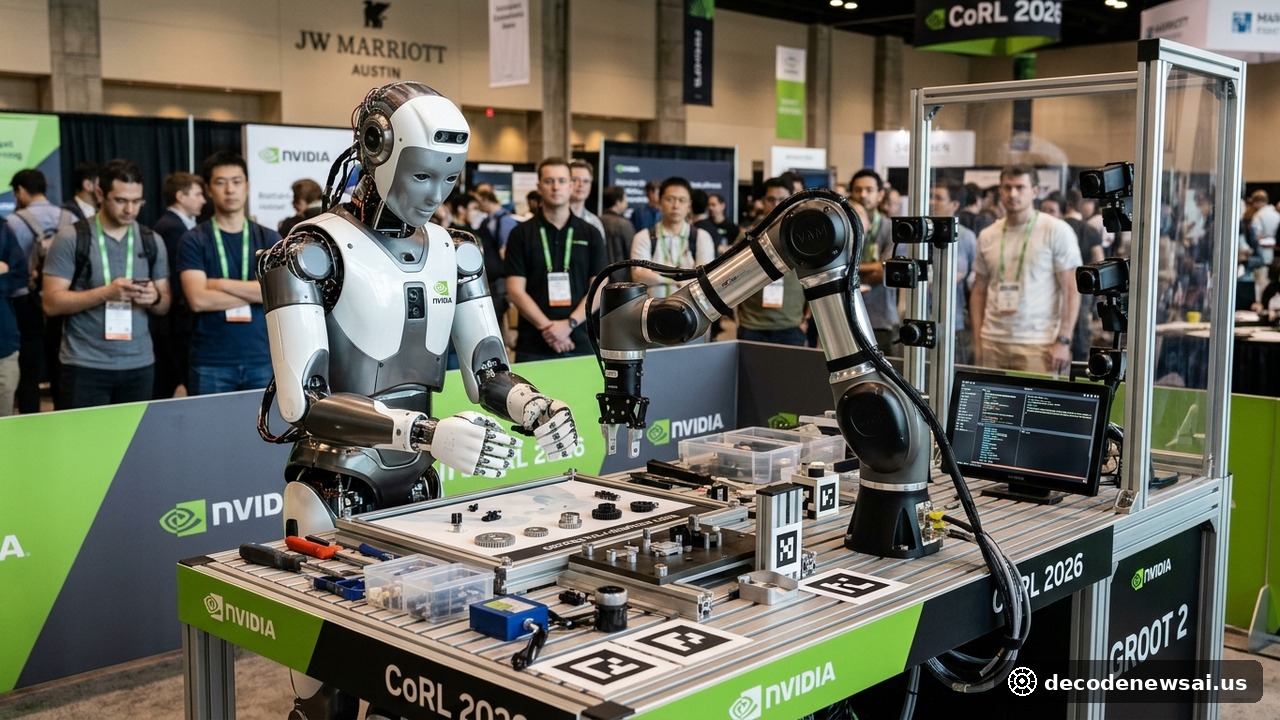
Google AI Studio and Google DeepMind formally opened global public preview access Sunday to Gemini Robotics ER 2, the organization's second-generation frontier foundation model tailored for robotics manipulation and physical embodied reasoning. The deployment introduces two dedicated API model endpoints designed to translate raw multimodal environmental observation directly into continuous kinematic control commands. The architecture represents a decisive technical departure from fragmented spatial perception pipelines toward end-to-end foundation model robotics.
ER 2 hits 84.2% task completion success rate
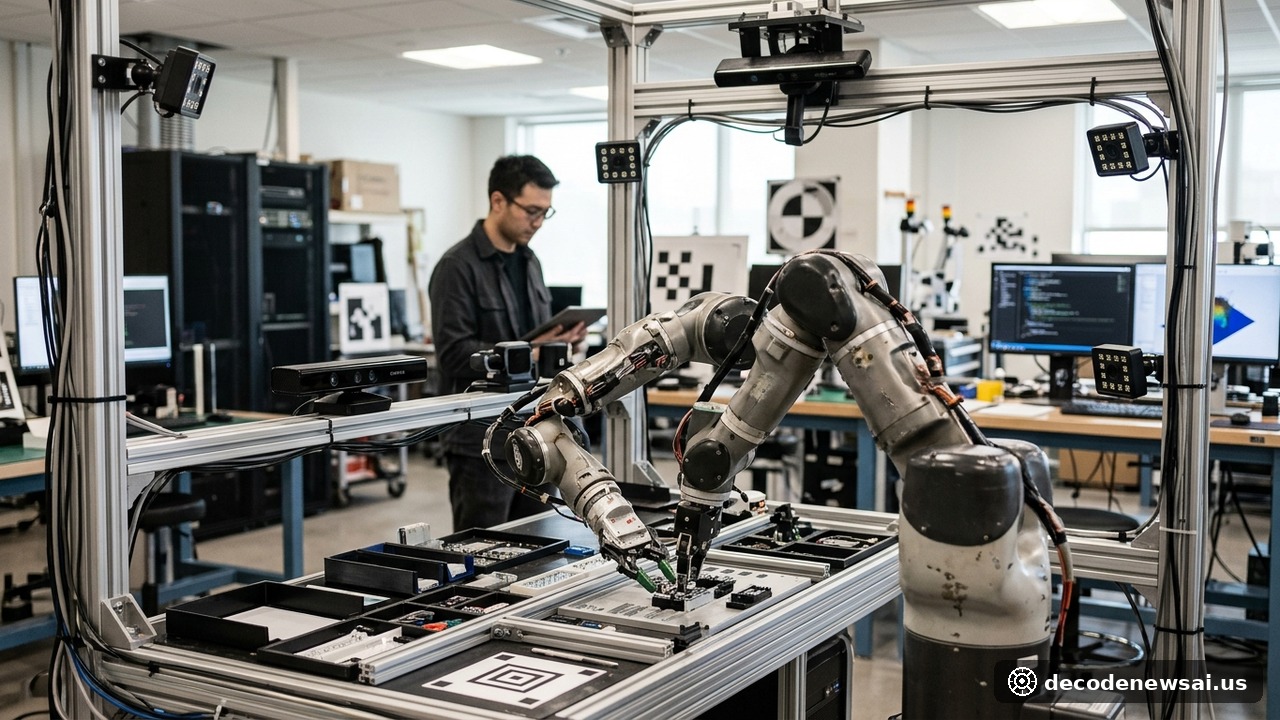
Technical evaluations published in accompanying developer documentation demonstrate remarkable advances in spatial understanding and geometric commonsense. Traditional robotic programming requires labor-intensive point-cloud registration, rigid coordinate transformations, and fragile heuristic path planning. Gemini Robotics ER 2 processes uncompressed stereo camera feeds and localized depth sensor streams natively, generating multi-axis trajectory waypoints in real time.
Across standardized robotic manipulation benchmarks, ER 2 recorded an 84.2% task completion success rate across complex, multi-stage household and industrial manipulation sequences. The embodied model demonstrated robust adaptive grasp postures when confronted with reflective lighting variations, overlapping obstacles, and novel objects absent from training datasets. Autonomous error-recovery behaviors enabled robotic effectors to realign missed grips without manual resets.
Google Robotics Research Director Vincent Vanhoucke detailed the underlying engineering architecture in a comprehensive technical brief: "The fundamental barrier in physical AI has always been grounding high-level semantics in the unforgiving physical laws of our three-dimensional environment. ER 2 bridges spatial perception and motor actuation within a unified tokenized reasoning graph." Research directors confirmed that open evaluation toolkits are accessible to developers worldwide.
ROS 2 and Isaac Sim bridges speed enterprise integration
To accelerate enterprise integration across academic laboratories and commercial equipment manufacturers, Google deployed pre-configured simulation bridges supporting the Robot Operating System (ROS 2) and Nvidia Isaac Sim virtual environments. Development teams can iterate spatial reasoning workflows inside photorealistic digital twin environments prior to deploying calibrated model weights onto physical robotic arms and autonomous mobile bases.
Multimodal linguistic parsing benchmarks demonstrated an unprecedented capacity to resolve highly ambiguous natural language requests into mathematically rigorous execution parameters. Directives such as "carefully place the fragile glassware inside the middle storage cabinet" trigger automated mass inference, surface friction estimation, and localized clearance navigation. The model achieved a 91% zero-shot instruction compliance accuracy across diverse laboratory trials.
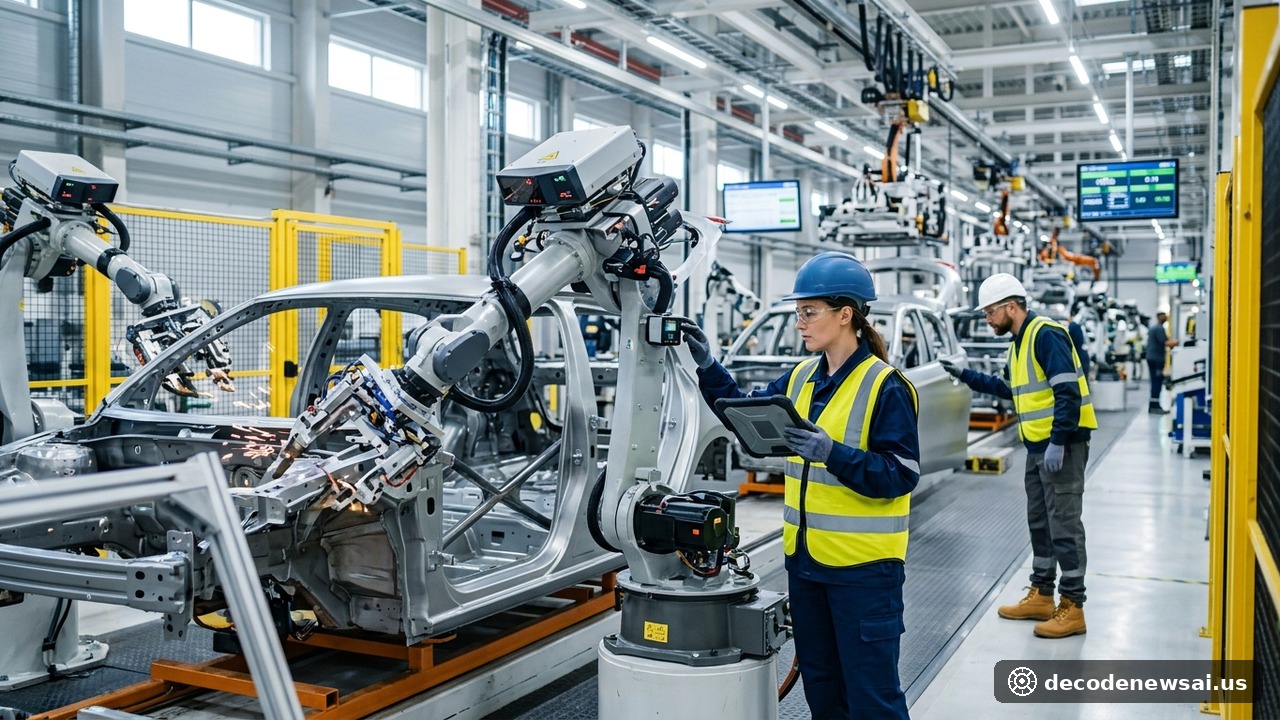
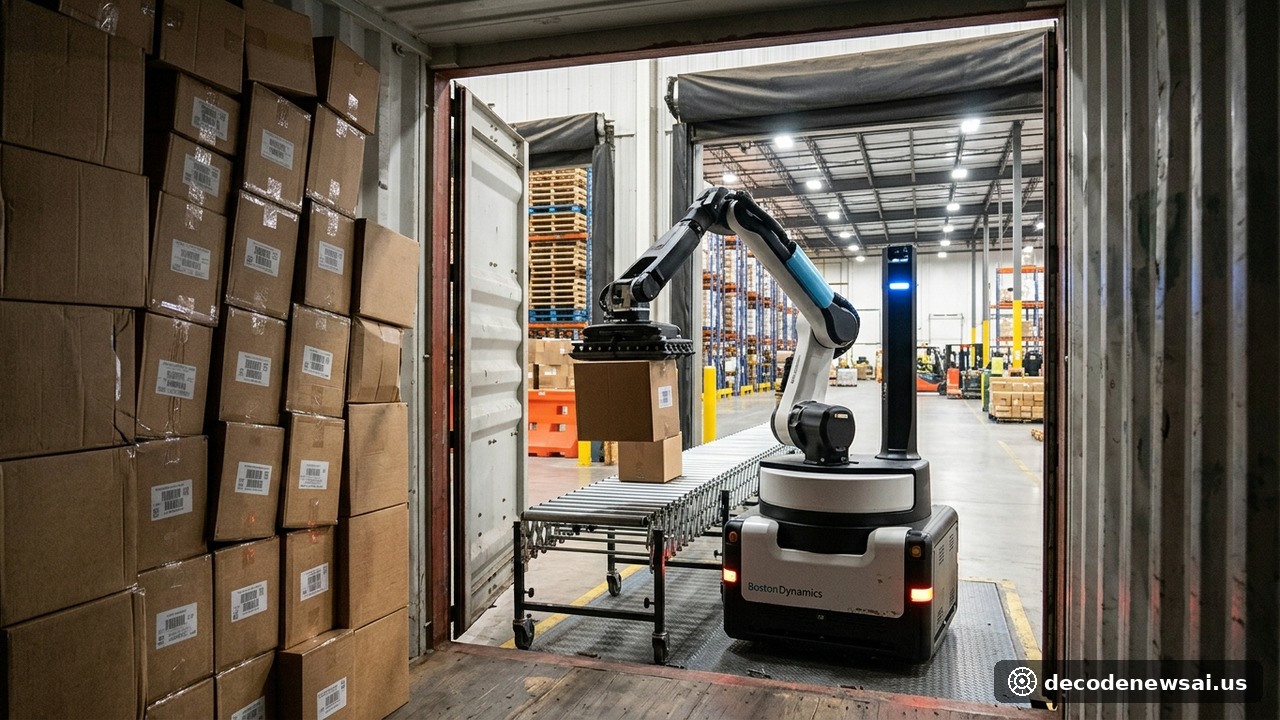
Commercial robotics integrators across smart manufacturing and logistics fulfillment sectors reported significant productivity enhancements during early beta testing. Prototype implementations in high-precision electronics manufacturing demonstrated a 60% reduction in motion-planning configuration timelines. Precision bin-picking installations achieved a 99.1% successful grasp rate across cluttered inventory bins, signaling substantial commercial momentum.
UC Berkeley and IFR cite foundation model inflection point
Academic robotics researchers and open-source robotics consortia commended Google's public preview release. Engineering teams at the University of California, Berkeley verified that the dual embodied reasoning endpoints demonstrated exceptional few-shot transfer learning across novel bimanual assembly tasks. Collaborative open-source testing platforms confirmed substantial reductions in sim-to-real transfer latency, validating foundation model approaches to physical manipulation.
The International Federation of Robotics highlighted that foundation models represent a defining inflection point for industrial factory automation. Global manufacturing standards bodies are formulating standardized safety benchmarks to govern torque thresholds and real-time collision avoidance for autonomous cognitive robotics on live factory floors. Leading industrial conglomerates plan to deploy commercial embodied agents across automated logistics and packaging facilities throughout early 2027.
Robotics software engineers highlighted that unifying high-level cognitive reasoning with low-level motion planning fundamentally streamlines custom automation deployments. Instead of building isolated perception stacks for every distinct industrial fixture, engineering teams can configure generalized visual policy models through standard API endpoints. The transition to foundation model robotics promises to significantly broaden robotic deployment across small-batch manufacturing. Industrial automation consortia confirmed that open development programs accelerate the broad adoption of cognitive machine systems across international advanced production facilities.