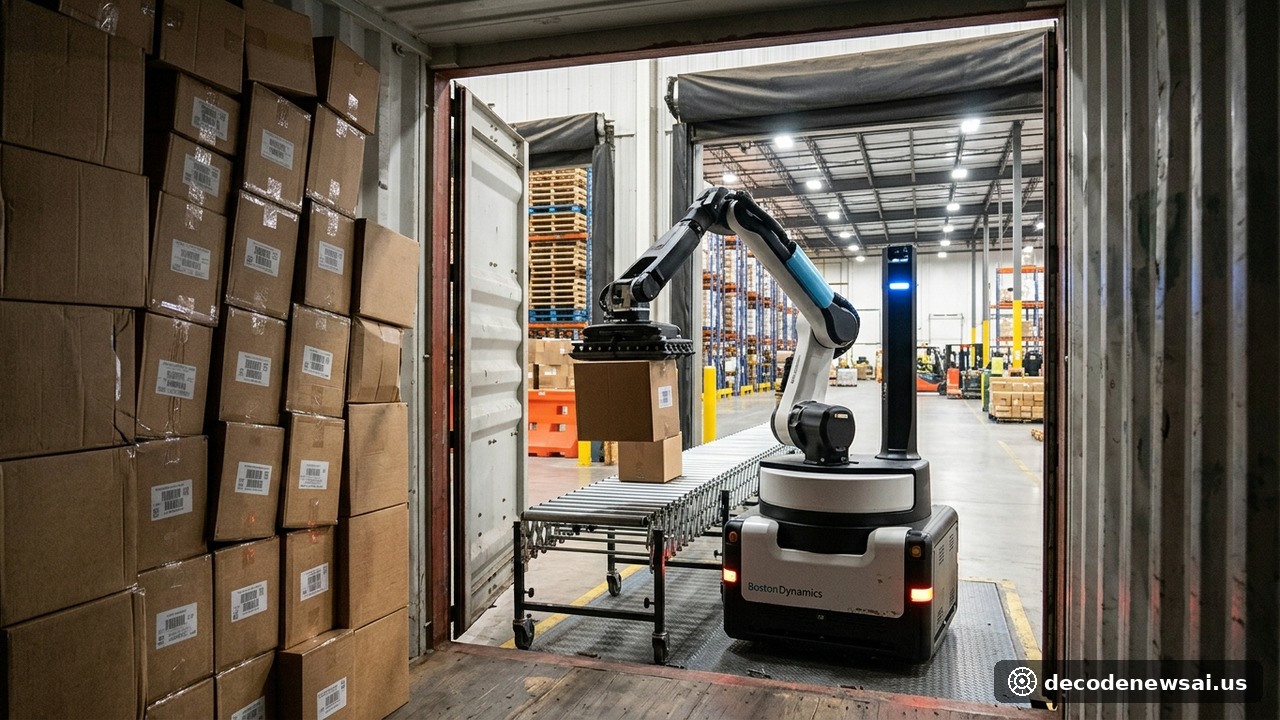
Boston Dynamics officially launched Stretch Gen 2 in early November 2026, introducing advanced multi-package vision algorithms, high-payload robotic articulating arms, and ruggedized trailer mobility for autonomous logistics facilities; simultaneously, global market intelligence firm SAG reported that worldwide commercial humanoid robot shipments surged 272% year-over-year in 2026 to reach 19,100 units, demonstrating that embodied artificial intelligence hardware has crossed the threshold from experimental research into high-density industrial deployments.
What Key Deployment Figures Measure the 2026 Logistics Robotics Expansion?
- Enterprise Humanoid Unit Cost Range: $100,000 – $500,000 per integrated unit
- Commercial Deployment Forecast CAGR: Exceeding 65% through 2030 cycle
What Mechanical and Vision Breakthroughs Distinguish Stretch Gen 2?
Engineered specifically to solve the arduous operational challenge of manual floor-loaded freight unloading, Boston Dynamics redesigned the Stretch architecture around autonomous trailer clearance. The Gen 2 model integrates high-definition solid-state LiDAR sensors alongside multi-angle stereoscopic vision arrays, enabling reliable localization inside poorly lit, metallic trailer interiors characterized by shifting container floors.
The mechanical arm features an adaptive high-flow vacuum gripping array capable of adjusting suction geometry in real time. Stretch Gen 2 reliably detects and extracts severely tilted, crushed, or heterogeneous corrugated cardboard packaging without jamming, reducing unassisted trailer turnaround times by approximately 40%. The platform operates at a sustained throughput exceeding 800 packages per hour, automating an environment characterized by chronic labor turnover and extreme musculoskeletal fatigue.
Why Did Enterprise Humanoid Deployments Accelerate Sharply in 2026?
According to industry findings published by SAG, 2026 marked the definitive transition from pilot proof-of-concept trials to production-line hardware deployments. Shipments escalated from early thousands into commercial volume, driven by tier-one automotive assembly complexes and contract electronics manufacturers automating sub-component conveyance.
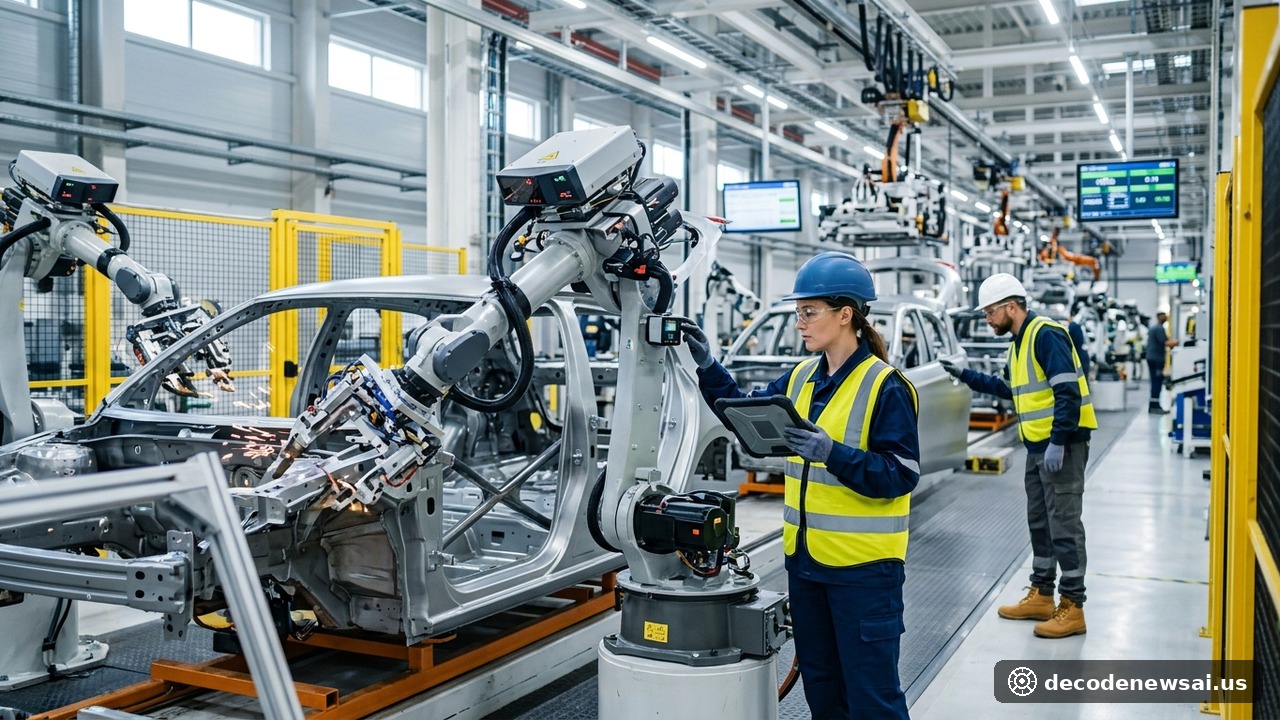
Automakers including BMW and Hyundai expanded operational deployments of Figure 02, the electric Atlas, and Agility's Digit within stamping, sequencing, and sheet metal kitting cells. In parallel, Unitree accelerated research adoption with its G1 platform priced at approximately $13,500, providing engineering universities and warehouse integrators with full bipedal locomotion platforms capable of sustained operational hours without excessive financial capital barriers.
How Will the Physical AI Training Data Gap Shape Long-Term Scaling?
Despite rapid hardware production, leading robotics executives emphasize that the defining constraint on general-purpose manipulation remains the scarcity of embodied physical interaction data. Unlike multimodal generative text models that ingest web-scale tokens, dexterous robotic manipulation requires dense tactile feedback, force telemetry, and spatial dynamics recorded during continuous physical contact.
Consequently, robotics leaders are diverging along two primary commercial vectors: developers like Figure and Tesla Optimus are accumulating tens of thousands of hours of high-fidelity teleoperation data to train unified behavioral foundations, while purpose-built systems like Boston Dynamics Stretch capture immediate recurring cash flows by solving structured vertical challenges inside logistics bays, accelerating the commercial timeline for fully autonomous smart manufacturing.
What Infrastructure and Workflow Adaptations Are Warehouses Implementing?
To achieve maximum efficiency with autonomous trailer unloader platforms, modern distribution logistics hubs are redesigning dock staging bays and warehouse management system interfaces. High-throughput facilities are integrating robotic unloading data directly into enterprise resource planning software, allowing real-time inventory reconciliation as packages move from trailer interiors onto automated conveyor belts.
Logistics engineering specialists emphasize that successful deployment requires holistic human-machine collaboration. While Stretch Gen 2 takes over the ergonomically punishing task of lifting heavy, awkward freight under extreme heat or freezing dock conditions, warehouse labor is reassigned to supervisory monitoring, quality assurance scanning, and dynamic dock door scheduling, creating higher-skilled operational roles across logistics hubs.