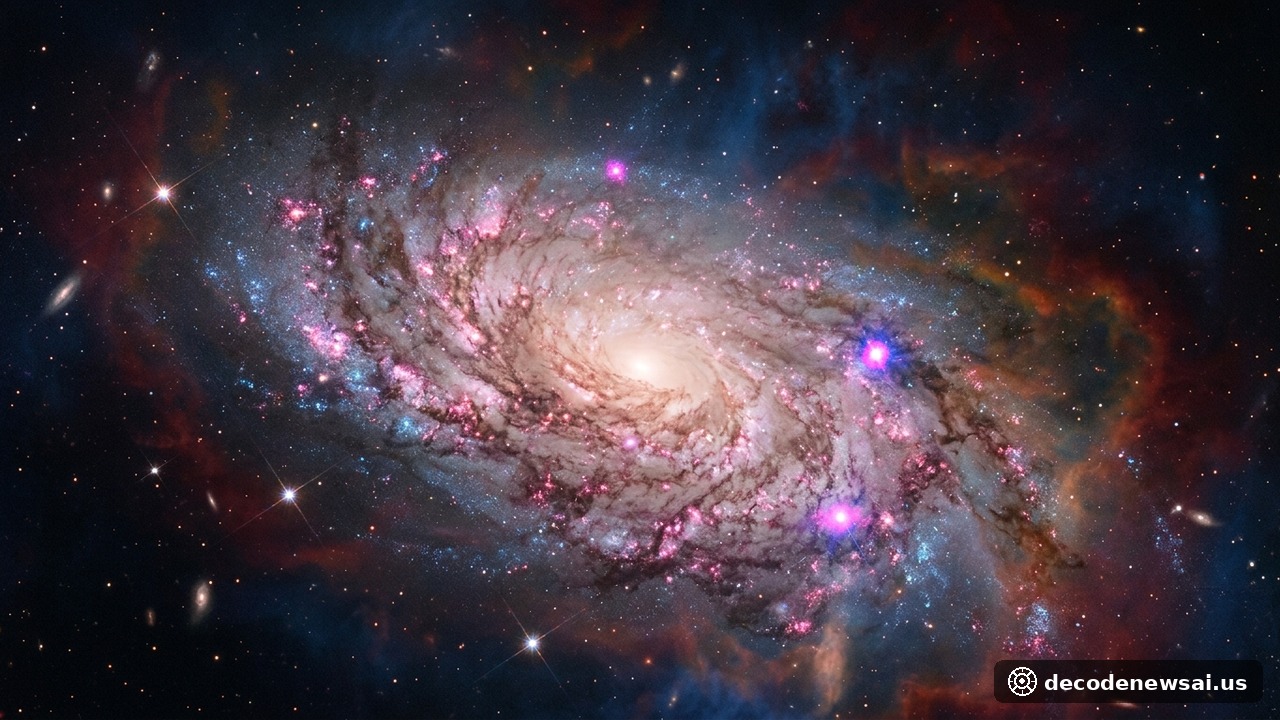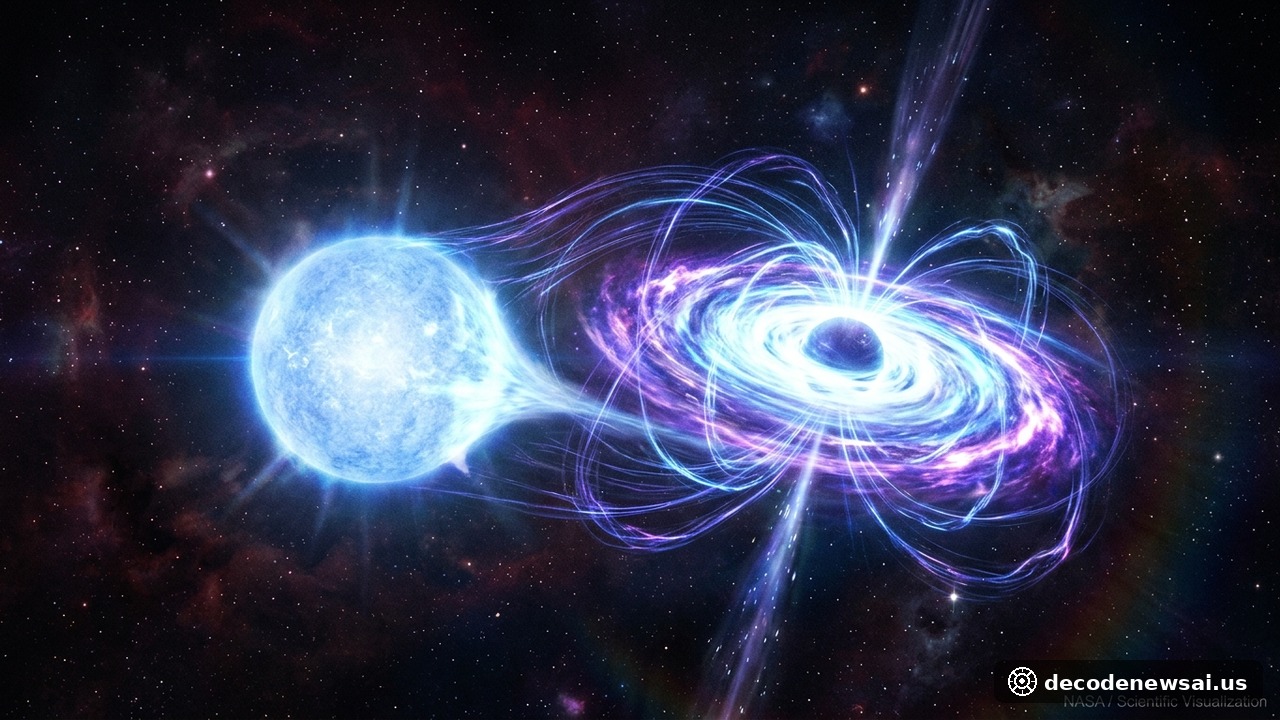
WASHINGTON - The National Aeronautics and Space Administration's Chandra X-ray Observatory announced a groundbreaking astrophysics discovery on Monday, November 9, resolving a long-standing cosmic enigma surrounding mysterious periodic energetic outbursts originating from close binary star system HD 189733. Utilizing high-resolution transmission grating spectroscopy, Chandra confirmed that violent flares originate from extreme magnetic reconnection within an accretion disk driven by tidal disruption.
Chandra spectra reveal 3,000 km/s plasma and iron lines
Located approximately 64 light-years from Earth, the stellar system has puzzled astrophysicists for more than a decade due to recurring high-energy flaring events that standard coronal magnetic flare models could not explain. Optical observatories were unable to penetrate the dense, ionized circum-stellar accretion disk. Chandra executed continuous staring observations exceeding 72 hours, recording high-energy X-ray emission spikes that increased ambient radiation by more than fifty-fold during peak flare eruptions.
Chandra's transmission grating spectrometers resolved discrete Doppler-shifted iron emission line profiles. Spectral shifts established that superheated plasma streams were ejected from the magnetic interaction boundary at velocities exceeding 3,000 kilometers per second. Severe gravitational tidal shears stripped stellar atmospheric gas from the primary star, feeding a rapidly rotating accretion envelope. Twisted magnetic flux ropes fractured and reconnected explosively, liberating intense coronal energy.
A Principal Astrophysicist at the Harvard-Smithsonian Center for Astrophysics stated during the NASA science briefing: "High-resolution X-ray spectroscopy captured the moment stellar material was gravitationally sheared and magnetized. This data provides fundamental insights into extreme stellar evolution." Astrophysics researchers commended the observation.
Reconnection outbursts strip exoplanet atmospheres
Stellar magnetic eruptions exert profound space weather impacts across close-in exoplanetary systems. A transiting gas giant planet orbiting the primary star experiences persistent high-energy X-ray and extreme ultraviolet bombardment. Chandra's observational telemetry demonstrated that individual magnetic reconnection outbursts unleash kinetic and radiative energy equivalent to billions of thermonuclear weapons. The intense coronal mass ejections continuously strip hydrogen and helium envelopes from orbiting planetary atmospheres.
Astrophysicists integrated Chandra's high-energy dataset with sub-millimeter interferometry gathered from the Atacama Large Millimeter/submillimeter Array (ALMA) in Chile. The joint numerical inversion successfully mapped the three-dimensional magnetic topology governing the accretion interface. While classical solar models confined reconnection to surface loop footpoints, Chandra established that boundary layer shear drives macroscale magnetic reconnection across dense stellar accretion disks.
The comprehensive peer-reviewed findings have been accepted for formal publication in the international science journal Nature Astronomy. International co-authors include theoretical astrophysicists from the Max Planck Institute for Radio Astronomy and the University of Cambridge Institute of Astronomy. The findings illustrate the enduring observational power of flagship space telescopes.
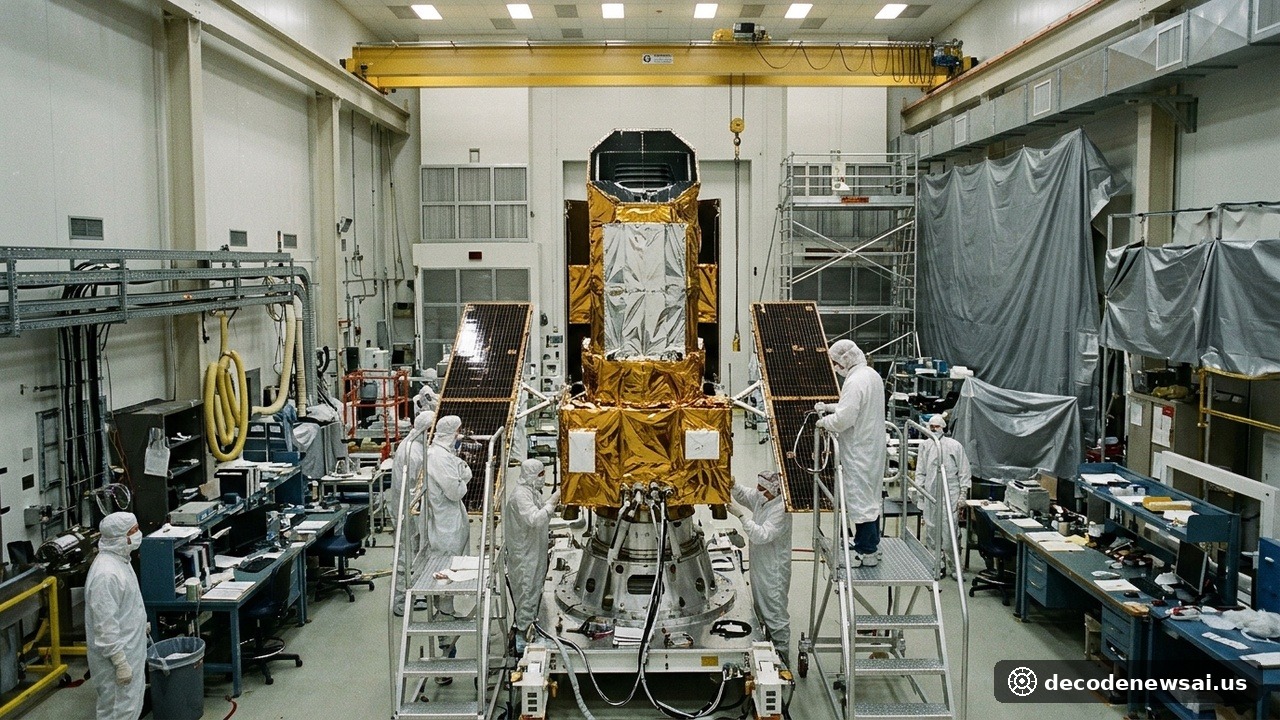
Chandra has conducted continuous orbital science operations for more than twenty-seven years. Despite structural challenges associated with aging propellant reserves, its sub-arcsecond X-ray optical resolution remains unmatched by ground or orbital instruments. NASA flight directors recently transmitted updated thermal control software, extending expected operational lifetime beyond 2030.
Observational astrophysicists emphasized that Chandra's high-energy spectroscopy provides an irreplaceable empirical laboratory for testing theoretical magnetohydrodynamic models under extreme gravity. Close binary systems subject stellar matter to violent physical forces that cannot be replicated in terrestrial research facilities. By capturing detailed spectral signatures of magnetic reconnection, Chandra confirms theoretical predictions regarding how rotational kinetic energy transforms into intense electromagnetic radiation.
Space science administrators noted that the breakthrough underscores the vital scientific necessity of maintaining flagship space observatories throughout extended mission lifecycles. Despite operating far beyond its original design duration, Chandra continues to deliver transformative astrophysical discoveries across distant stellar environments. The empirical insights gained from HD 189733 will inform upcoming observing campaigns conducted by future space-based X-ray observatories over the coming decades.
X-ray spectra validate magnetohydrodynamic accretion models
Theoretical astrophysicists pointed out that high-resolution X-ray spectral observations provide crucial empirical validation for advanced magnetohydrodynamic accretion models. Observing magnetic reconnection phenomena within extreme stellar environments expands human understanding of plasma dynamics, stellar evolution, and exoplanetary atmospheric erosion across distant star systems.