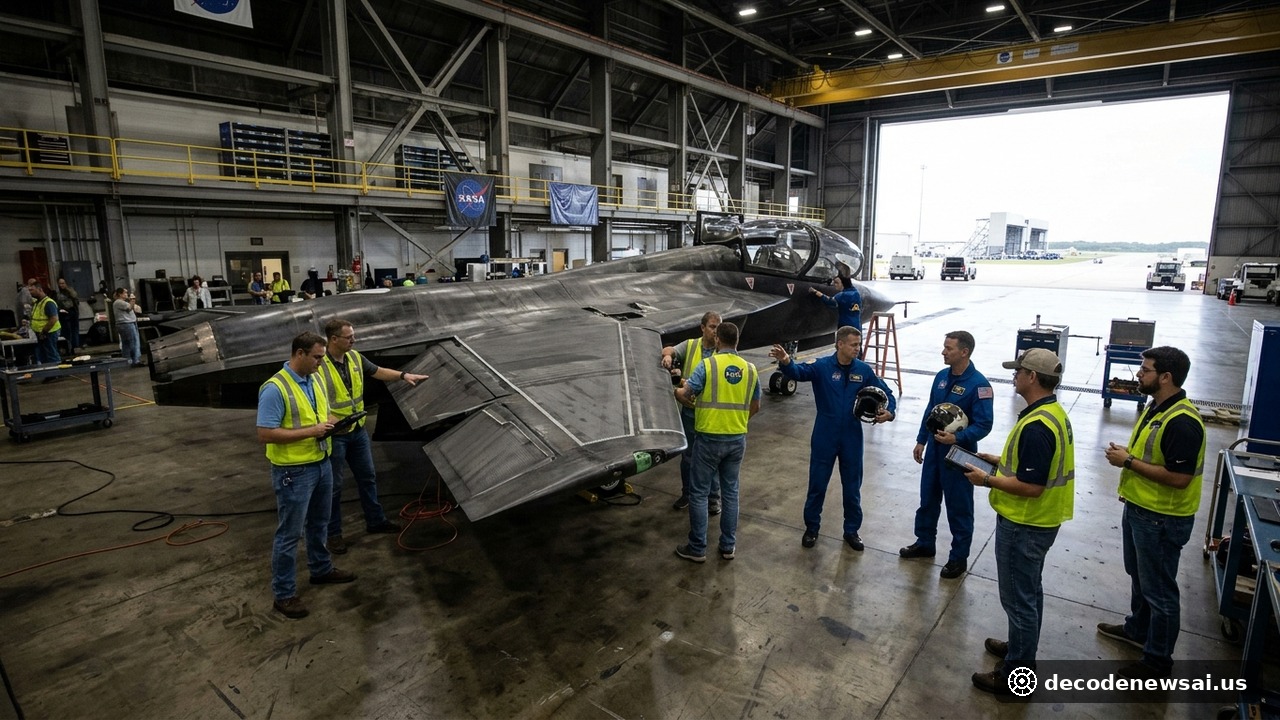
NASA announced a new experimental aircraft on Monday, November 9. The agency unveiled the crewed X-70 Fractal at the UP.Summit aerospace conference in Florida. It is a 4.5-ton research testbed. It flies at speeds up to Mach 0.75. The X-plane is built to speed up flight control technologies.
Modular wing attachments and interchangeable control surfaces
The X-plane designation covers legendary experimental platforms. Those aircraft broke the sound barrier and advanced atmospheric hypersonic flight. NASA showed conceptual renderings and engineering specifications for the X-70 Fractal. The aircraft is an agile, modular testbed. It is configured to evaluate advanced autonomous flight control software and non-linear aeroelastic behaviors in real flight regimes.
The X-70 Fractal's defining feature is its modular, interchangeable wing attachments. It also has rapidly configurable control surfaces. Ground crews can detach and replace entire composite wing assemblies within forty-eight hours. Researchers can then evaluate variable-camber profiles, high-aspect-ratio composite wings, and active aeroelastic tailoring across identical fuselage baselines.
A senior systems engineer in NASA's Aeronautics Research Mission Directorate spoke at the unveiling. The engineer said: 'The X-70 Fractal functions as an airborne laboratory for next-generation flight controls, bridging the critical gap between computational fluid simulations and real atmospheric aerodynamics.' Aerospace industry researchers commended the platform.
Dual-seat cockpit and maiden flight within two years
The X-70 addresses the expanding role of autonomous systems in modern aviation. It incorporates a dual-seat tandem cockpit configuration. A veteran research test pilot occupies the forward station. That pilot manages primary aircraft envelopes and holds immediate override authority. A flight test engineer in the aft station controls modular avionics racks. The engineer uploads software flight control patches in real time.
The dual-crew setup allows NASA to run rigorous edge-case evaluations of artificial intelligence flight-control models. Flight telemetry records pilot behavioral inputs during turbulence encounters. This provides empirical training datasets to refine adaptive flight-control algorithms. It does so without exposing prototype airframes to unrecoverable departure risks. Onboard telemetry systems stream sensor data directly to ground monitoring stations.
NASA flight directors project a maiden flight within two years. It will take place at NASA's Armstrong Flight Research Center. The center is located at Edwards Air Force Base in California. Structural loads analysis and high-speed wind tunnel testing on subscale models have concluded at NASA Langley Research Center. That work cleared the initiative for full-scale fabrication.
Boeing and Lockheed Martin assess 8 to 12 percent drag cuts
Commercial transport manufacturers including Boeing and Lockheed Martin attended the unveiling ceremony. They are assessing how X-70 aerodynamic discoveries can transfer to commercial airliners. NASA estimates that active flow control technologies matured aboard the testbed could yield cruise drag reductions between 8 and 12 percent. That would deliver fuel efficiency gains for commercial aviation.
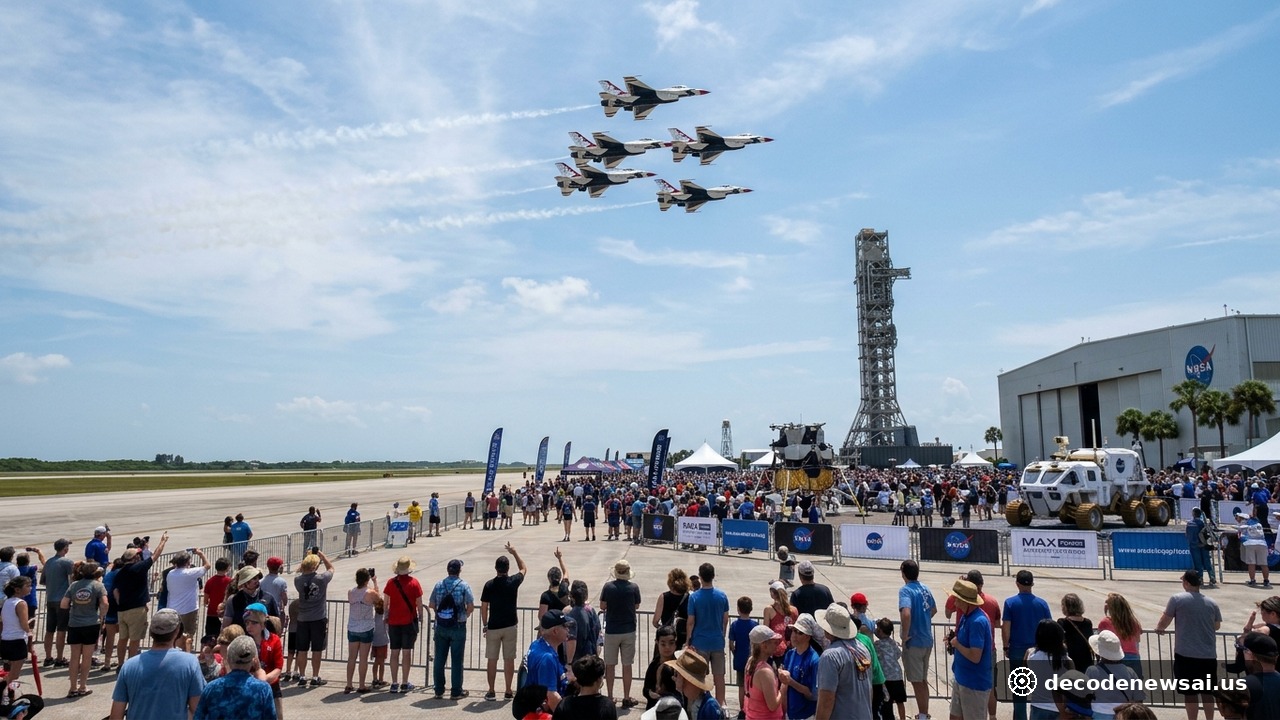
The experimental aircraft was presented alongside emerging aerospace prototypes. The event took place inside the iconic Vehicle Assembly Building perimeter. NASA is investing in dedicated experimental flight testbeds. The agency reaffirms its foundational role in pioneering advanced aeronautical research. It also sustains technological leadership across international aviation sectors.
Aerospace engineering scholars emphasized the value of modular, rapidly reconfigurable research aircraft. They said such platforms are vital for maturing novel flight control architectures. Computational fluid dynamic models and wind tunnel simulations cannot fully capture complex, non-linear aerodynamic coupling. That coupling occurs during high-rate dynamic maneuvering in turbulent atmospheric conditions.
Veteran test pilots and real-world validation for algorithms
Flight research specialists noted the value of pairing veteran test pilots with modular avionics testbeds. They said this provides an optimal environment for safely evaluating experimental autonomous algorithms. Real-time human-in-the-loop oversight lets research teams explore aggressive aerodynamic configurations. It also safeguards flight test safety.
Aerospace industry researchers highlighted the role of experimental flight platforms. They said these platforms provide irreplaceable real-world validation for cutting-edge flight control algorithms. Accelerating aerodynamic innovation through rapidly reconfigurable flight vehicles reinforces long-term technological competitiveness. That competitiveness spans international aviation manufacturing sectors. Ongoing wind tunnel assessments and structural airframe load reviews continue proceeding on target. Rapid iterative prototyping remains central to modern aerospace engineering methodologies.