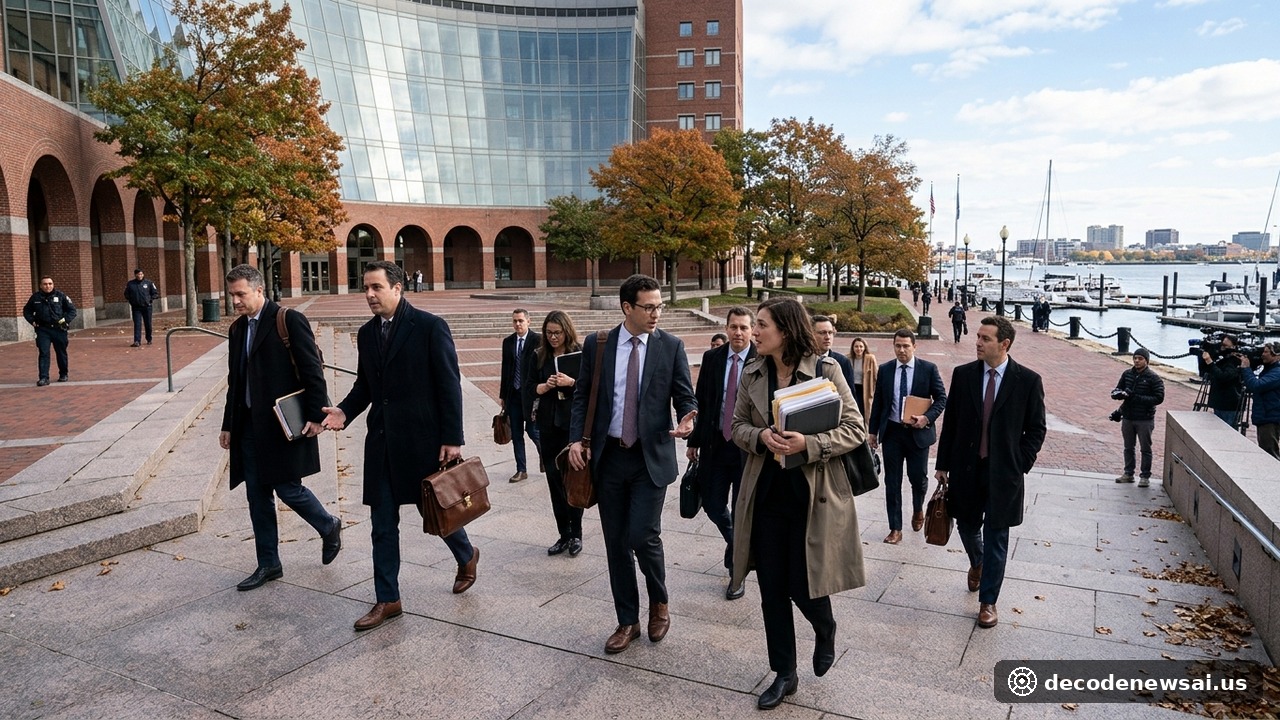
BOSTON - United States District Judge Leo T. Sorokin on Monday, November 9, formally granted a prosecution motion to dismiss all criminal charges against Russian-born Harvard Medical School researcher Kseniia Petrova. The 31-year-old biomedical scientist had faced federal felony charges alleging she smuggled non-toxic frog embryo samples into the United States for cellular aging and cancer research. The judicial dismissal definitively concludes a high-profile legal dispute surrounding federal enforcement actions against international academic researchers.
Petrova Detained Four Months Over Frog Embryos
Petrova was intercepted by United States Customs and Border Protection officers at Boston's Logan International Airport in February 2025 upon returning from an academic conference in Paris. Federal officers discovered undeclared biological samples comprising inert Xenopus frog embryos preserved in paraffin wax slides inside her duffel bag. Immigration authorities revoked her J-1 research visa and transferred her to an administrative detention facility in Louisiana, where she was detained for four months before securing bail.
A federal grand jury subsequently indicted Petrova on three felony counts: smuggling goods into the United States, concealing material facts, and making false statements. Daniel Marx, lead defense counsel for Petrova, welcomed the complete dismissal in an official statement on Monday: "The Department of Justice never should have brought this highly unusual smuggling prosecution against Kseniia Petrova, a talented scientist at Harvard Medical School. Ms. Petrova only sought to advance medical research into cellular aging that could benefit everyone, and her handling of scientific samples—inert, non-living, non-toxic frog embryos—never posed any danger to anyone."
The prosecution's case weakened following a parallel federal ruling in Vermont establishing that customs officers acted arbitrarily and without statutory authority when canceling Petrova's visa. Furthermore, a federal magistrate judge granted defense motions seeking internal customs enforcement records to investigate claims of vindictive prosecution.
Leah Foley Concedes Prosecution Resources Outweigh Public Interest
In court filings requesting dismissal, Assistant United States Attorney Leah Foley conceded that the expenditure of federal prosecutorial resources outweighed the public interest in continuing the case. Crucially, defending against the defense's selective-prosecution discovery requests would have forced the government to disclose confidential operational manuals and investigative methodologies utilized by border inspection personnel. The decision permanently clears Petrova of all criminal wrongdoing, allowing her to resume cellular biology research at Harvard.
The definitive dismissal of all federal charges against Kseniia Petrova represents a landmark legal outcome for international researchers conducting biomedical research within United States universities. Legal scholars and civil liberties advocates noted that the Department of Justice's decision to drop the prosecution underscores the importance of protecting scientific inquiry from overly punitive immigration enforcement. Academic organizations had warned that criminalizing standard scientific sample transit threatened to deter foreign scholars from contributing to critical biomedical advances across American institutions.
Harvard Medical School faculty and international scientific societies expressed relief following the resolution of the protracted legal proceeding. Colleagues affirmed that Petrova's specialized computational expertise in cellular aging mechanisms provides invaluable contributions to oncology and degenerative disease research. Legal experts emphasized that federal courts must continue to ensure that administrative customs procedures adhere to constitutional standards of fairness, safeguarding cross-border academic exchange and fostering collaborative scientific discovery globally.
Legal Scholars Commend Dismissal as Affirmation of Scientific Freedom
Legal scholars and academic research directors commended the federal court's dismissal as an essential affirmation of scientific freedom and lawful cross-border collaboration. University leadership emphasized that clear administrative standards protect visiting scholars from unwarranted criminal scrutiny while preserving vital international partnerships across biomedical research laboratories. The resolution of the case ensures that innovative medical research can proceed unhindered within leading academic institutions nationwide. Biomedical research associations affirmed that transparent customs regulations and protective legal frameworks foster vital global academic partnerships. Supporting dedicated researchers ensures continued scientific innovation across translational oncology and cellular biology laboratories worldwide.