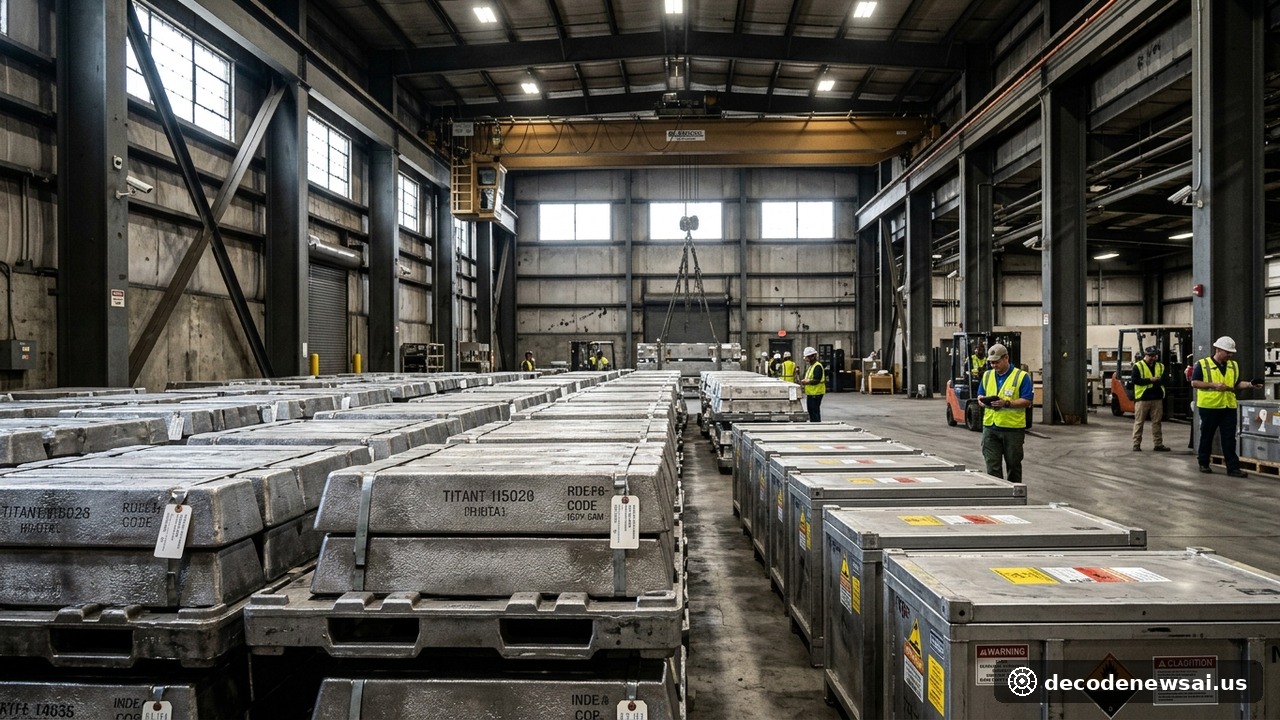
WASHINGTON - The United States Department of Defense, through the Defense Logistics Agency (DLA), officially directed $2 billion in strategic acquisition funding on Monday, November 9, to replenish the National Defense Stockpile with vital raw materials. The capital allocation targets severe structural vulnerabilities across military supply chains by purchasing critical minerals, aerospace-grade titanium, rare earth permanent magnets, and semiconductor precursors. Commodity markets closely tracked the major federal procurement initiative.
Procurement briefing details sourcing rules for 35 raw materials
Authorized under the National Defense Authorization Act for Fiscal Year 2026, the $2 billion purchasing program focuses on more than 35 raw materials deemed essential for producing advanced precision-guided munitions and radar systems. Target acquisitions include high-purity gallium, germanium, antimony, scandium alloys, and carbon fiber composite materials. Delivery operations into secure underground storage repositories will commence before the end of the year.
Speaking during an operational procurement briefing at Fort Belvoir, Virginia, on Monday, defense logistics leadership confirmed strict sourcing parameters prioritizing domestic extraction and processing facilities alongside certified suppliers located within allied nations. Sourcing criteria aim to insulate high-priority defense contractors from foreign export embargoes during geopolitical crises.
A senior procurement official within the Defense Logistics Agency stated during the briefing: "Directing $2 billion toward critical material stockpiles fundamentally transforms our readiness posture, guaranteeing that advanced weapon production lines will operate uninterrupted throughout international supply chain emergencies." Major defense prime contractors praised the procurement program.
DLA sets 36-month reserve and $500 million refining subsidies
The procurement directive establishes revised inventory management standards requiring the National Defense Stockpile to maintain a minimum 36-month operational reserve of vulnerable materials. Unlike post-Cold War surplus selloffs, the current policy utilizes long-term commercial offtake contracts with price ceilings to protect defense budgets from spot commodity volatility. Major prime contractors will access bonded material stores to expedite production schedules for critical air defense missiles and maritime platforms.
Bipartisan members of the House and Senate Armed Services Committees voiced support for the DLA program, indicating plans to introduce $500 million in complementary refining subsidies in the 2027 defense budget. The initiative establishes an enduring defense logistics reserve capable of sustaining strategic industrial production during protracted international conflicts.
The allocation of $2 billion to the National Defense Stockpile marks the most comprehensive procurement push undertaken by the Pentagon in more than three decades. Senior officials within the Defense Logistics Agency highlighted that securing physical inventories of critical rare earth elements, specialized aerospace titanium ingots, and chemical semiconductor substrates insulates American defense industrial output from foreign export restrictions. The stockpiling directive mandates continuous supplier quality audits, guaranteeing that procured elements meet strict military-grade purity standards before entering secured long-term repositories.
Analysts back stockpiles over wartime production disruptions
National security economists and industrial defense analysts underscored that maintaining physical stockpiles of vulnerable precursors is far more cost-effective than absorbing production disruptions during wartime mobilizations. Prime aerospace contractors and microelectronics manufacturers will coordinate directly with DLA logistics hubs to access emergency allotments should international maritime routes suffer unexpected blockades. By systematically establishing multi-year buffer stocks, the United States reinforces its defense industrial base and solidifies deterrent capabilities across contested global theaters.
Defense procurement specialists noted that comprehensive strategic materials management shields critical weapon programs from unexpected raw material embargoes and international supply chain volatility. Maintaining multi-year reserves across domestic military depots ensures that national defense readiness remains robust across changing geopolitical environments worldwide. Allied foreign ministries confirmed that ongoing diplomatic consultations will continue through multilateral working groups scheduled across European capitals throughout early 2027. International industry analysts and regional observers confirmed that transparent governance standards ensure lasting economic resilience and technological progress across global markets. Strategic leadership and collaborative initiatives reinforce operational excellence.