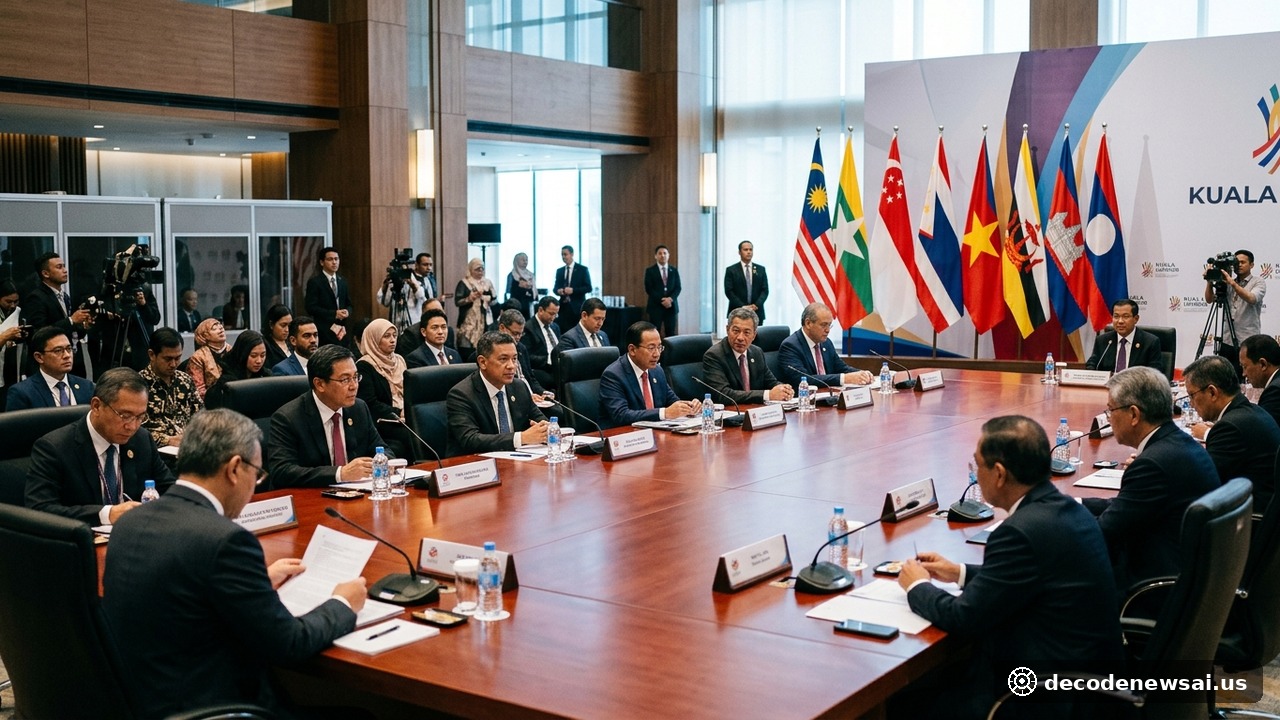
Representatives from China and the ten member states of ASEAN met in Kuala Lumpur on November 10, 2026. They opened a substantive negotiating round on the South China Sea Code of Conduct. Diplomatic delegations agreed to set up technical working groups on maritime crisis management and search and rescue by year-end.
Crisis Hotlines Aim to Prevent Tactical Miscalculations at Sea
Malaysia's Ministry of Foreign Affairs hosted the closed-door talks. Senior diplomats went through the Declaration on the Conduct of Parties in the South China Sea line by line. Regional delegates said tactical predictability matters. Clear de-escalation channels are essential for sustaining peace across contested waterways.
A foreign ministry spokesperson spoke at the post-session briefing. "Participating states have agreed to accelerate negotiations toward a functional and legally coherent code. By introducing dedicated search and rescue taskforces alongside real-time maritime communication links, our region demonstrates the institutional capability to manage differences constructively and preserve regional navigation stability." The statement laid out practical operational pathways for deepening security coordination among coast guards and maritime enforcement authorities.
Working groups examined standard operating procedures for an around-the-clock liaison hotline. The line would connect regional maritime operations centers. Technical teams are preparing encrypted communication protocols and common language rubrics. These would enable direct vessel-to-vessel contact during unexpected naval encounters.
Delegations stressed one point. Cutting response latency during maritime incidents is paramount for regional risk mitigation.
Environmental Cooperation and Joint Oceanographic Research Expand
Environmental protection and marine scientific cooperation emerged as substantial deliverables of the Kuala Lumpur session. The rotating ASEAN chair said the South China Sea hosts critical commercial sea lanes. Those lanes support trillions of dollars in global commerce alongside vulnerable marine ecosystems.
The chief ASEAN negotiator remarked: "In confronting marine environmental degradation and extreme weather anomalies, littoral countries must mobilize joint acoustic monitoring, coral reef conservation, and standardized salvage operations. We are translating diplomatic consensus into tangible maritime cooperation." Multilateral observers welcomed the collaborative focus on shared ecological stewardship.
Technical subcommittees will convene in Jakarta next month, according to the joint media release. They will finalize operational parameters of joint search and rescue exercises scheduled for the spring of 2027. International shipping associations and marine underwriters noted one effect. Institutionalized conflict mitigation frameworks significantly lower voyage risk premiums across vital Southeast Asian shipping corridors.
Maritime Observers Call Bilateral Dialogue an Anchor of Regional Stability
Global maritime law scholars and security analysts observed that steady progress on the code of conduct provides a constructive paradigm for peaceful regional governance. Regional partners are relying on direct bilateral consultations. They are insulating maritime commercial routes from external geopolitical friction.
Commercial navigation and civil aviation across the central passages remain completely unimpeded. Regional port networks report improved synchronization under emerging regional protocols. Multi-agency coordination has strengthened anti-piracy operations and disaster response readiness across the Malacca and Singapore straits.
A senior maritime economist at the United Nations Economic and Social Commission for Asia and the Pacific noted that regular diplomatic engagement reinforces regional resilience: "Codifying practical rules of engagement through structured dialogue provides the only durable solution for mitigating maritime friction. The Kuala Lumpur negotiations have established a solid technical foundation for concluding a binding regional agreement." Ministerial delegations are scheduled to review intermediate drafting progress before the conclusion of the year.