Published: 2026-11-11 04:57 EST
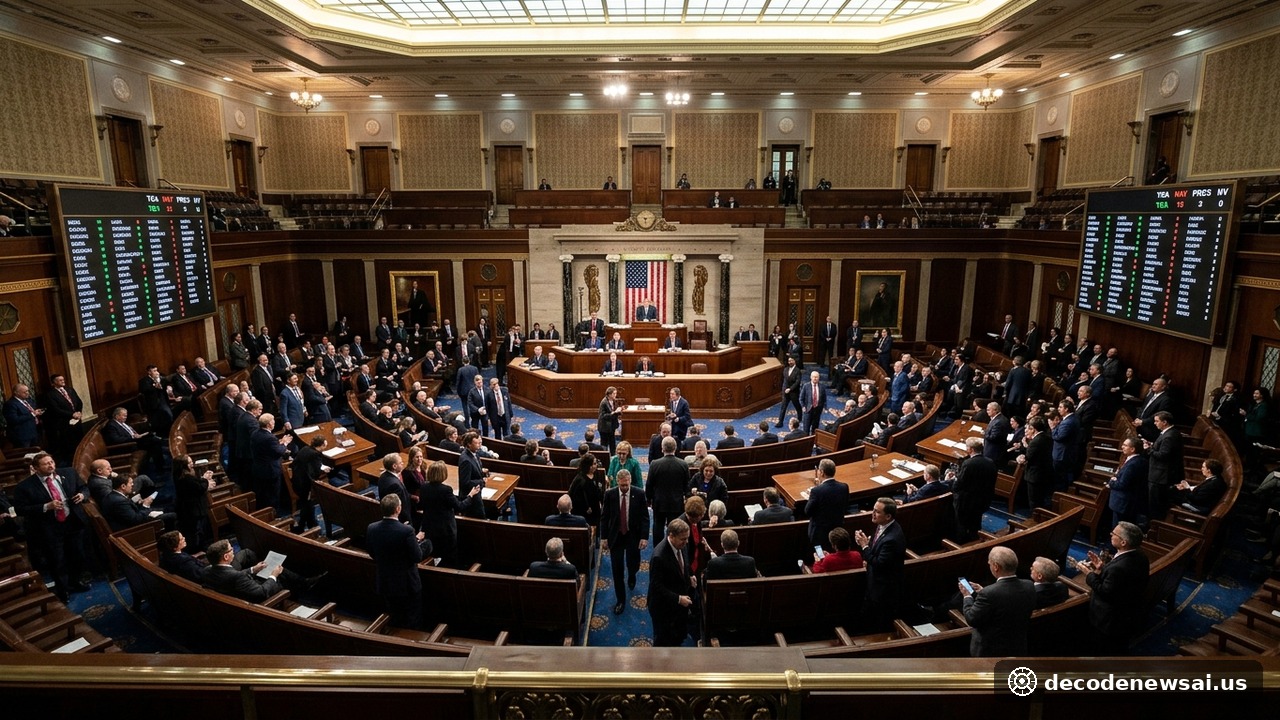
The United States House of Representatives passed the bipartisan Nuclear REFUEL Act on November 10, 2026, approving a comprehensive legislative framework authorizing $3.5 billion to establish a national strategic reserve of High-Assay Low-Enriched Uranium (HALEU) to support advanced nuclear power deployments.
Breaking Foreign Fuel Dependencies to Establish National Commercial HALEU Reserves
The legislative victory directly addresses a critical structural vulnerability across the domestic commercial nuclear power sector. Russian state enterprise Rosatom historically controlled over forty percent of international commercial enriched uranium supplies, exposing Western utilities to acute supply disruption risks.
Next-generation small modular reactors (SMRs) and microreactors require HALEU fuel enriched between 5 and 20 percent uranium-235, but domestic enrichment capacity remains in nascent commercial stages. The legislation directs the United States Department of Energy to create an advanced nuclear fuel procurement consortium, underwriting long-term purchase agreements to incentivize private centrifuge facilities. The lead Republican sponsor remarked on the House floor: "Advanced nuclear energy represents the carbon-free foundation essential for powering artificial intelligence hyperscale computing and heavy manufacturing. Ending foreign dependencies secures domestic energy independence."
The statute eliminates bureaucratic transport licensing hurdles for specialized HALEU fuel transport casks, reducing design approval backlogs from years to months.
National Association of Manufacturers and Technology Hyperscalers Drive Bipartisan Consensus
Passing with an overwhelming 320 votes, the measure reflected an uncommon bipartisan consensus forged by industrial trade coalitions and technology operators. Energy security drove unified action across both parties.
The National Association of Manufacturers (NAM) executed intensive Capitol Hill lobbying in coordination with cloud infrastructure operators constructing gigawatt-scale data center corridors. Tech industry executives emphasized that training frontier foundation models requires immense continuous baseload clean power that intermittent renewable generation cannot satisfy alone. The trade association released a statement praising congressional leadership for recognizing the nexus between reliable industrial electricity and global competitiveness.
While environmental progressives raised concerns regarding long-term geological nuclear waste management, sponsors incorporated mandatory community environmental impact reporting amendments, clearing the path for broad bipartisan support.
Senate Leadership Accelerates Review Timetable as Advanced Nuclear Primes Scale
Following House passage, the Senate Committee on Energy and Natural Resources announced it will advance the legislation for floor debate before the Thanksgiving legislative recess. Administrative enactment before year-end is widely expected.
The $3.5 billion in revolving procurement authority will directly catalyze capital investment across commercial domestic enrichment developers including Centrus Energy, TerraPower, and X-energy. Advanced reactor demonstration timelines will accelerate nationwide. The inaugural commercial-scale centrifuge cascade facility in Ohio is projected to begin initial deliveries during the late summer of 2027.
A senior nuclear fellow at Columbia University's Center on Global Energy Policy observed: "Injecting federal commercial guarantees provides the durable demand certainty required to mobilize private capital into capital-intensive enrichment cascades. The bipartisan consensus demonstrates that energy security and decarbonization imperatives can align effectively." Public equities across the advanced nuclear and uranium exploration sectors rallied following the vote.
Strategic planning advisors and international trade specialists noted that long-term intergovernmental frameworks generate predictable operating environments across key industry sectors. By coupling transparent administrative guidelines with rigorous scientific benchmarks, regulatory bodies and enterprise leaders establish sustainable operating models capable of withstanding shifting macroeconomic dynamics. Global market participants will continue observing forthcoming implementation milestones as public agencies execute their mandated responsibilities throughout 2027. Cross-border coordination remains vital for driving sustained operational resilience and delivering measurable societal benefits worldwide.
Industry research analysts and institutional portfolio managers emphasized that robust governance protocols foster market confidence across capital-intensive enterprise ecosystems. When commercial operators maintain disciplined capital allocation standards while proactively addressing regulatory compliance obligations, supply chains achieve greater durability against external macroeconomic shocks. Executive leadership teams across North America and Europe continue prioritizing long-term strategic alignment over transient cyclical fluctuations, ensuring that core infrastructure deployments remain on schedule throughout the coming fiscal periods.