Published: 2026-11-11 04:57 EST
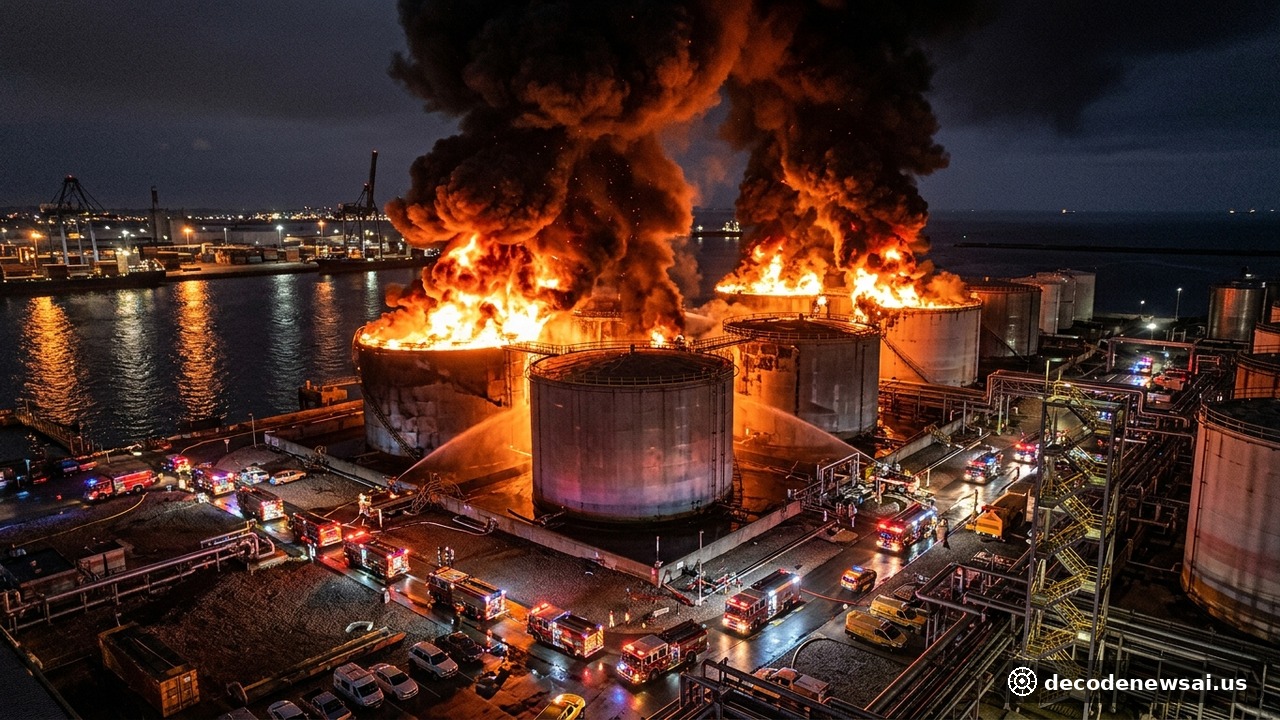
Special forces from Ukraine's Main Directorate of Intelligence conducted a coordinated long-range cross-border drone strike against the Russian Baltic commercial seaport of Ust-Luga on the night of November 10, 2026. The deep-penetration aerial attack struck key fuel storage reservoirs and coastal oil export pumping infrastructure, triggering massive industrial fires.
Jet-Powered Drone Swarms Infiltrate Baltic Airspace to Strike Petroleum Storage Reservoirs
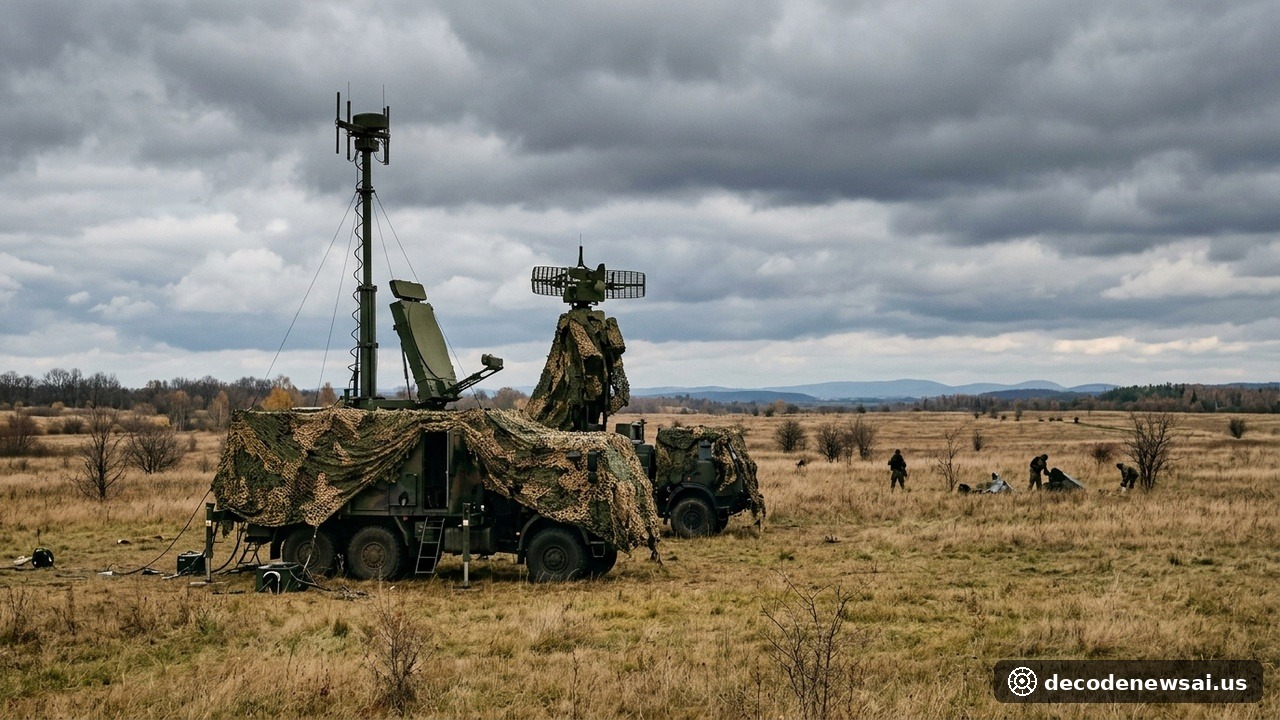
Satellite tracking data and local maritime feeds confirmed that Ukraine deployed up to sixteen long-range jet-powered loitering munitions to execute the 1,000-kilometer nocturnal transit. Flying low across maritime approach corridors, the strike packages evaded regional anti-aircraft radar coverage.
Direct kinetic impacts ignited two 20,000-cubic-meter refined fuel storage tanks and damaged primary manifold pumping pipelines serving Novatek's coastal gas fractionation plant. Infrared thermal imaging captured fire plumes visible from low-Earth orbit. In a briefing in Kyiv, a Ukrainian defense intelligence official stated: "Dismantling the aggressor's hydrocarbon export logistics is paramount for exhausting military operational capacity. The critical transshipment terminals at Ust-Luga have sustained severe physical degradation."
The governor of Russia's Leningrad Oblast acknowledged the industrial fire while asserting that regional air defenses intercepted incoming projectiles. Emergency response units established perimeter cordons around damaged harbor facilities.
Maritime Energy Bottlenecks Force Oil Tankers into Anchorage and Escalate Freight Premiums
With an annualized handling capacity exceeding 30 million metric tons, Ust-Luga anchors Russia's primary petroleum export logistics along northern European commercial corridors. The terminal closure disrupts scheduled shipments across Asian and international refining destinations.
Harbor tracking metrics revealed that three Aframax crude and naphtha carriers were forced to halt loading operations and retreat into offshore anchorages. Marine underwriters responded immediately by raising Baltic Sea cargo risk premiums by twenty percent. Export schedules across Baltic pipelines face weeks of operational latency.
Maritime energy economists at London shipping brokerages noted that Ukraine's campaign against Russian energy infrastructure imposes structural export friction: "Diverting crude shipments away from damaged Baltic berths toward Pacific ports adds nearly $3 per barrel in secondary logistics costs. Continued maritime vulnerability directly drains sovereign export revenues." Re-routing logistics strains tanker fleet availability.
Accelerating Deep-Strike Capabilities Reshape Infrastructure Conflict Across Eastern Europe
The deployment of advanced Ukrainian jet-powered strike platforms underscores a significant qualitative evolution in long-range precision warfare. Operating envelopes for indigenous strike systems now routinely exceed 1,200 kilometers.
In anticipated retaliation, Russian strategic forces fired over 100 drones and cruise missiles targeting electrical substations across southern Ukraine over the subsequent twenty-four hours. Bilateral infrastructure attrition continues escalating. The International Energy Agency published an extraordinary surveillance dispatch cautioning that disruptions to Baltic commercial waterways heighten global refined product volatility.
A senior defense fellow at the Institute for the Study of War concluded: "Systematic deep strikes against export nodes impose compounding fiscal strain on Moscow's wartime economy. Disrupting external fossil export revenues remains Kyiv's most potent asymmetric lever for shifting strategic negotiating balances." European defense ministries are tracking tactical developments closely.
Strategic planning advisors and international trade specialists noted that long-term intergovernmental frameworks generate predictable operating environments across key industry sectors. By coupling transparent administrative guidelines with rigorous scientific benchmarks, regulatory bodies and enterprise leaders establish sustainable operating models capable of withstanding shifting macroeconomic dynamics. Global market participants will continue observing forthcoming implementation milestones as public agencies execute their mandated responsibilities throughout 2027. Cross-border coordination remains vital for driving sustained operational resilience and delivering measurable societal benefits worldwide.
Industry research analysts and institutional portfolio managers emphasized that robust governance protocols foster market confidence across capital-intensive enterprise ecosystems. When commercial operators maintain disciplined capital allocation standards while proactively addressing regulatory compliance obligations, supply chains achieve greater durability against external macroeconomic shocks. Executive leadership teams across North America and Europe continue prioritizing long-term strategic alignment over transient cyclical fluctuations, ensuring that core infrastructure deployments remain on schedule throughout the coming fiscal periods.