NASA announced an accelerated framework for its lunar exploration architecture on November 9, 2026. Leadership released revised mission timelines for the Artemis campaign. The plan sets a targeted landing window in 2028 for the Artemis IV crewed lunar surface expedition. The agency confirmed that SpaceX and Blue Origin are advancing competing human landing systems.
Orion and SLS to launch four astronauts
A decisive orbital validation mission is scheduled for 2027. The recalibration aims to ensure a sustained American presence on the Moon. NASA reorganized launch operations to address technical constraints found in early mission planning. Executives confirmed the central objective: returning American astronauts to the lunar south pole by 2028.
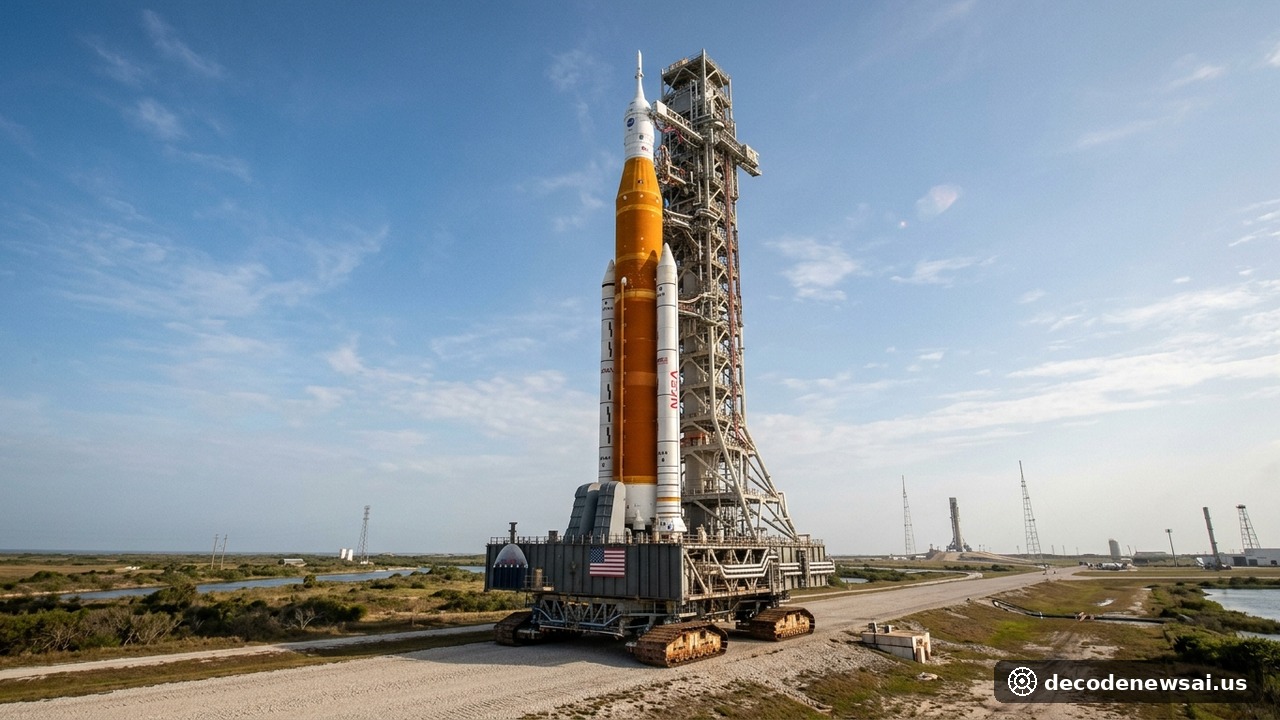
The mission architecture pairs established launch elements with commercial lander platforms. Four astronauts will launch aboard the Orion spacecraft. The Space Launch System heavy rocket will lift off from Launch Complex 39B at Kennedy Space Center in Florida. Assembly teams at the Michoud Assembly Facility in Louisiana are completing structural tests on the core stage hardware.
NASA is managing dual-track public-private development contracts for surface descent. SpaceX is adapting its Starship architecture. Blue Origin is manufacturing the Blue Moon lander. Both contractor teams are conducting full-scale engine burn tests and cryogenic propellant transfer trials in Texas and Alabama.
uncrewed test to validate docking and refueling
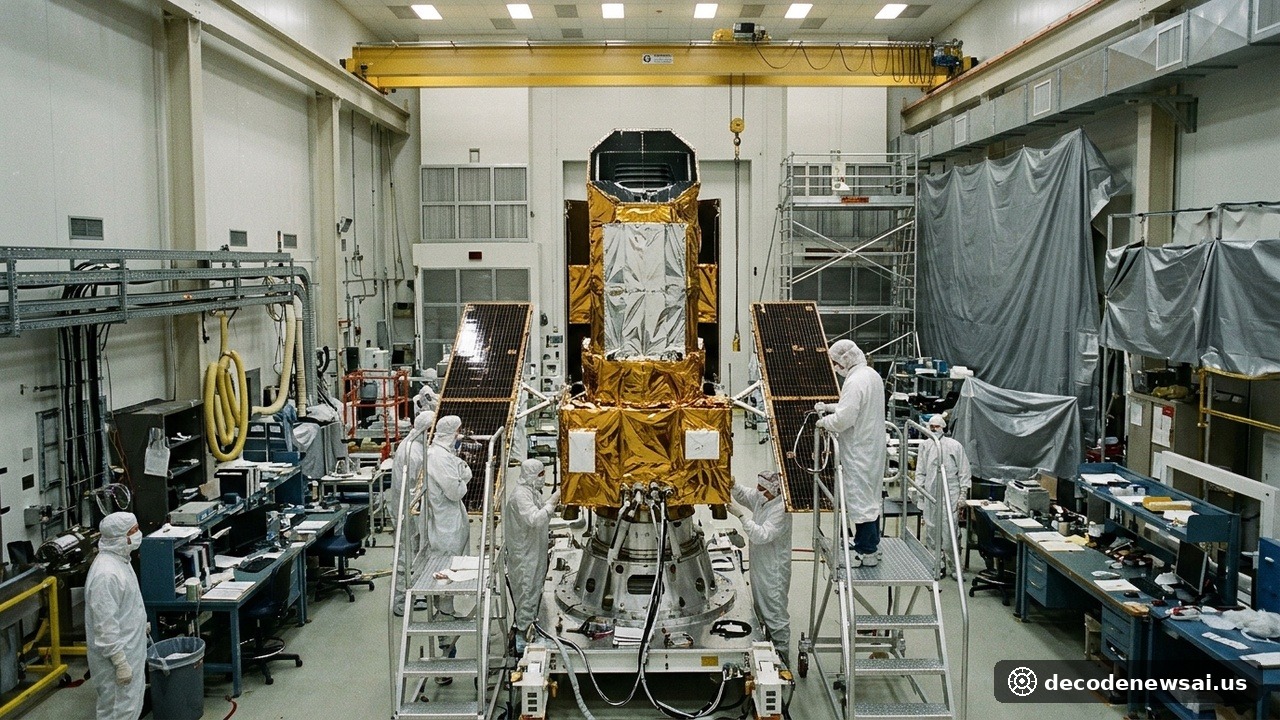
Rigorous automated testing protocols will precede crewed touchdown maneuvers. NASA scheduled a complex uncrewed orbital flight test for 2027. That test will evaluate autonomous lunar rendezvous, automated docking, and in-space fuel replenishment. Validating automated docking systems under space radiation is essential for crew safety.
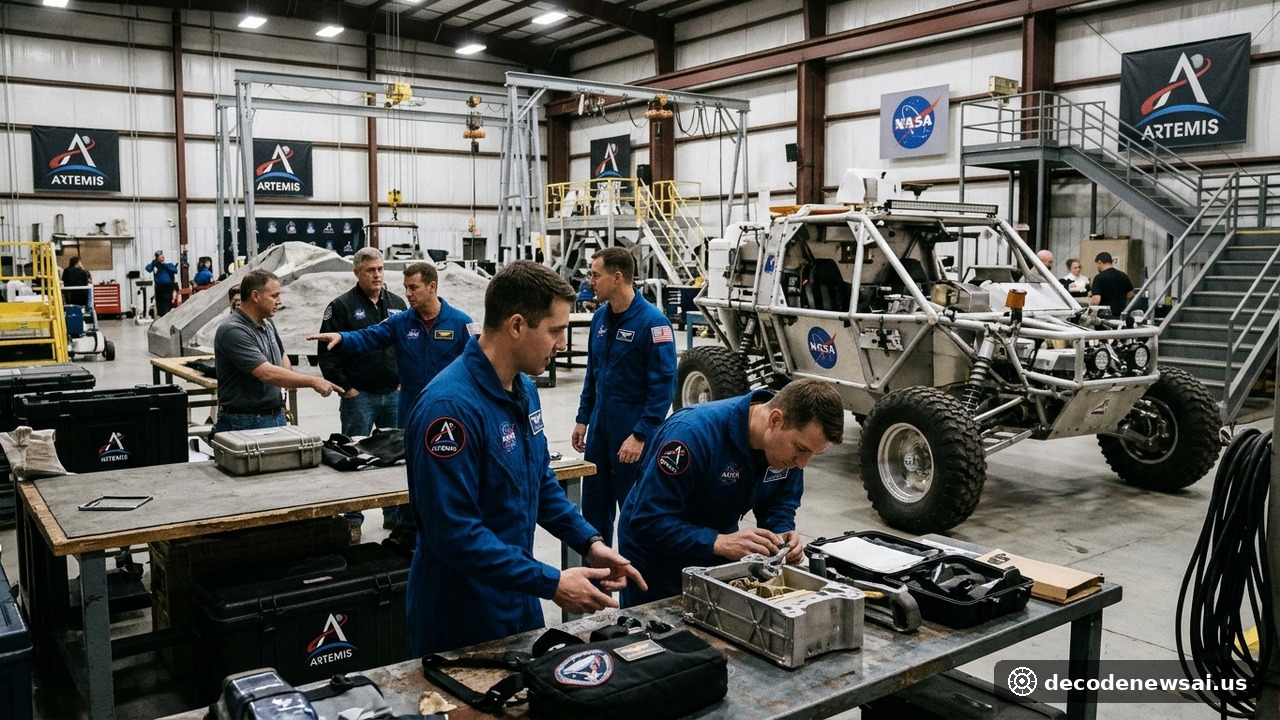
Engineers completed preliminary thermal vacuum trials on next-generation exploration extravehicular mobility suits. The redesigned suits incorporate flexible joint articulation and advanced thermal insulation. They allow astronauts to conduct extravehicular sorties lasting up to eight hours. Those sorties will take place within permanently shadowed lunar craters.
An associate administrator for exploration systems development detailed the programmatic revisions at a briefing at NASA Headquarters in Washington. The administrator stated: "By accelerating collaborative lander development with our commercial partners, NASA is establishing a reliable path to return American explorers to the lunar surface in 2028."
Shackleton Crater rim chosen for habitat infrastructure
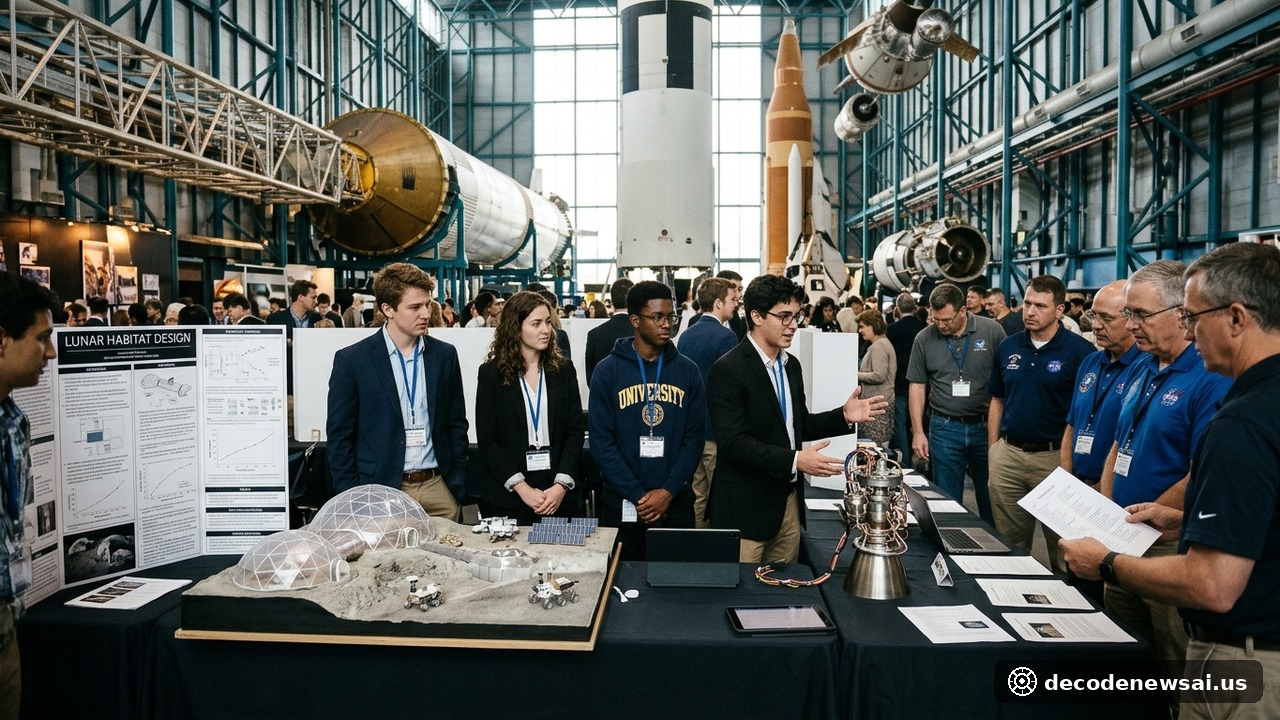
The Artemis initiative extends beyond short-duration exploration flags and footprints. NASA designated the Shackleton Crater rim at the south pole as the primary staging area for permanent lunar habitat infrastructure. Water ice deposits trapped in shadowed craters will be extracted. The ice will generate breathing oxygen and liquid hydrogen propellants.
Multinational aerospace agencies are integrated into the surface program. The European Space Agency and the Japan Aerospace Exploration Agency are manufacturing pressurized exploration rovers and habitat modules. Those modules are for the Gateway lunar orbital platform.
NASA planners emphasized that long-term operations on the Moon serve as the essential stepping stone for future human missions to Mars. Developing closed-loop life support architectures on the lunar surface lowers technological risks for interplanetary flight. Global scientific communities welcomed the accelerated development timeline.
Engineers stress 2027 docking tests and suit certification
Aerospace engineers and planetary exploration specialists emphasized that accelerating the Artemis lunar landing schedule restores momentum to international deep space exploration architectures. Lunar surface missions require flawless coordination between heavy-lift launch vehicles and commercial descent landers. Conducting uncrewed orbital docking validations in 2027 provides crucial operational risk mitigation. NASA mission directorates and commercial aerospace contractors expanded integrated development testing.
The expanded testing will certify cryogenic propellant transfer protocols and lightweight extravehicular mobility suits. Blue Origin and SpaceX reaffirmed their engineering commitments. Both companies will deliver fully verified human landing platforms. Those platforms must sustain multi-day surface science investigations at the lunar south pole. Global scientific institutions noted that permanent lunar exploration infrastructure creates indispensable technological foundations for eventual crewed voyages to the Martian surface.