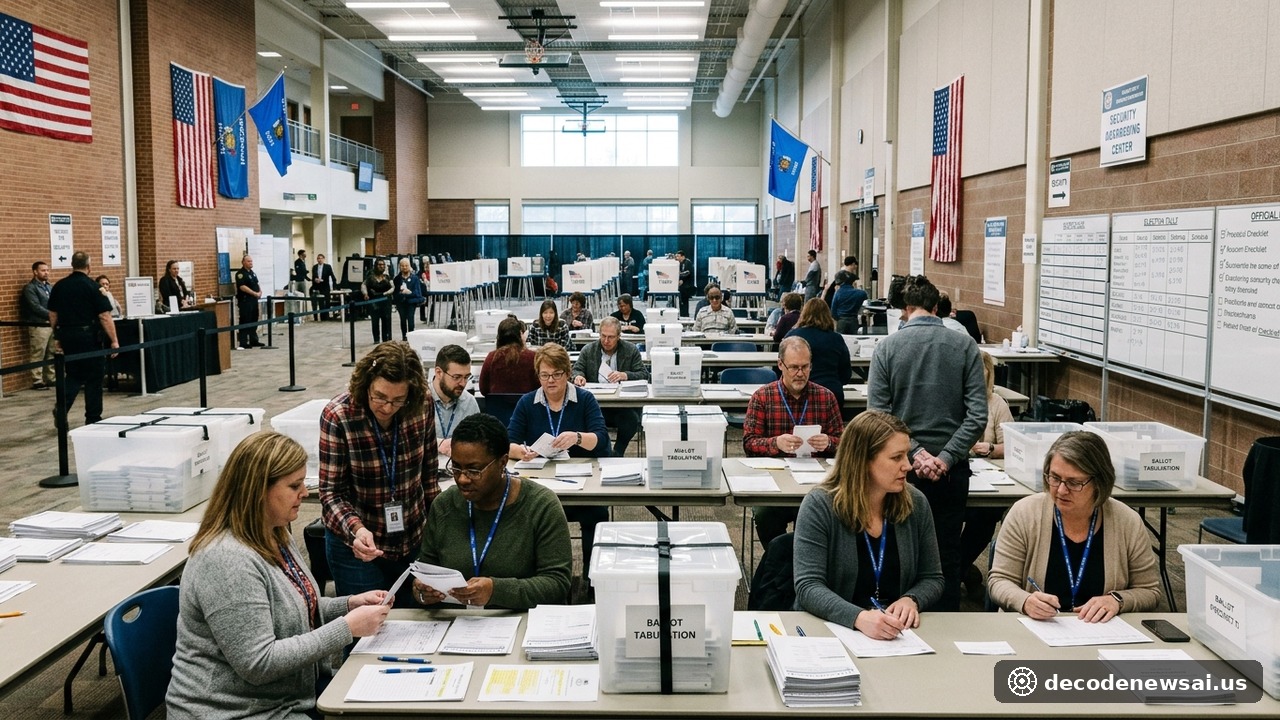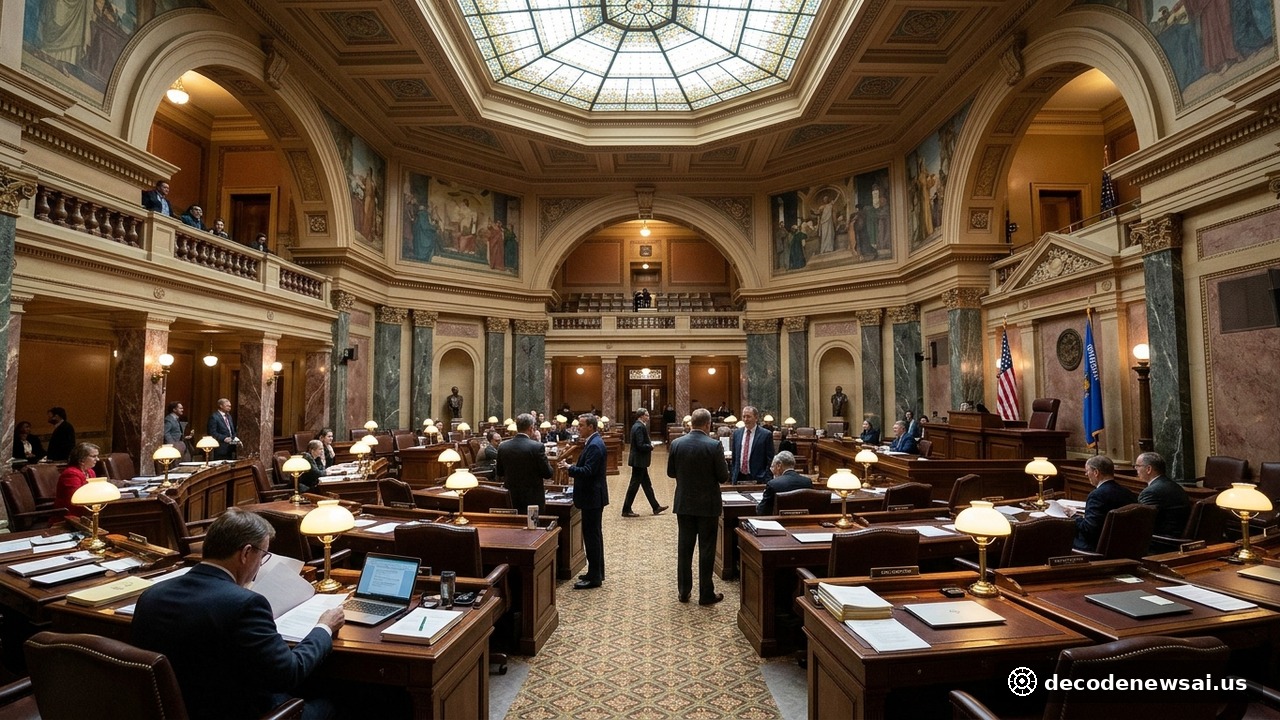
Senate Republicans in Wisconsin convened a closed-door caucus session in Madison on November 9, 2026, electing a new legislative floor leader following significant midterm defeats. The internal restructuring occurred after Democrats secured majorities in both chambers of the state legislature for the first time since 2010. Democrats flipped three Republican-held state Senate seats, transforming an 18-to-15 Republican majority into an 18-to-15 Democratic governing advantage. The outcome forces legislative Republicans into the minority posture heading into the upcoming biennial session.
Democrats flip eight Assembly districts and win governorship
The statewide legislative outcome fundamentally rearranged the balance of power across the upper Midwest battleground. Operating under new state legislative district boundaries established after judicial intervention, Democratic candidates achieved historic breakthroughs in competitive assembly districts.
In the state Assembly, Democrats converted eight targeted districts, transforming a 54-to-45 Republican edge into a 53-to-46 Democratic working majority. Concurrently, Milwaukee County Executive David Crowley defeated Republican challenger Tom Tiffany by approximately eight percentage points to win the governorship.
Outgoing Senate Majority Leader Devin LeMahieu previously announced his decision not to seek re-election, creating an immediate vacancy at the helm of the Republican caucus. Confronting their transition to minority status, Republican senators deliberated over legislative strategy during marathon caucus votes.
New minority leader vows to block spending expansions
After extensive balloting, lawmakers selected a consensus pragmatist known for legislative discipline and budgetary expertise to guide the caucus. Speaking to reporters inside the state capitol rotunda in Madison, the newly selected Republican floor leader addressed party members. The leader said: "Confronting this new legislative alignment, Senate Republicans will remain united to defend taxpayer pocketbooks and block irresponsible public spending expansions."
Political strategists noted that the incoming minority leadership faces an assertive Democratic legislative program. Senator Dianne Hesselbein, poised to assume the mantle of Senate Majority Leader, outlined plans to introduce comprehensive public education appropriations during the first legislative week.
The transfer of power concludes more than a decade of uninterrupted Republican dominance over the statehouse in Madison. Incoming Governor Crowley pledged to pursue healthcare affordability programs and municipal infrastructure grants in partnership with legislative leaders.
Republicans cite two constitutional amendments as safeguards
Republicans emphasized that voters approved two constitutional amendments placed on the ballot by conservative lawmakers, establishing essential safeguards against executive overreach. The institutional clash between legislative branches will shape state policy for years.
The Wisconsin Legislature is scheduled to take the official oath of office in January 2027. Republican leaders plan to organize regional outreach meetings to mobilize grassroots networks. The political experiment in Madison draws intense national scrutiny.
State legislative scholars and political governance experts observed that abrupt shifts in chamber majorities frequently reshape traditional legislative dynamics between legislative leaders and executive offices. Because the Wisconsin Legislature exercises broad statutory prerogatives over biennial budget appropriations, establishing collaborative bipartisan protocols will be essential to prevent prolonged fiscal standoffs in Madison. Good-government organizations and civic advocacy groups encouraged incoming lawmakers to prioritize transparent public hearings regarding public education formulas and municipal revenue sharing. Democratic leaders confirmed that their legislative priorities will concentrate on working family tax relief and healthcare modernization. National political observers noted that divided governance in Wisconsin will offer an important test case for institutional compromise.
Caucuses plan interim committee reviews before January 2027
In addition, political party analysts and state constitutional scholars noted that procedural reforms within state senates can significantly influence the pace of statutory executive appointments. Both caucuses plan extensive interim committee reviews to structure upcoming legislative agendas before lawmakers convene in early January.
Furthermore, state political directors and civic organizers highlighted that collaborative committee deliberations will establish constructive foundational protocols for navigating legislative redistricting outcomes. Both legislative caucuses remain focused on addressing pressing public concerns regarding fiscal responsibility and statewide community prosperity.